The room looks good, the price is tempting, and the listing says Seoul. Before you book, there is one more question: does this address make your trip easier? A useful base puts your main plans within reach and gives you a comfortable walk home. For a first visit, I would shortlist Myeongdong or City Hall for a mixed itinerary, Jongno for palace days, and Hongdae for lively evenings. Then compare the actual buildings.
01
Start with three places you actually plan to visit
Before searching for hotels, mark your three main destinations on a map. They could be Gyeongbokgung, Hongdae and COEX, or a concert venue, a shopping district and a family attraction. Look at where your days cluster. A hotel near one famous place can still be awkward for the rest of the trip.
I would also write down your preferred bedtime, arrival airport and the amount of luggage you will carry. Someone who wants dinner at 10 p.m. needs a different evening outside the door from someone traveling with a child who goes to sleep at eight. Those details are more useful than a generic list of the city's best neighborhoods.
The comparison below is a starting point for your search. Its recommendations reflect the kind of trip each area suits. Noise, room quality and ease of access depend on the individual property.
| Area | I would shortlist it for | Check before booking |
|---|---|---|
| Myeongdong / City Hall | A mixed first visit, shopping and central sightseeing | Actual station, airport route and room size |
| Jongno / Insadong / Seochon | Palaces, heritage and older streets | Slopes, building access and evening food |
| Hongdae / Yeonnam / Hapjeong | Music, shopping and later evenings | Night noise and distance to Hongik University Station |
| Seoul Station | Rail departures or an airport connection that shapes the trip | Walking route from the station to the hotel door |
| Gangnam / Samseong | COEX, appointments and plans south of the river | Journeys to your northern-Seoul sightseeing |
| Jamsil | Lotte World, Seokchon Lake and eastern-Seoul plans | Exact venue, station exit and return journey |
| Seongsu | Cafés, design and an itinerary focused on the east | Available rooms and transport for the rest of your trip |
02
Myeongdong and City Hall: my starting point for a mixed first trip
If your itinerary mixes shopping, markets, palaces and meals across central Seoul, start your hotel search here. Myeongdong gives you a busy shopping district outside the door. City Hall puts Deoksugung and the central business district nearby. Both are useful areas to compare when you have not committed your trip to one particular interest.
The hotel name can be misleading. A property marketed as Myeongdong may be more convenient for Euljiro, Chungmuro or another station than Myeongdong Station itself. Save its Korean address and check the entrance you will actually use. With a suitcase, an elevator route can be worth a slightly longer walk.
I would favor the room with the simpler daily journey over the one with a more impressive lobby. Look at recent comments about noise and space, especially if you need to open two suitcases. For an airport bus, check the current stop and route for that exact property; proximity to a shopping street does not guarantee a convenient bus stop.
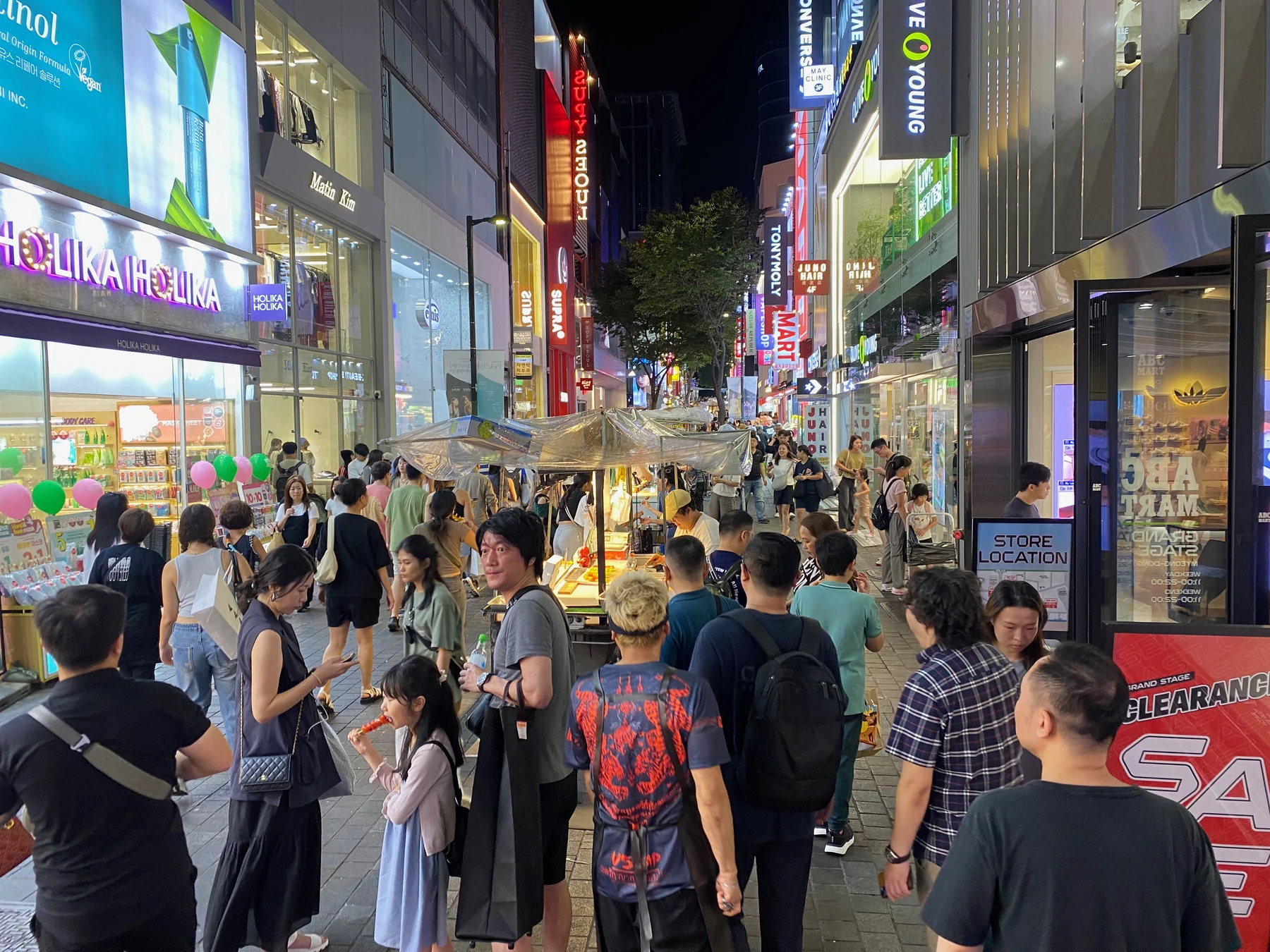
Myeongdong’s shopping streets after dark, August 2024.
03
Jongno, Insadong and Seochon: for palace mornings and older streets
Choose this cluster when your trip leans toward Gyeongbokgung, Changdeokgung, Insadong and the older center. You can build several days around nearby streets instead of beginning each morning with a cross-city ride. My starting search would be around Jonggak, Anguk or Gyeongbokgung Station, depending on which palace area you want closest.
These are different settings within a broad part of Seoul. Insadong suits browsing and a central base; Seochon lies west of Gyeongbokgung; Anguk is useful for the streets around Bukchon and the eastern palace area. Pick a few actual addresses before deciding which atmosphere you prefer.
If a hanok stay appeals to you, read the room description closely. Check whether you will sleep on a bed or floor bedding, whether the bathroom is private, and how luggage reaches the room. Ask about sound insulation and steps when those matter. Traditional architecture can be a lovely part of the trip, but comfort varies between properties.
In residential lanes, keep late conversations quiet and respect posted visiting rules. Also check the final slope to the accommodation. A charming street is a different proposition when you are pulling a suitcase uphill.
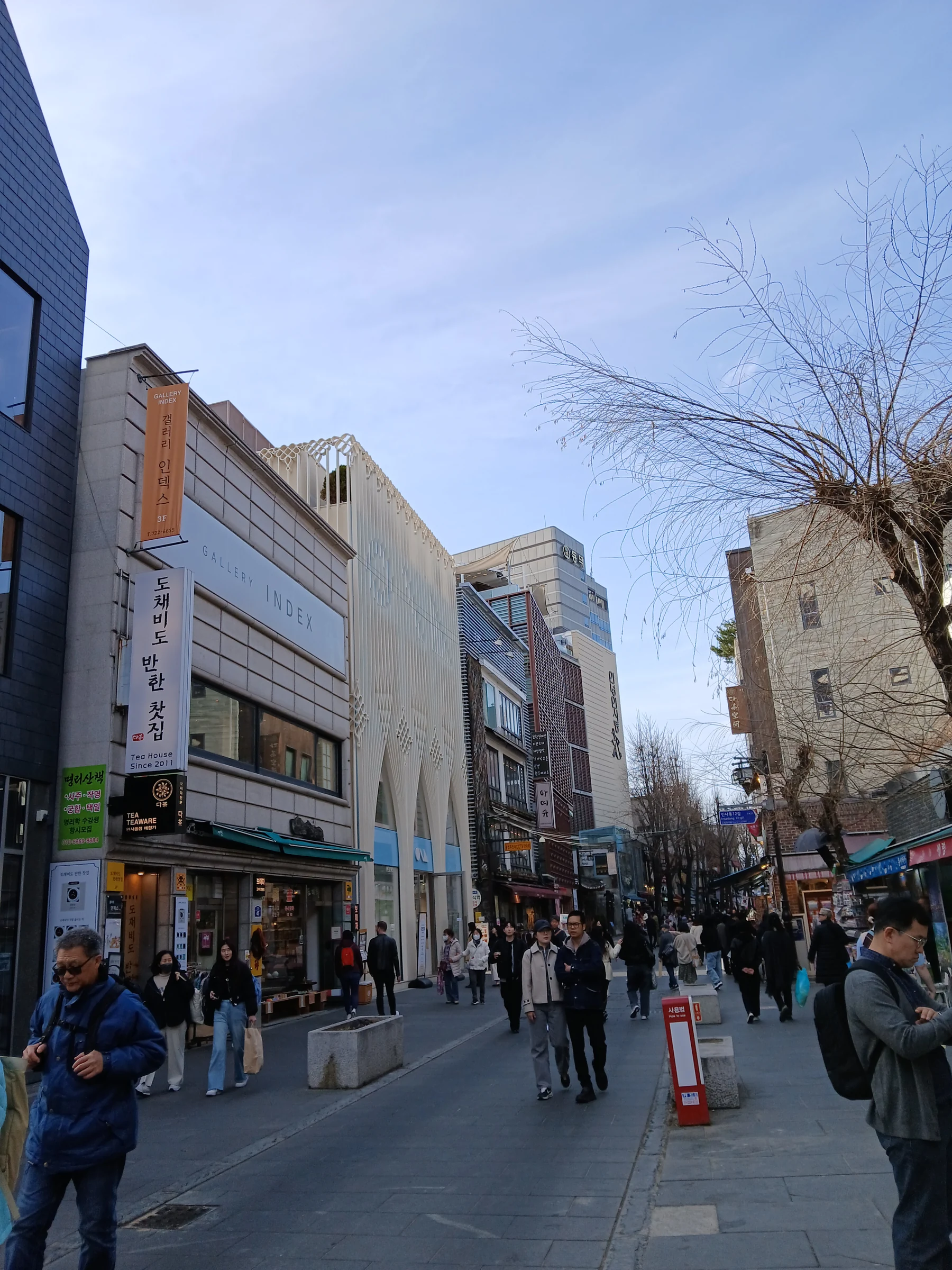
Insadong-gil, March 2025. A Jongno base puts these streets nearby.
04
Hongdae, Yeonnam and Hapjeong: for evenings you want to spend nearby
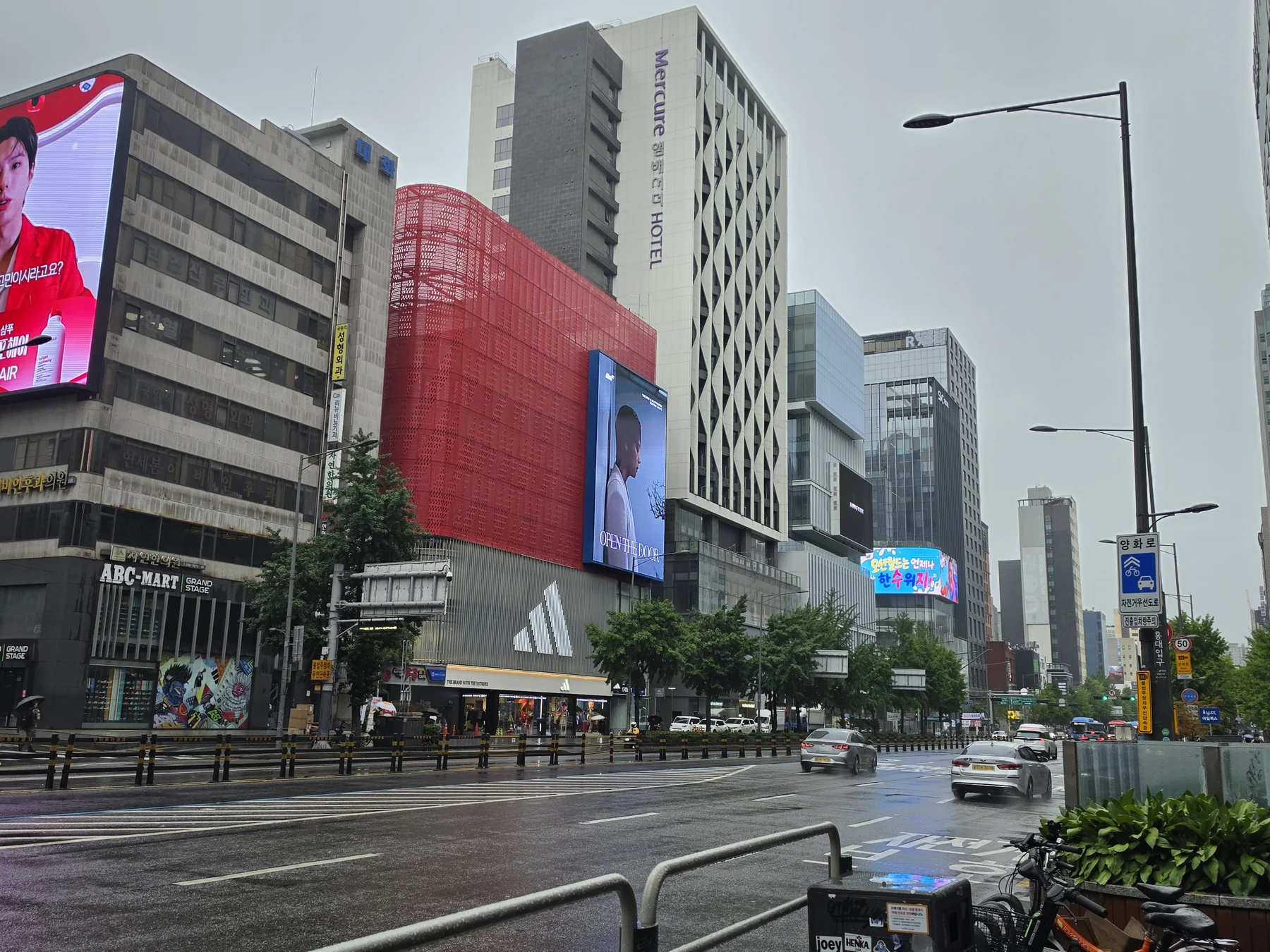
Hongdae is the area I would shortlist for music, shopping and a trip with later evenings. Staying nearby lets dinner or a performance become part of your neighborhood time, without planning every night around a long return journey.
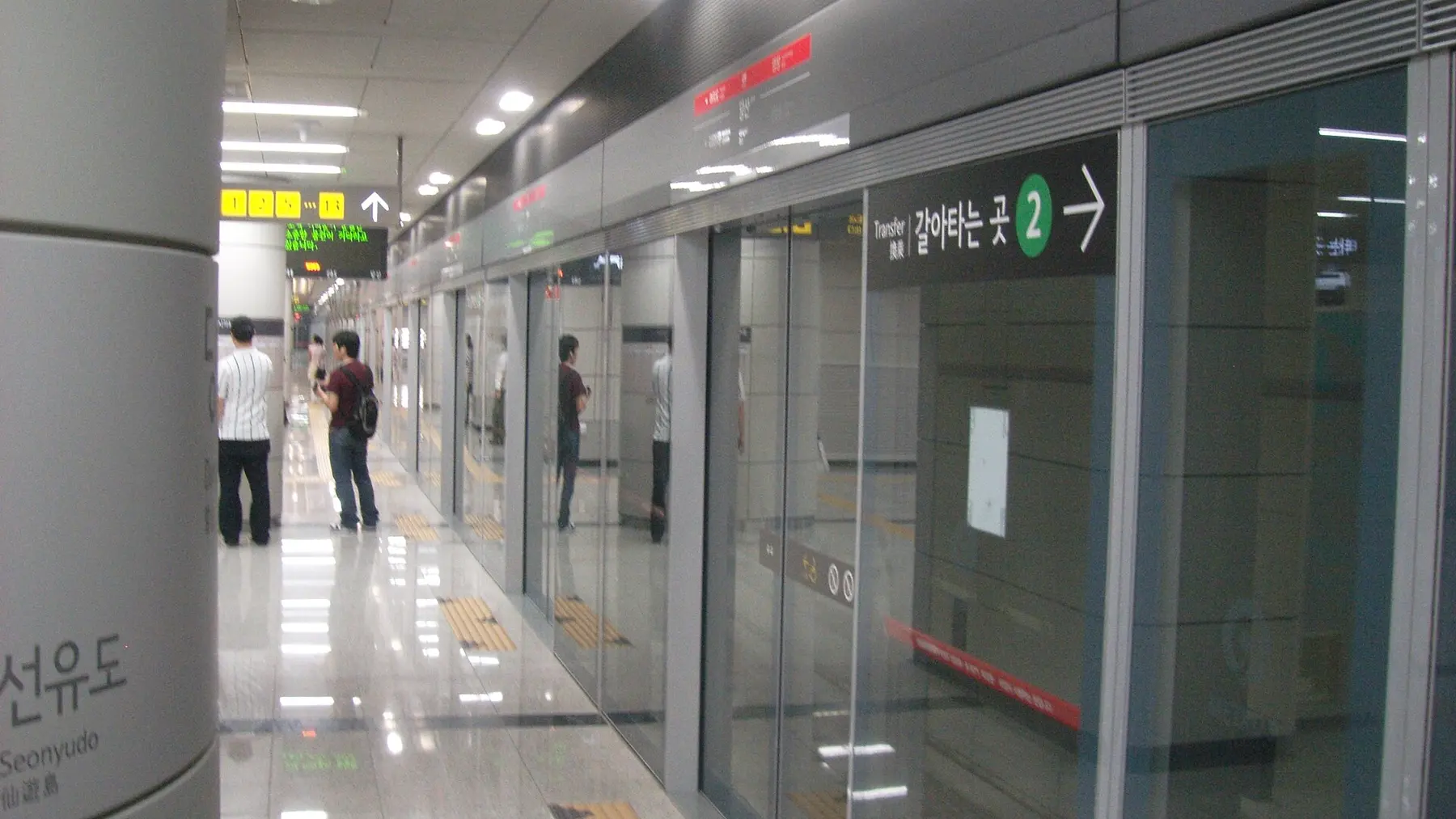
Hongik University Station is served by the AREX all-stop train. The airport Express runs nonstop to Seoul Station, so check the service name before boarding. That distinction matters if you choose a hotel here partly for the airport journey.
Treat Hongdae, Yeonnam and Hapjeong as separate searches. Compare rooms near the lively streets with rooms farther into residential blocks, then read recent noise reviews for the exact building. A residential address can still have a busy café, bar or road nearby.
Do not assume that every Hongdae listing is a short walk from the airport railway. Check the station exit, crossings and final approach. If most of your plans are around palaces or eastern Seoul, compare those daily journeys too. Convenient airport access is only one part of the stay.
05
Seoul Station: useful when the connection is the point
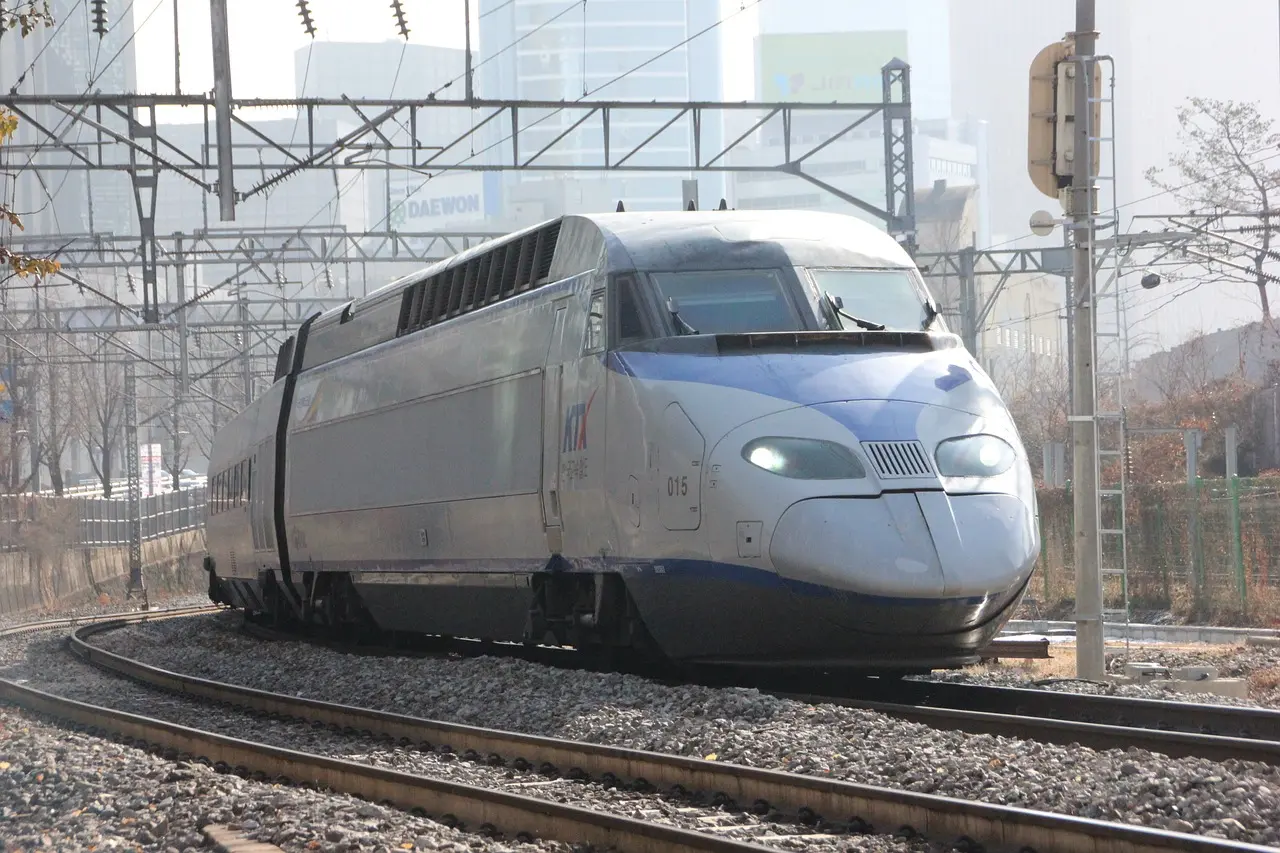
A base near Seoul Station deserves a look when an intercity train or airport connection shapes your plans. It can make sense before an early departure, or when you want to keep the transfer between the airport railway and a KTX journey straightforward.
However, being near the station on a map does not tell you how easy the hotel is to reach. Check the route from the relevant platform area to the correct exit and onward to the building. Roads, passages and a walk on the far side of the station can change the experience.
For several sightseeing days, compare the surrounding evening options with Myeongdong or Jongno before choosing. I would book here for a specific connection or a property that passes the daily-route test, rather than treating the station as an automatic best base.
06
Gangnam, Jamsil and Seongsu: choose them because your days are there
These areas are worth considering when your plans concentrate in southern or eastern Seoul. Around Samseong, COEX and nearby destinations can anchor a Gangnam stay. Jamsil is a practical search area for Lotte World and Seokchon Lake. Seongsu suits a trip with time set aside for cafés, shops and design.
The district name is only the beginning. Gangnam covers a broad area, and a hotel near one station may be inconvenient for an appointment or venue at another. Save the exact destination and compare the route from each candidate hotel.
If your itinerary mixes these areas with several palace days, check the commute at the times you expect to travel. A cheaper room can be worthwhile, but make the extra journeys a conscious choice. There is no need to rule out these districts for a first trip; there is a reason to choose them carefully.
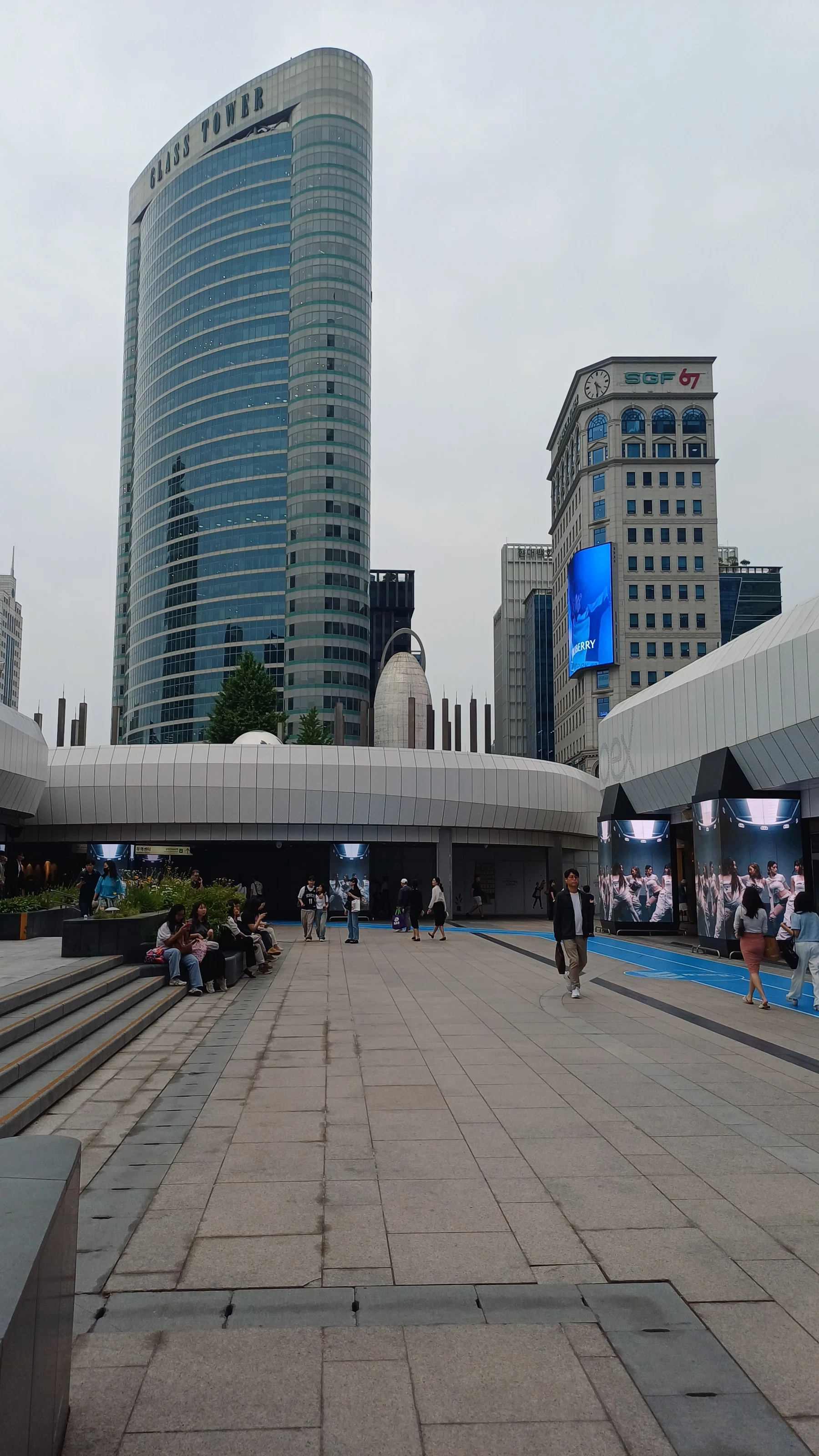
Around COEX in Samseong, June 2025.
07
Compare the whole stay, not the first price you see
Compare the same dates, number of guests and room conditions. Check the final amount at checkout, including any displayed taxes or compulsory charges, and note the currency you will actually pay. A cheaper nonrefundable rate and a flexible rate buy different things.
Then add the costs that the address creates. Airport transfers, a taxi after a late evening, breakfast and laundry may change which room offers better value. Avoid assigning a fixed nightly price to a whole neighborhood: dates, events and room types can change the comparison.
Here is a simple example, using hypothetical prices. Saving ₩20,000 per night for four nights leaves you ₩80,000 ahead. If that address also adds 40 minutes of travel on each of four sightseeing days, you give up two hours and 40 minutes. Decide whether that exchange works for you before booking.
If your plans are still uncertain, check the cancellation deadline, its time zone and the rules for changing dates. Save the terms with your confirmation. Flexible booking is useful only if you understand when that flexibility ends.
08
The room category decides what you are buying
A hotel's photographs can show several different room types. Check the exact category in your booking: bed configuration, usable space, bathroom, windows and maximum occupancy. Families should confirm the permitted number of guests and any bedding charges directly with the property.
For light sleepers, read reviews for repeated mentions of bars, traffic, thin walls or corridor noise. For longer stays, check laundry access and whether there is room to unpack. For late arrivals, confirm reception hours or self-check-in instructions before paying.
If you need step-free access, ask about the whole route: pavement to entrance, entrance to lift, and lift to room. An elevator in the listing does not confirm that every part of the approach is step-free. Ask about bathroom access and dimensions where relevant.
Visit Seoul's accommodation directory is a useful place to begin. Its Seoul Stay section includes city-supported listings for legally operating urban and hanok guesthouses. A directory entry gives you a property to investigate; still check current terms and the room that suits your needs.
09
Keep one base unless changing hotels solves a real problem
For a short first visit, I would normally keep one Seoul base. Packing, storing bags and waiting for a second check-in take time even when the hotels look close on the map. You can explore another neighborhood without sleeping there.
A split stay can make sense when you have a longer trip, several consecutive commitments in a different area, or a departure that would otherwise be difficult. Write down what the move saves and what it costs before adding it to the itinerary.
Once you have narrowed the search to two or three rooms, use the companion checklist below. Compare the address, the full price and the room conditions side by side. The best choice is the one you can explain in terms of your own trip.
Check before you go
Official links and live information
Details last checked October 2, 2026. Entry rules, schedules, prices, transport coverage, and operating hours can change, so verify time-sensitive details before committing time or money.
- Seoul's official tourist map: neighborhoods, sights and railway connections
- Visit Seoul: getting to Seoul and the two AREX services
- Visit Seoul: Hongdae's music and nighttime culture
- Visit Seoul: Insadong
- Visit Seoul: accommodation directory
- Visit Seoul: Seoul Stay guesthouse directory
- AREX: current airport railway information