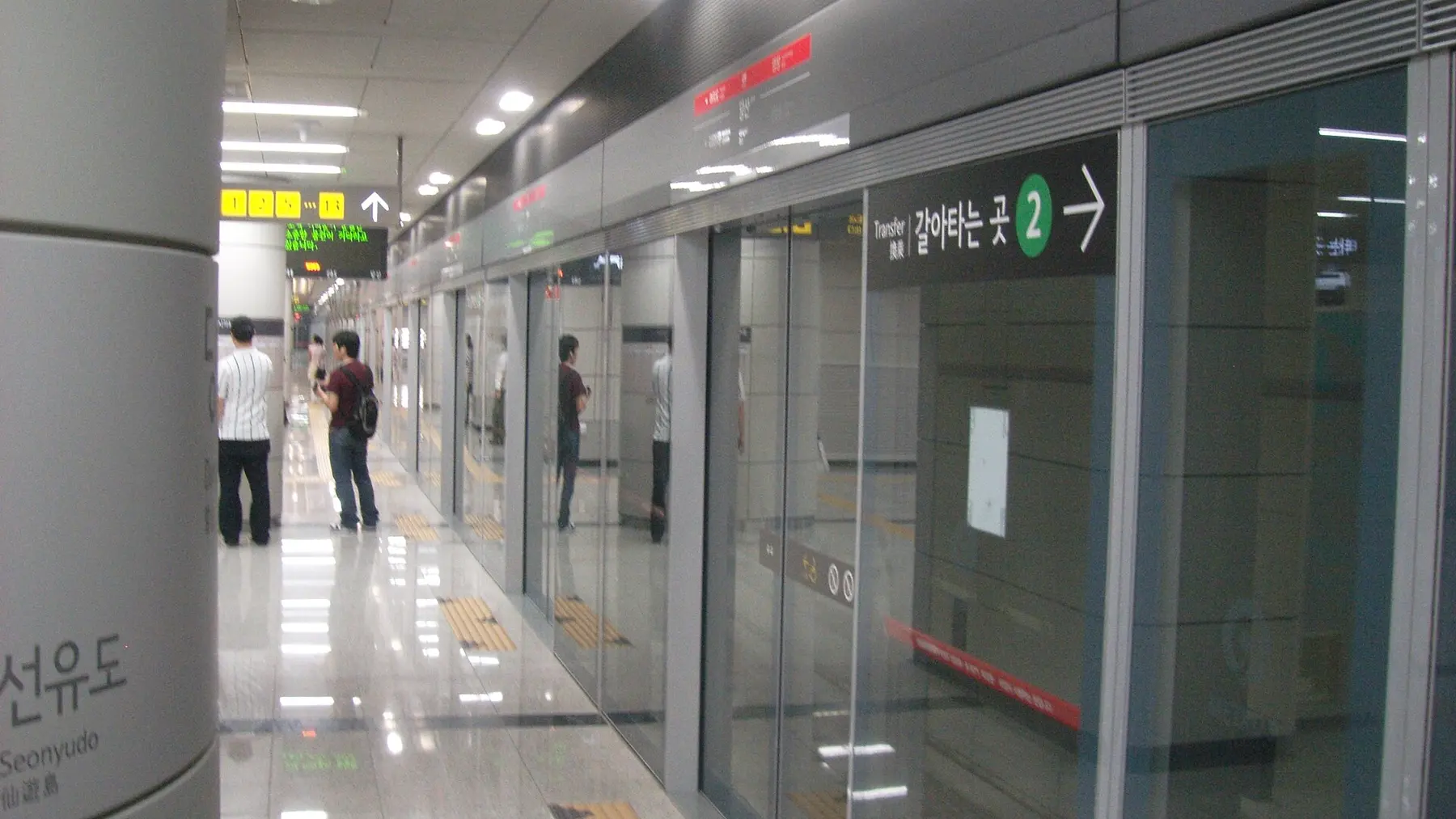
A Seoul subway train arriving at an underground platform
Photo by 배재덕 · CC BY-SA 3.0

01 · The quick take · Essentials

Korea by Public Transport: A First-Trip Playbook

LocationKorea
Fuller guide16 min read
PlanThree separate travel legs

Airport rail, one Seoul transfer, one KTX: learn those three journeys and the network starts to make sense. The trick is knowing what to do before you reach the gate.

Tell me moreThe fuller guide · 16 min readHide the fuller guideReturn to the quick take

02 · The guide

The fuller picture.

Learn three journeys and Korea's transport network gets much less intimidating: the airport ride, a city transfer and the KTX between cities. The useful details are the card, the correct station and the last walk to your hotel. This guide explains each, followed by a practice plan. Saving four minutes is rarely worth hauling a suitcase through an extra transfer.

01

Choose one card system

Keep the card decision simple: a standard rechargeable Tmoney or EZL card suits most visitors using subways and city buses. Buy one at the airport, convenience store, or designated machine, load a modest cash balance, and top up as needed. Keep the card away from other contactless cards when tapping.

Seoul’s Climate Card offers short-term visitor passes and can be good value for intensive travel within its coverage area. It is not automatically the best choice for airport segments or trips outside Seoul, so compare the current coverage with your actual itinerary before buying.

02

Plan the whole path, including exits

Compare the whole journey in Naver Map or KakaoMap, including the part you will walk. Look beyond the fastest arrival time: count transfers, inspect walking distance, and note the station exit number. A route with one fewer transfer is often easier with luggage even if it takes several minutes longer.

Large stations can involve long internal walks. If accessibility matters, check for elevator icons and allow extra time. Take a screenshot of the final walking segment before going underground, where GPS can drift.

03

Tap correctly and transfer calmly

On the subway, make two taps part of the habit: one at entry and one at exit. On city buses, tap when boarding and again before alighting so the system calculates the fare and any transfer discount. Enter through the front unless local practice clearly indicates otherwise, and move inside rather than stopping by the driver.

Subway cars have priority seating and designated spaces; follow signs and local cues. During rush hour, let passengers exit before boarding and avoid large luggage when you can. Many city buses are cashless, which makes a transport card more than a convenience.

04

Handle the airport by destination

Choose the airport train by your destination: AREX Express runs nonstop from Incheon to Seoul Station, while the all-stop service reaches intermediate stations including the Hongdae area. Airport limousine buses may be easier for hotels near a direct stop, especially with large bags or late arrival. Confirm the terminal, last departure, and walking route from the stop.

On departure day, work backward from check-in time and add margin for the hotel-to-station walk, transfers, and terminal navigation. Seoul Station is not the right interchange for every traveler simply because the express train starts there.

05

Use intercity rail as a separate system

Treat KTX as a reserved intercity journey: book through LetsKorail or another official Korail channel, especially for Friday evenings, Sundays and holidays. Confirm the station name: Seoul has multiple intercity terminals, and some cities have separate KTX and downtown stations.

Arrive 20 to 30 minutes early the first time. Korean trains do not require airport-style security, but finding the platform, carriage position, food, and restrooms takes time. Keep the train number, departure time, car, and seat together in a screenshot.

Check before you go

Official links and live information

Details last checked September 25, 2026. Entry rules, schedules, prices, transport coverage, and operating hours can change, so verify time-sensitive details before committing time or money.
Go deeperThe complete, copyable planHide the detailed planReturn to the fuller guide

The deep dive · Three separate travel legs

Three Rides That Teach You Korea's Transport

Learn the system by doing three useful journeys: airport to city, across Seoul, then a reserved train to Busan. Follow them in order on a Seoul–Busan trip. Substitute your own hotel station while keeping the same ticket, exit, and tap checks.

StartIncheon International Airport
FinishBusan Station
AllowThree separate travel legs

Before you leave

Set up the day.

  • Install Naver Map and save your hotel, Gyeongbokgung Station, Seoul Station, Busan Station, and both airport terminal names.
  • Get one rechargeable Tmoney or EZL card and a modest cash balance. The Express AREX and intercity KTX use separate tickets; do not assume the transit card itself reserves those seats.
  • Reserve a KTX seat through LetsKorail or an official Korail channel when dates are firm, especially for holidays and weekend peaks.

Follow the route

Your plan, in order.

Times are suggested planning anchors. Copy the route, then adjust it for your date, opening hours, and pace.

  1. Ride 1 · airport
    01

    Incheon Airport rail station

    Start with the terminal you actually landed at, then follow the Airport Railroad signs. Search your hotel's exact address. Take the all-stop AREX when an intermediate station such as Hongik University is the easiest exit; take the nonstop Express to Seoul Station when that is your best connection. Buy the appropriate ticket at the official machine or counter.

  2. Ride 1 · city exit
    02

    Hotel-side station exit

    Follow your map app's exit number, not just the station name. Large stations can add several minutes of walking. If carrying a suitcase, look for an elevator route. Once outside, confirm the Korean hotel address and street direction before moving.

  3. Ride 2 · subway
    03

    Hotel → Gyeongbokgung Station

    Map search: 경복궁역

    Use a regular transit card at the entry gate and again at the exit gate. Check the line direction and destination station on the platform. If the map suggests one simple transfer, follow its platform signs and keep your card accessible.

  4. Ride 2 · city bus
    04

    One short surface leg

    Choose a short bus segment in Naver Map to a neighborhood stop when one naturally fits your day. Queue at the displayed stop, check the bus number and direction, tap on when boarding and tap off before alighting. The second tap matters for correct distance and transfer calculation.

  5. Ride 3 · reserve
    05

    Seoul → Busan KTX

    Map search: 서울역

    Confirm the departure station printed on the booking; Seoul, Yongsan, and Suseo are not interchangeable. Save the train number, car, seat, date, and QR or ticket image. Do not plan a museum immediately before departure.

  6. Ride 3 · depart
    06

    KTX platform

    Reach the station roughly 20–30 minutes early for your first intercity ride. Find the correct platform and carriage position on the signs, board with luggage you can handle, and take your reserved seat. On arrival at Busan Station, check the city-transit route to your hotel before leaving the building.

Make it your trip

Useful changes.

  • Seoul Climate Card may be economical for intensive Seoul travel, but verify short-term pass coverage before buying; it does not replace an intercity train reservation.
  • With mobility needs, check elevator and accessible-route information for each interchange and leave more margin.
  • A declined card or closed gate is a station-staff question, not a reason to force the gate.

Sources checked September 25, 2026

Verify before you go

Schedules, admission, train availability, restaurant hours, and weather can change. The sources below are the starting points for final checks. Route times are editorial estimates.