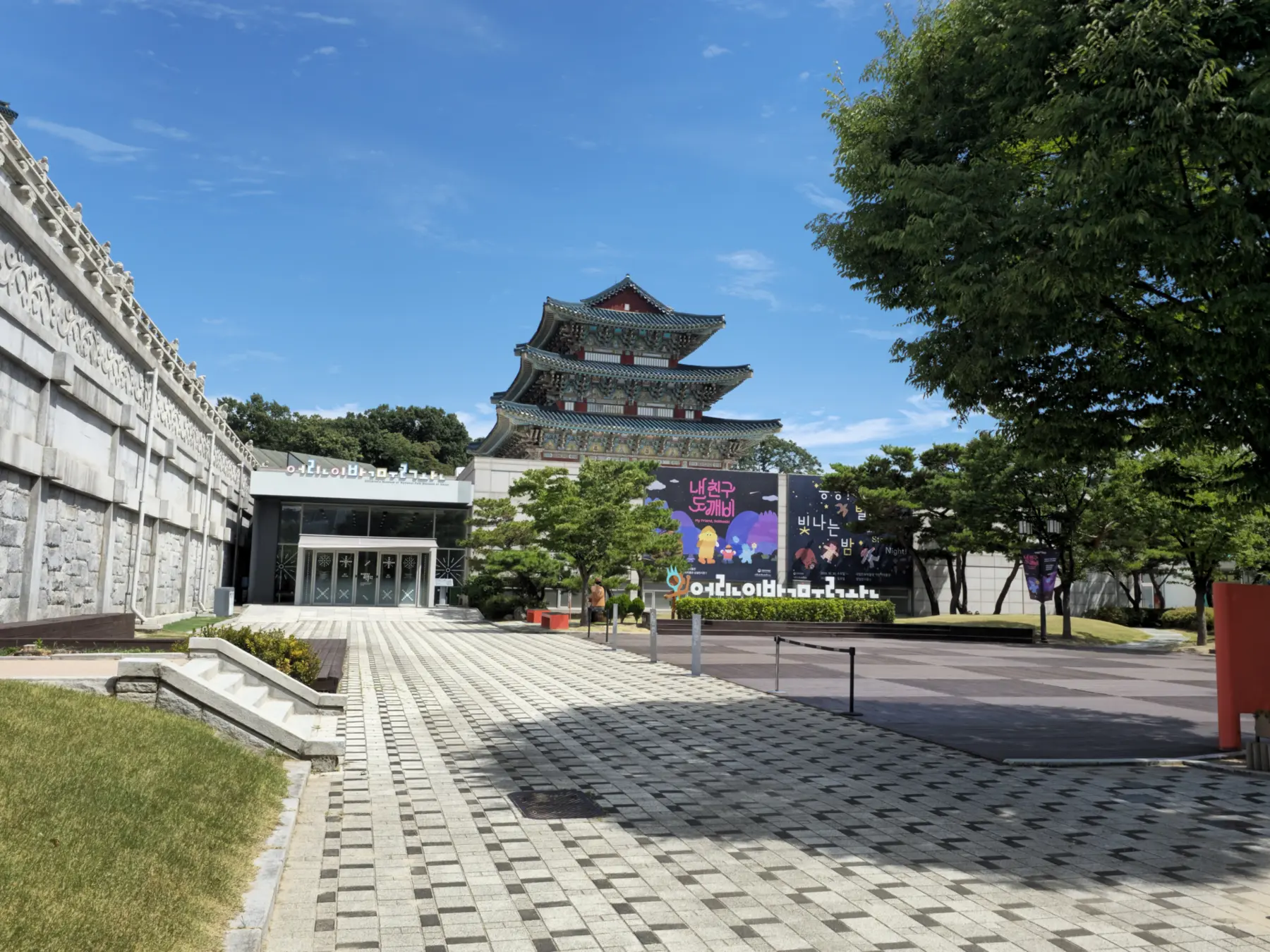
A good family day in Seoul is not the adult itinerary with a stroller attached. It starts with the child's sleep, meals and comfortable travel time, then adds one main experience and one genuinely optional extra. The city becomes much easier when the hotel works as a midday base, the station route includes the elevator and dinner begins before everyone is exhausted.
01
Build the day around the things that cannot move
Begin with the child's usual wake time, nap window, meals and bedtime. These are the fixed points. Attractions, cafés and shopping fit around them. If the child naps only in a quiet room, a hotel return is part of the itinerary rather than lost sightseeing time.
Give the morning one purpose: a museum session, palace courtyard, aquarium or park. Eat nearby, then choose the nap plan. The afternoon can be a playground, a short neighborhood walk or nothing at all. Parents on Korea travel forums repeatedly ask how to manage strollers, naps and the return to the hotel; the practical answer is to reduce the number of crossings rather than move faster.
| Decision | Question to answer | Next action |
|---|---|---|
| Morning anchor | What is the one experience worth leaving for? | Book it if required and keep lunch nearby |
| Nap | Room, stroller or carrier? | Use only the method that already works for your child |
| Afternoon | How will everyone feel after the nap? | Keep one close, free or refundable option |
| Dinner | When does hunger become a meltdown? | Eat earlier and save the route back before sitting down |
02
Choose the hotel by daily friction, not the family label
A hotel can call itself family-friendly and still give you a room that barely fits the booked occupants, stroller and luggage. Enter every adult and child in the search, then confirm the maximum occupancy and the exact sleeping arrangement. A cot, bed rail, sofa bed and connecting room are separate requests; none should be assumed from a photograph.
Measure convenience from the door. Check for a step-free hotel entrance, lift access to the room and a usable route from the station elevator. A property five minutes from the nearest stairs may be less useful than one ten minutes from an elevator exit. If naps happen in the room, compare the midday return from the areas you will actually visit.
| Check | Why it matters | Ask the property |
|---|---|---|
| Occupancy and beds | A double room may not accept the whole family | Which beds are confirmed for every guest? |
| Cot or bed rail | Availability and age or weight limits vary | Is it confirmed for every night, and does it cost extra? |
| Floor space | An open stroller and luggage can block the walkway | What is the room size and can the stroller be stored safely? |
| Food setup | Milk, snacks and early breakfasts need a plan | Is there a usable fridge, kettle or microwave? |
| Laundry | A listed service may be expensive or off-site | Is there a guest washer and dryer, and when can it be used? |
| Sleep | One room may leave adults sitting in darkness | Are blackout curtains, a quiet room or a separated sleeping area available? |
03
Bring the stroller that makes difficult moments smaller
For most city days, a light stroller that folds with a simple motion is easier than a large travel system. Test it with the child, bag and rain cover before flying. Do not hang heavy bags from the handle where they can tip the stroller. Keep the essentials in one small bag that can move with the child if you must fold the stroller.
A carrier can help on steps, narrow entrances and a short taxi transfer, but only if both adult and child already tolerate it. Bringing two unfamiliar mobility systems does not create flexibility. It creates two things to carry.
For each important stop, check the last part of the route as well as the station. A map pin can hide a staircase, steep lane or entrance on the other side of a large building. Seoul Danurim lets you filter places for accessible entryways, toilets, stroller rental, nursing rooms and changing stations. Treat each listing as a facility check, not a promise that the complete journey is step-free.
04
Use the subway when the complete route works
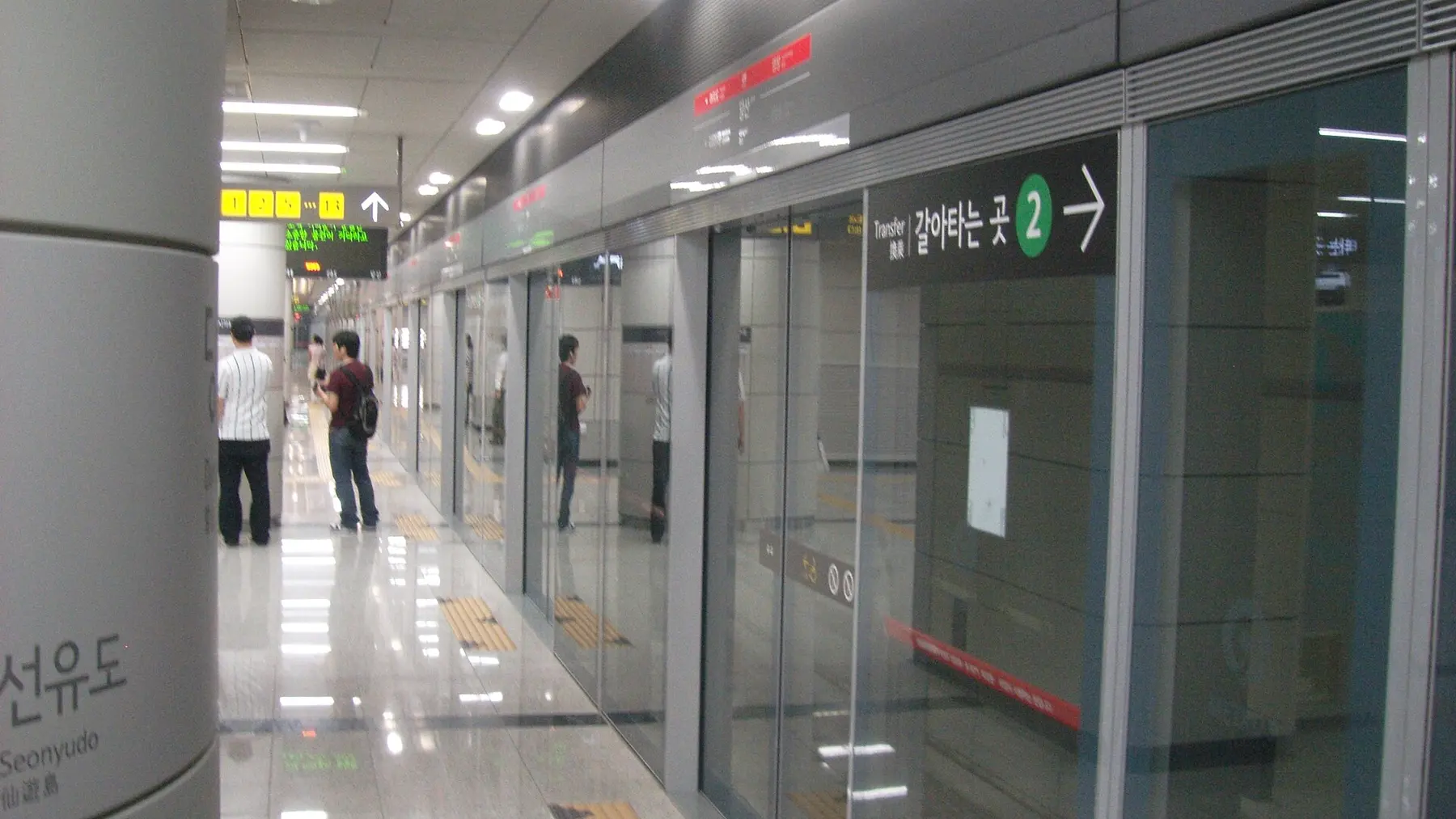
Seoul publishes a station-by-station accessibility-facilities table, including elevators and accessible restrooms. Check both the origin and destination, then follow the elevator signs even when that route is longer. At a large interchange, the lift route can involve a detour and a wait. Add that time before you promise a timed museum entry or restaurant booking.
Travel outside the busiest commuting periods when you can. A compact stroller is easier to position, but a packed train may still be uncomfortable. If the next train is crowded, wait for another or change the plan. A bus can be useful for a direct surface journey, yet boarding space, traffic and the need to manage a folded stroller can make it less predictable for a first visit.
Each child using a discounted Tmoney or EZL fare needs the correct age category. VISITKOREA says travelers under 18 must register their date of birth at a convenience store to receive the public-transport discount. Ask staff to set the card correctly before the first ride rather than trying to fix the fare at a gate.
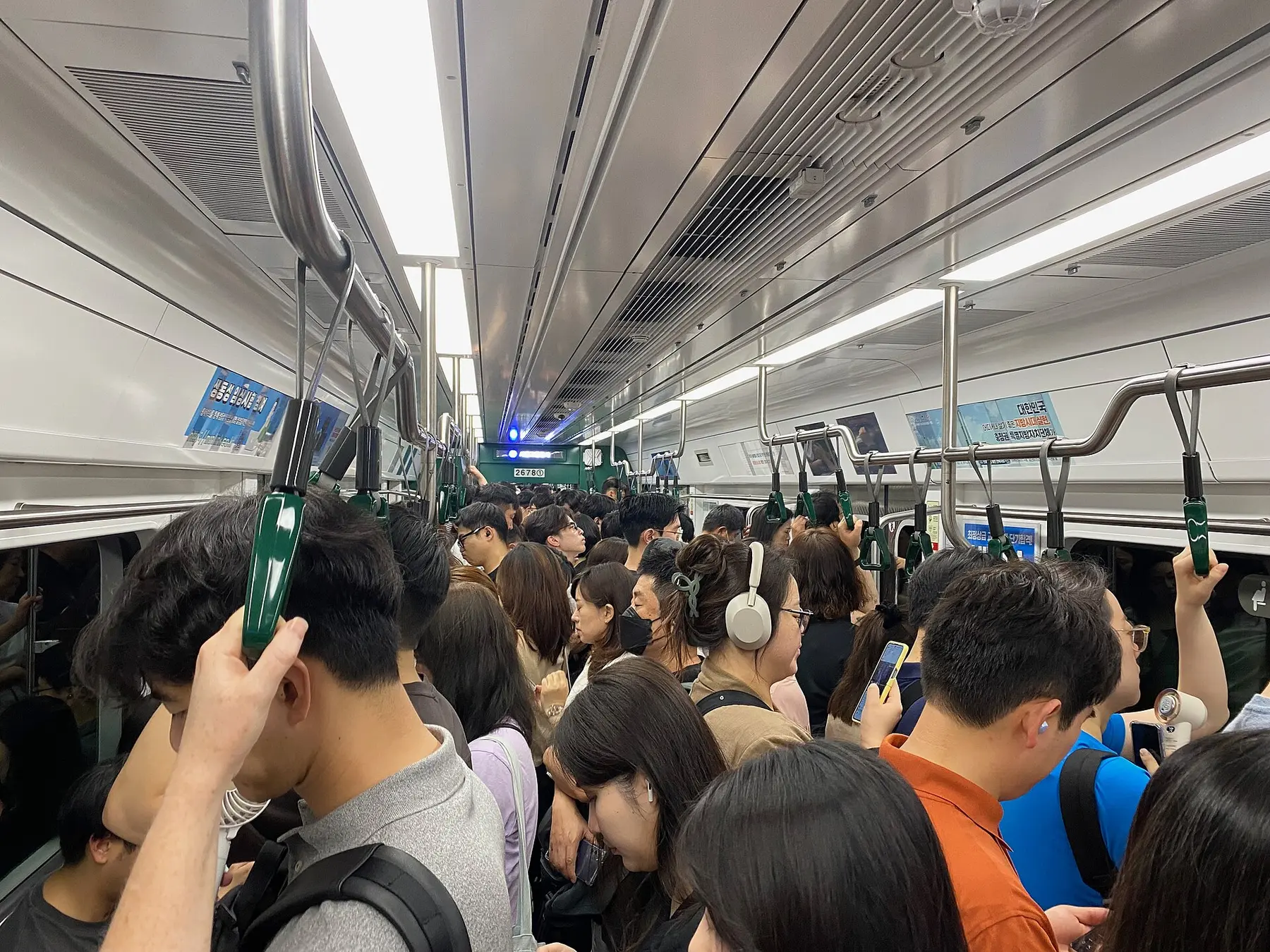
A Seoul subway car at 8:32 a.m. in August 2024. Crowd levels vary, but traveling outside the busiest commute can make a family journey easier.
05
Choose the nap plan before leaving the hotel
Use a hotel nap if the child needs darkness, quiet or a proper bed. The morning area should then be close enough that the return is realistic. A direct 20-minute ride can work; two transfers, an elevator hunt and a steep final block can turn the nap into the hardest part of the day.
Use a stroller nap only if it is already normal for your child. Save a flat park, quiet museum courtyard or mall seating area near the morning stop, and keep one adult free to walk while the other rests. Do not schedule a timed attraction during a nap you hope will happen.
This example is a planning template, not a prescription. Move every block to match your child's routine.
| Time | Plan | Why it works |
|---|---|---|
| 09:30 | One booked or weather-proof morning activity | Uses the child's freshest part of the day |
| 11:30 | Lunch in the same area | Avoids traveling while hungry |
| 13:00 | Hotel or familiar on-the-go nap | Protects the routine instead of testing it |
| 15:30 | Nearby park, playground or short walk | Easy to shorten without losing money |
| 17:30 | Early dinner near the hotel | Leaves a simple route home before bedtime |
06
Make the next meal easy before anyone is hungry
Choose lunch before the morning activity ends. Look for table seating, a clear menu and one mild dish the child is likely to eat. Rice, plain noodles, egg dishes, dumplings or soup can be useful starting points, but ingredients and seasoning vary. Ask instead of assuming that a pale-looking dish is mild.
High chairs, children's cutlery and space for a stroller vary by restaurant. Call or ask at the door, especially in small barbecue shops and narrow market stalls. Keep a familiar snack and water in the day bag, then use a convenience store or supermarket to replace them. The backup snack is there to reach the meal, not to make every restaurant work.
Useful questions are: 아기의자가 있나요? for 'Do you have a high chair?' and 아이가 먹을 수 있는 안 매운 음식이 있나요? for 'Do you have a non-spicy dish a child can eat?' Show the Korean text rather than relying on pronunciation.
07
Use family facilities as anchors, not lucky discoveries
Before a long outing, save one place with a nursing room or changing station and one indoor fallback. Seoul Danurim's infant-and-toddler filters are useful for narrowing the search. Department stores, museums, large malls and major attractions may have family facilities, but the exact location, hours and access rules should be checked on the venue page.
Reservations can be the hidden difficulty. The National Folk Museum of Korea states that its Children's Museum requires advance reservation and that the online service is Korean-only; its English visitor page tells people who cannot complete the online process to visit the information desk. This is a good example of why a free attraction can still need preparation.
Do not build a whole day around an unconfirmed stroller rental, nursing room or child seat. If a facility is essential, contact the venue or hotel and record the answer.
08
Know what you will drop when the day changes
Choose the first thing to remove before leaving the hotel. It should be the distant café, second district or evening shopping stop, not lunch or the route home. A skipped attraction is cheaper than a tired child and two adults crossing Seoul because the schedule says they should.
If the stroller route fails, step aside, settle the child and decide between the signed elevator route, a short surface ride or returning to the hotel. If the nap fails, bring dinner forward. If rain or heat changes the park plan, use the indoor backup and finish earlier. The companion checklist turns these decisions into a copyable routine.
Check before you go
Official links and live information
Details last checked October 10, 2026. Entry rules, schedules, prices, transport coverage, and operating hours can change, so verify time-sensitive details before committing time or money.
- Seoul Metropolitan Government: subway accessibility facilities by station
- Seoul Danurim: accessible tourism and infant-toddler facility search
- Korea Tourism Organization: transportation cards and age registration
- National Folk Museum of Korea: Children's Museum visitor and reservation information
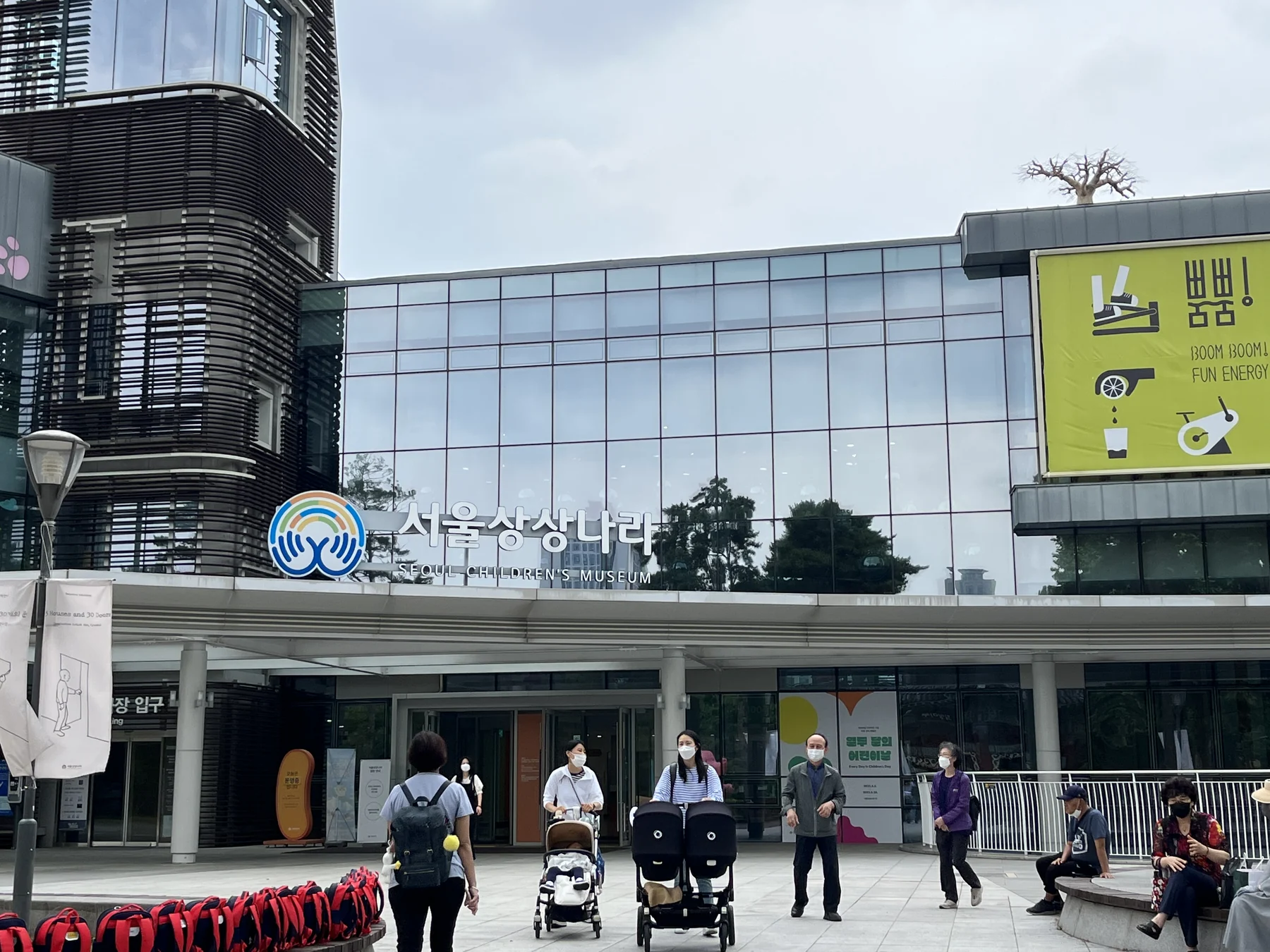
- Seoul Children's Museum: facilities and exhibitions