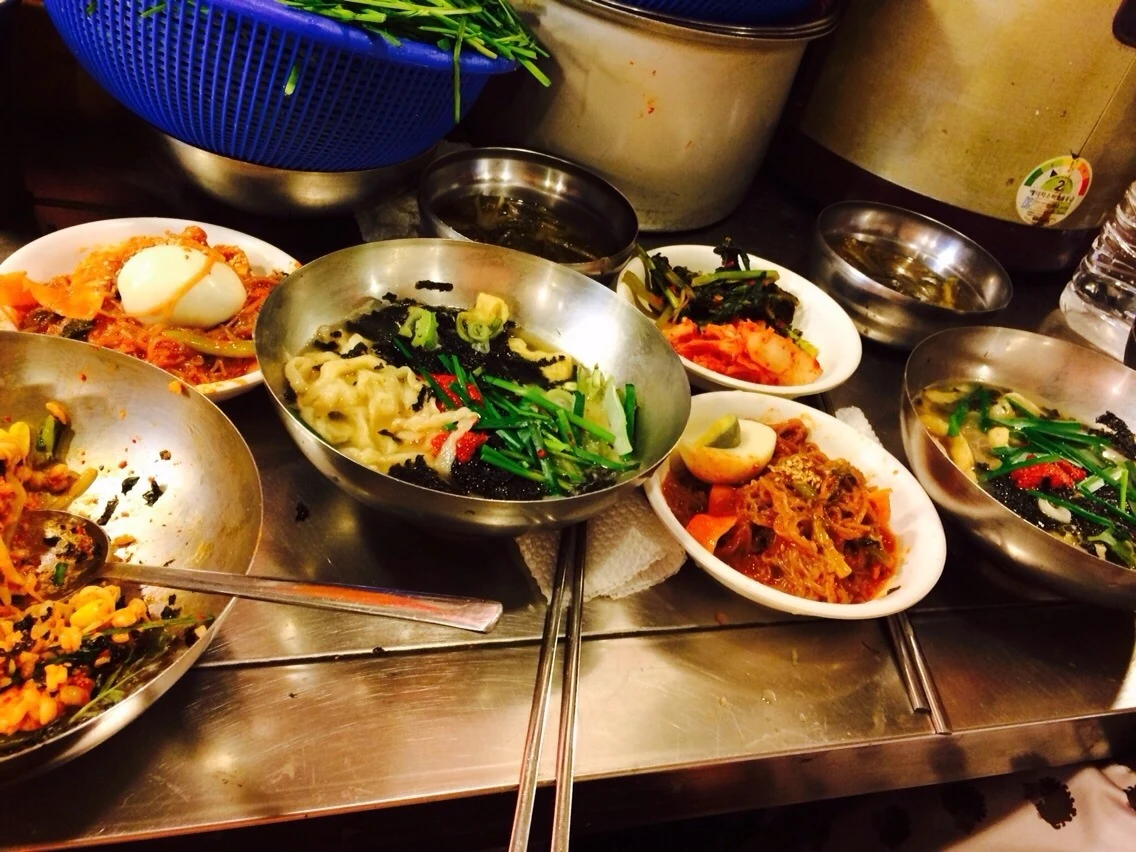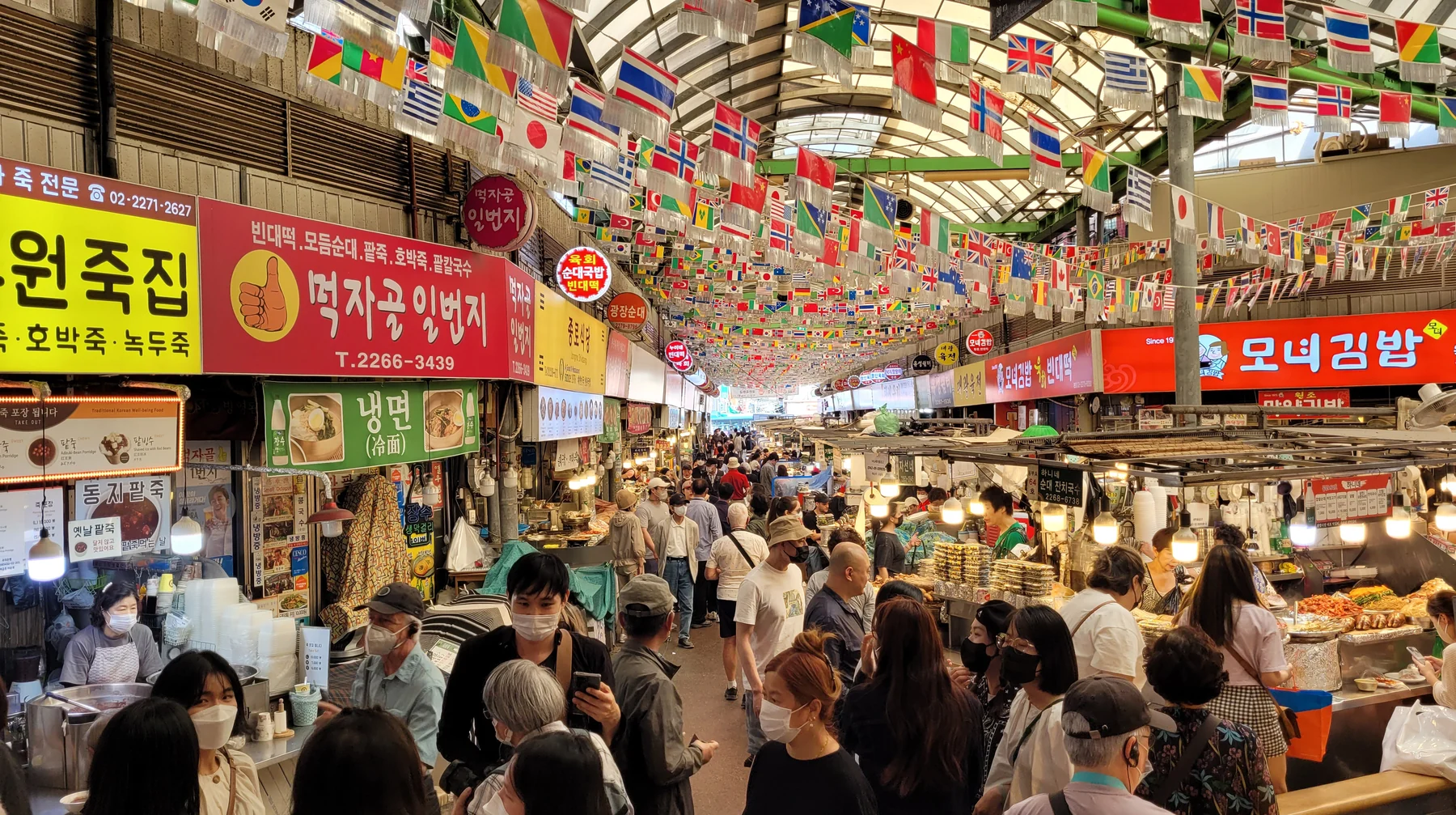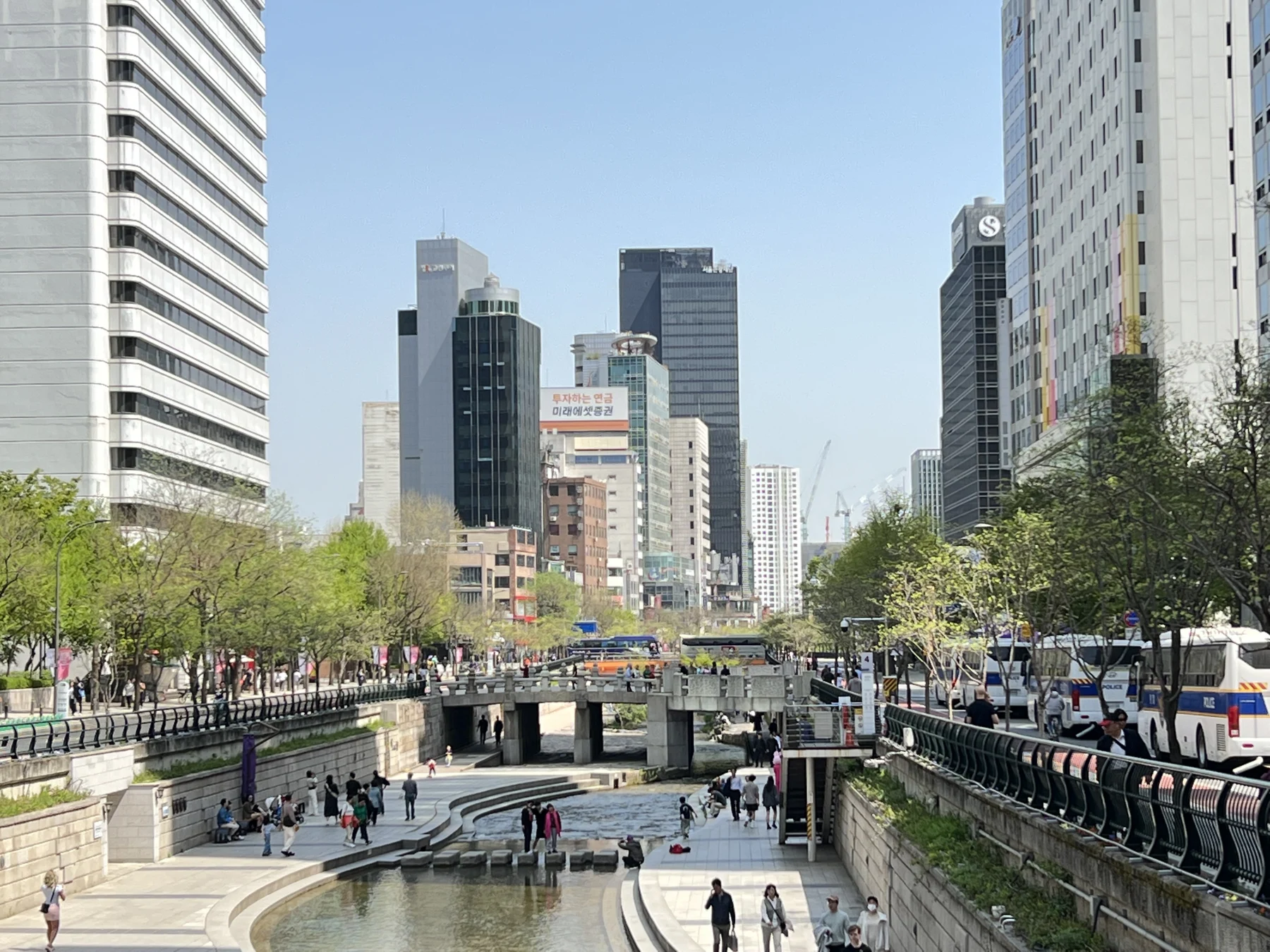
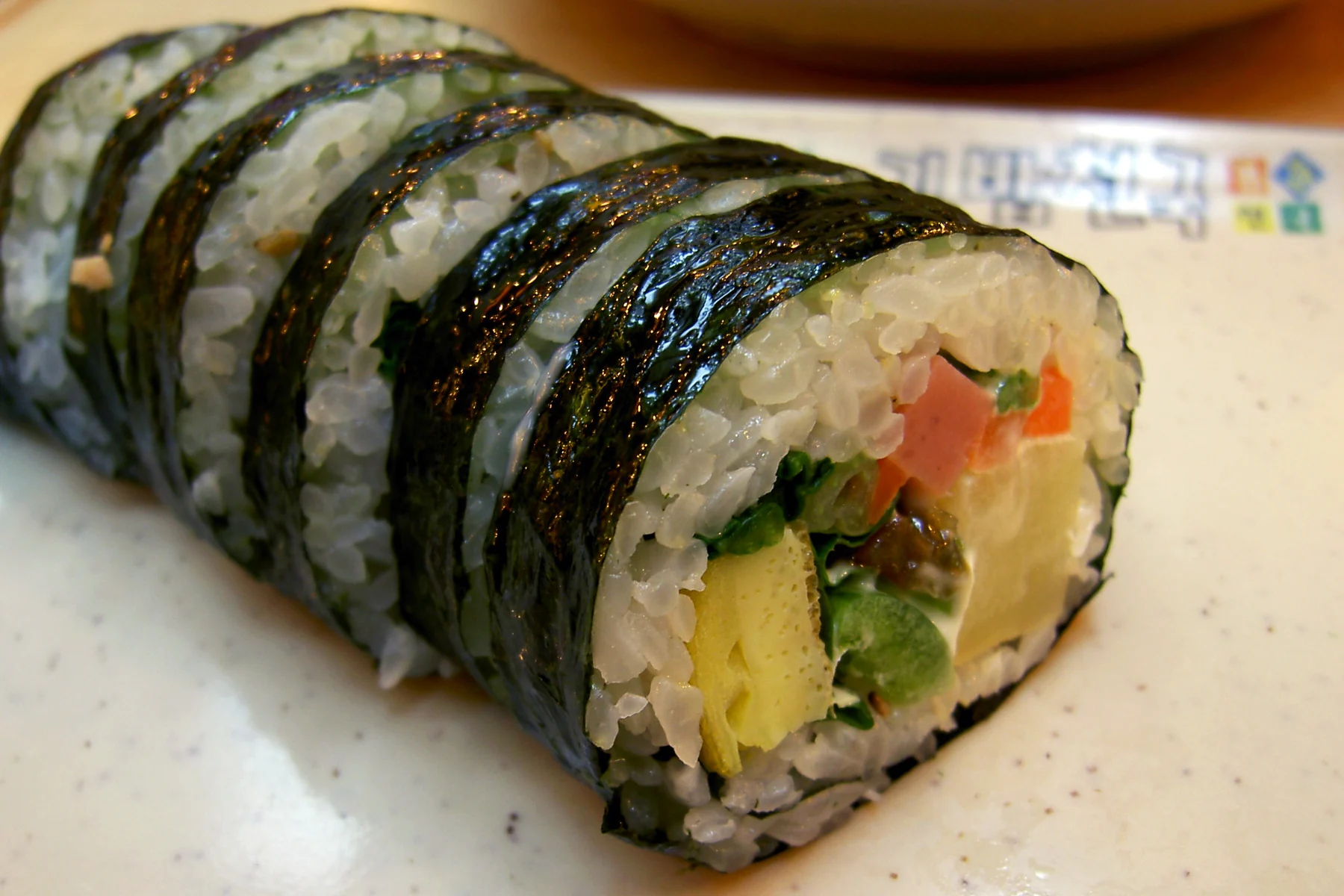
A bowl of soup, a plate of rice rolls, a table grill: all can be part of a Seoul food trip. When you are eating alone, the useful question is how the restaurant serves the dish. Can one guest sit down, can you order one portion, and what will the complete meal cost? Ask those questions before taking a seat, then give yourself time to enjoy lunch.
01
Choose the meal format first
For an uncomplicated first lunch, look for a dish served as an individual bowl or plate: gimbap (seaweed rice rolls), bibimbap (rice with mixed toppings), kalguksu (knife-cut noodle soup), or gomtang (beef soup). These are useful formats to investigate, not a promise about every restaurant serving them.
A photograph of a large pot or a table grill is your cue to ask about quantities. The same word, jjigae, can describe a stew served in one bowl or a larger shared pot. A grill menu may price meat by portion and require several portions for the first order.
My suggested starting point is one complete meal you actually want, close to the neighborhood you are exploring. You do not need to turn a simple lunch into a journey across Seoul. Keep the more elaborate meal for a place whose solo seating and serving rules you have checked.
02
One guest and one portion are different
Ask whether you can dine alone first. Then point to the dish and ask whether one portion is available. Paying for two portions is an option only if the restaurant accepts a solo guest and you want that quantity. It does not override a seating rule.
Read 1인분 as one portion, 2인분 as two portions, and 2인분 이상 as at least two portions. A menu marked 2인 이상 refers to at least two people. Those last two conditions are different, so ask staff to clarify which applies. Small print beside a price matters as much as the number.
For example, suppose a grill lists meat at ₩18,000 per portion with a two-portion minimum. The meat alone costs ₩36,000, even for one diner, if solo seating is allowed. Rice, drinks and any extra dishes may add to that. These are illustrative figures, not a quote from a named restaurant.
If you want a lighter meal, ask whether a one-person set or lunch menu is available at that time. If the answer is no, use your alternative. A large order should be something you choose because you want it.
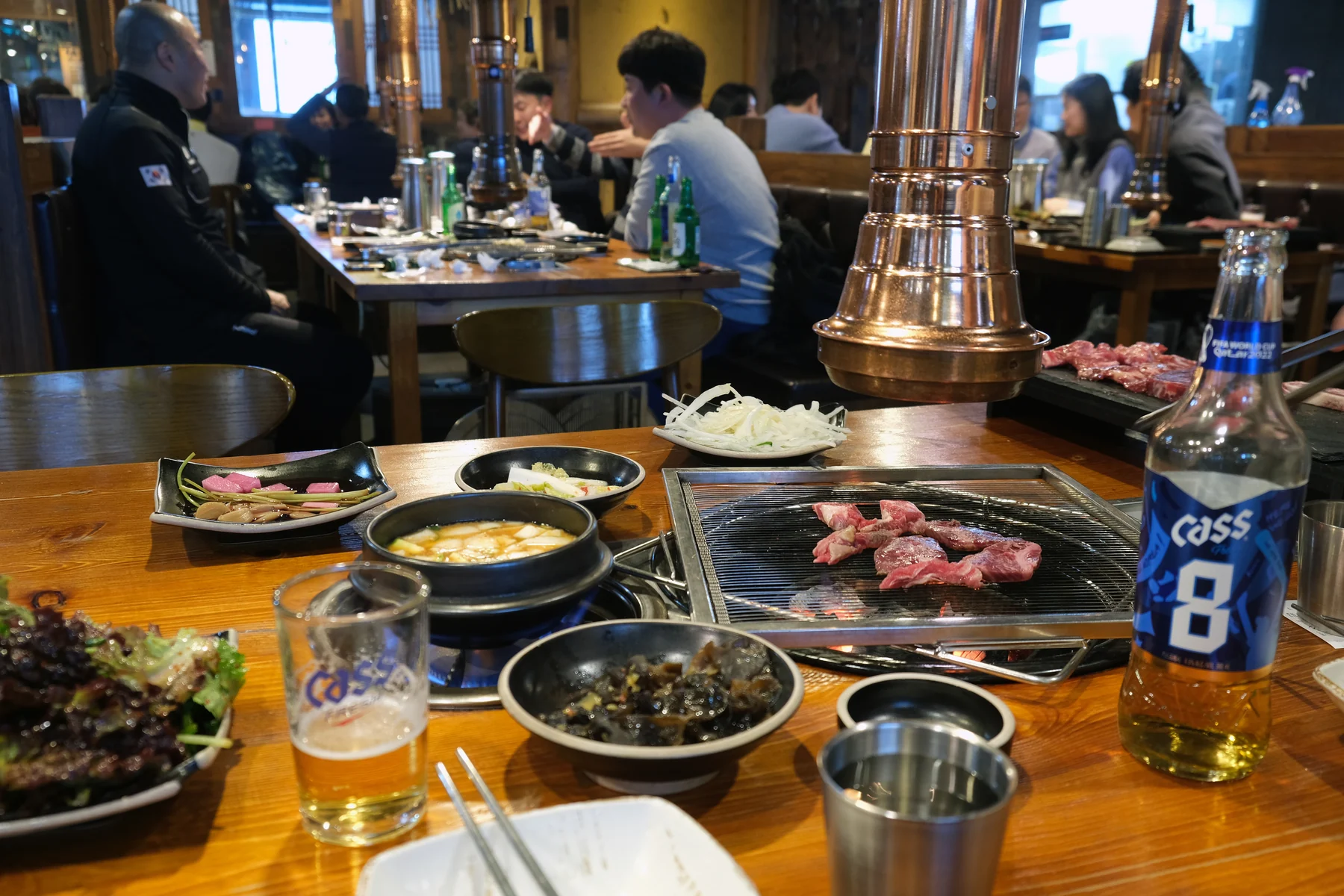
A tabletop barbecue in Seoul, photographed December 3, 2022. Archive dining scene illustrating the grill format, with no claim about this restaurant's solo seating or minimum order.
03
Save these phrases before you are hungry
You can show the Korean text on your phone. Start with the seating question, then point at the menu item. Asking one clear question at a time is easier than explaining your entire lunch plan.
The word honbap, written 혼밥, means eating alone. It can help you search for ideas, but a search result or review is only a lead. Check the exact branch, current menu and staff response.
04
Three useful Seoul starting points
These are source-based starting points, not accounts of meals eaten by this writer. Official listings were checked on October 7, 2026. Seating availability, kitchen hours and prices still need a same-day check. Choose the option near your existing plans.
In Seongsu, Baune Najugomtang (바우네나주곰탕) is explicitly described by the Korea Tourism Organization as suitable for eating alone. Its specialty is beef bone soup. The listed address is 서울특별시 성동구 연무장7길 7-1; hours are 10:00–23:00, with last orders at 22:30. The listing gives no price, so check the menu before ordering. This is a soup option for a Seongsu day, rather than a reason to cross town.
Also in Seongsu, Somunnan Seongsu Gamjatang (소문난성수감자탕) has designated solo seats according to Visit Seoul. Gamjatang is a pork-bone soup or stew; ask staff which serving is intended for one person. The listing gives 연무장길 45 as the address and daily 24-hour operation. Tell staff you are alone and ask about the solo counter; do not assume you should bypass other guests. A seat being designated for one person does not guarantee that it is free when you arrive.
In Myeongdong, Myeongdong Chungmu Gimbap (명동충무김밥) is a menu lead rather than a verified solo-seating promise. Visit Seoul lists its Chungmu gimbap set at ₩11,000: plain seaweed rice rolls with seasoned squid and pickled radish. Confirm that one diner can order one set. The address is 명동10길 16; listed hours are 09:30–22:00 on weekdays and 09:00–22:00 on weekends, with closures for Korean New Year and Chuseok. The squid makes this unsuitable for someone avoiding seafood.
05
Follow the ordering system in front of you
At the entrance, say or show that you are one guest and wait for seating guidance. If there is a kiosk or table tablet, look for a language setting. Pointing at the menu and asking for help is a sensible next step when the screen is unclear.
Some restaurants use self-service for water and side dishes. Utensils may be in a drawer under the table, and a call button may summon staff. These are features to look for, not things every table has. Follow the signs or ask rather than opening unrelated cupboards.
Banchan means the small side dishes accompanying a meal. Their appearance does not mean you have accidentally ordered several mains. Confirm what comes with your dish, especially whether rice is included, and ask before adding separately priced extras.
When ordering, confirm whether payment happens now or after eating. When finished, ask to pay and follow staff guidance. Ordinary restaurant dining does not require a tip. Check the final bill against the order you agreed to.
06
Make a fallback part of the meal
Save a second option within the area before leaving your accommodation. For a Seongsu outing, that could be a soup restaurant plus a separate individual-meal option whose hours you have checked. Choose by what you would enjoy eating, then compare the actual walk from your next stop.
If your first choice refuses solo seating, requires more food than you want or has a queue you would rather avoid, move on. Takeaway is another question you can ask, but availability and minimum quantities still depend on the business.
For dietary needs, check the ingredients and broth as well as the dish name. A vegetable-filled rice roll or tofu stew can contain animal ingredients. Bring a Korean description of your restriction and confirm it with staff; menu photographs cannot settle that question.
07
Try the decision before the doorway
Imagine you are in Myeongdong and want a small lunch. You find a ₩11,000 Chungmu gimbap set in the official listing. First check whether the seafood and spice suit you. At the entrance, ask whether one guest can sit and whether one set can be ordered. Confirm the total, then decide. You have checked the actual meal rather than relying on the shape of the rice rolls.
Now imagine you want barbecue. The posted price is per meat portion, with a minimum of two. Ask about solo seating before calculating the bill. If the restaurant agrees, compare the complete order with your appetite and budget. If it does not fit, choose a confirmed one-person meal or another barbecue venue with an explicit solo option.
The companion checklist keeps those questions in order. Save it once, then spend the rest of lunch thinking about the food.
Check before you go
Official links and live information
Details last checked October 7, 2026. Entry rules, schedules, prices, transport coverage, and operating hours can change, so verify time-sensitive details before committing time or money.
- Baune Najugomtang: KTO listing explicitly describing solo dining
- Somunnan Seongsu Gamjatang: Visit Seoul solo seats, address and hours
- Myeongdong Chungmu Gimbap: Visit Seoul menu price and opening information
- KTO: restaurant service, self-service and table utensils
- KTO: Korean table settings and side dishes