A bowl of stew, a roll of gimbap or a plate of spicy pork can answer the most useful food question on a trip to Korea: what should I eat for an ordinary lunch? These ten familiar dishes give you a starting point, with Korean menu names and advice on choosing a meal.
01
Everyday meals in Korea
Korean food makes more sense when you look at the whole meal. Rice, a main dish and small side dishes often share the table, so a bowl of stew can be the center of lunch rather than a starter. Other meals arrive as a single bowl or a quick takeaway roll.
This is a selection of everyday favorites, without a ranked order. Preferences vary between people, households and regions. The list includes home-style dishes, casual restaurant meals and snack-shop food so you can use it across an actual trip.
02
1 Kimchi jjigae 김치찌개
Kimchi stew. Well-fermented kimchi gives this stew its tangy depth, while chili adds heat. Pork and tofu are familiar additions, though tuna and other versions also exist. Rice provides a welcome balance to the broth.
Choose it when you want something warming with a strong, sour-savory flavor. Check whether the restaurant serves individual portions or a shared pot, and whether rice is included.
03
2 Doenjang jjigae 된장찌개
Soybean paste stew. Fermented soybean paste gives doenjang jjigae its earthy, savory character. Tofu and vegetables such as zucchini are familiar ingredients; seafood, meat and broth choices vary.
This is my suggested starting point if fermented flavors appeal to you more than kimchi's sharpness. It can still contain chili, and a vegetable-filled bowl is not necessarily vegetarian. Ask about the stock and other ingredients.
04
3 Jeyuk bokkeum 제육볶음
Spicy stir-fried pork. Thin pork slices meet a red chili seasoning that can be sweet, savory and hot. With rice, it makes a substantial meal. Some servings include lettuce for wrapping, but the accompaniments depend on the restaurant.
Choose it when you want a meat-based lunch with plenty of flavor. On menus, look for 제육볶음 or a 제육 set meal. Check the serving size before ordering for one.
05
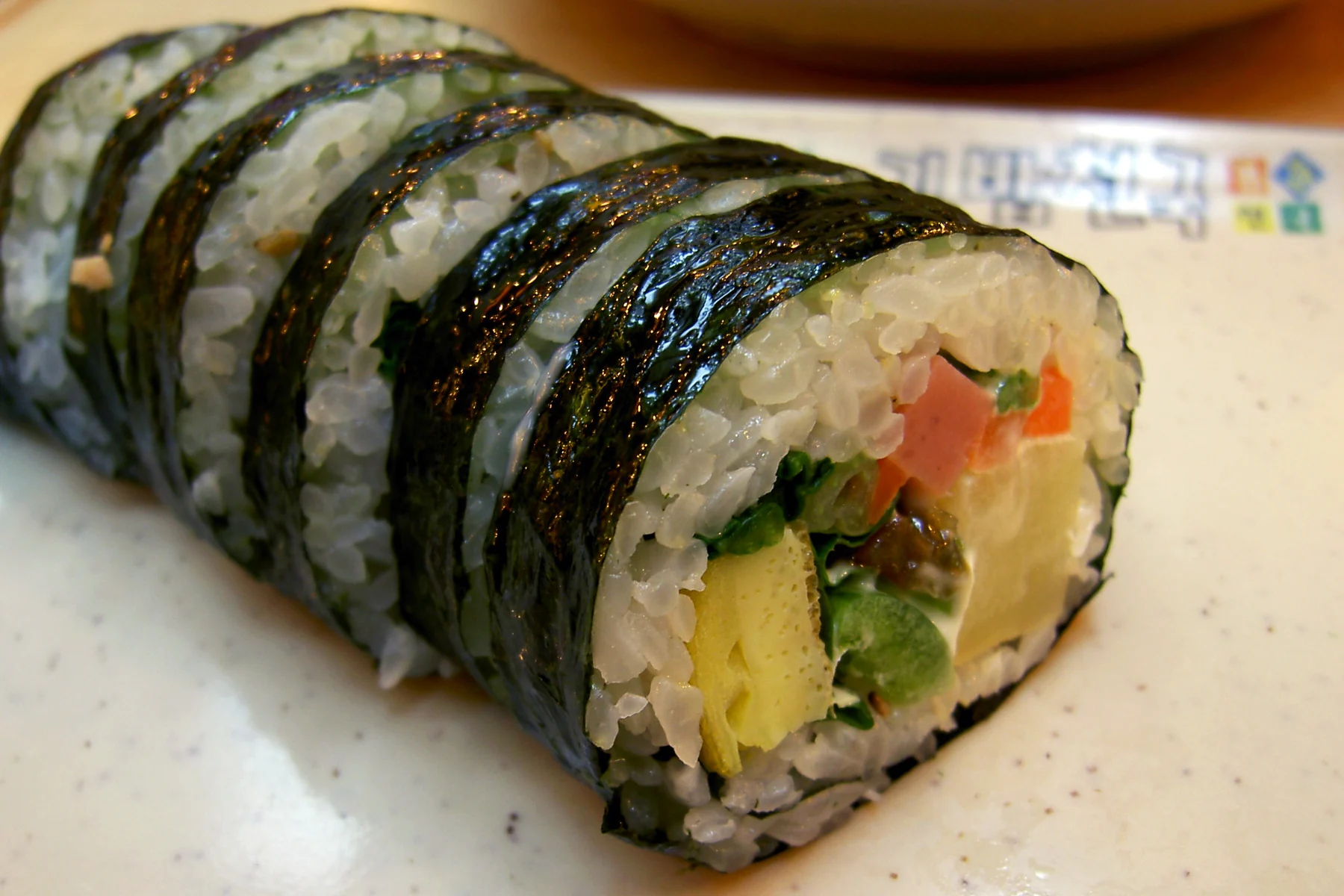
4 Gimbap 김밥
Seaweed rice rolls. Rice and fillings are rolled in seaweed and sliced into bite-size pieces. Versions can contain vegetables, egg, meat, tuna or other fillings, so gimbap describes a format rather than one fixed combination.
It is an easy choice for a quick meal or takeaway. The Korea Tourism Organization's guide describes varieties including tuna and pork-cutlet rolls. Read the filling name rather than assuming that a vegetable-heavy roll contains no animal ingredients.
06
5 Bibimbap 비빔밥
Mixed rice with toppings. Vegetables, rice and seasoning come together in one bowl, often with egg or meat. Mixing distributes the flavors through the rice. Dolsot bibimbap uses a hot stone bowl, which can create a crisp layer at the bottom.
Choose it when you want several textures in one meal. If the sauce comes separately, add a little first and adjust. For a vegetarian version, confirm the toppings and sauces rather than relying on the vegetables you can see.
07
6 Sundubu jjigae 순두부찌개
Soft tofu stew. Silky tofu is the defining ingredient. Red, chili-seasoned versions may contain seafood, pork or other additions, sometimes with an egg. The tofu's softness gives the meal a different feel from a firmer-tofu stew.
Choose it for a hot, spoonable meal with rice. Pick the named version carefully: 해물 indicates seafood, while 고기 indicates meat. The presence of tofu alone tells you little about the broth.
08
7 Kimchi bokkeumbap 김치볶음밥
Kimchi fried rice. Chopped kimchi is fried with rice, bringing tang, heat and savory flavor into the grains. Gim, sesame oil or an egg can finish the dish, while meat additions vary.
It is a useful option when you want a rice meal without a separate stew. Check the description for ham, pork or tuna if those ingredients matter to you. Kimchi itself can contain seafood seasonings.
09
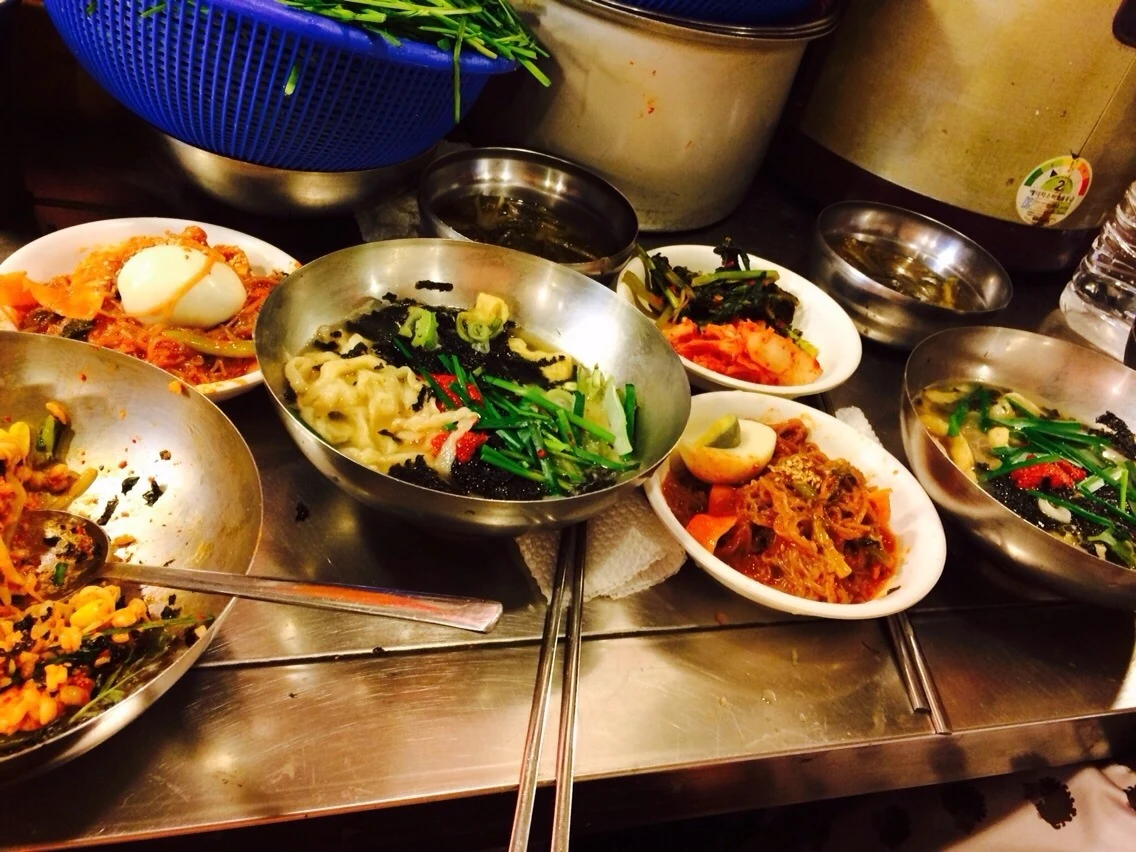
8 Kalguksu 칼국수
Knife-cut noodle soup. Wheat noodles are cut from rolled dough and served in broth. The stock and toppings depend on the version. Chicken kalguksu, for example, brings noodles and chicken together in one warming bowl.
Choose it when you want noodle soup. Look beyond the word kalguksu to the named variety, especially if you are avoiding meat or shellfish. The bowl may be mild even when the kimchi served alongside it is hot.
10
9 Jjajangmyeon 짜장면
Noodles with black bean sauce. This Korean Chinese dish combines wheat noodles with a thick, dark sauce made using chunjang, vegetables and commonly pork. Its flavor leans savory and sweet rather than chili-hot.
Choose it for a substantial noodle meal when you want a break from red chili sauces. Mix the sauce through the noodles before eating. A dark sauce does not mean a meat-free dish.
11
10 Tteokbokki 떡볶이
Rice cakes in sauce. The familiar red version coats chewy rice cakes in a sweet, spicy sauce. Fish cakes are a common addition, and broth ingredients vary.
Tteokbokki belongs to casual snack-shop eating, so it fills a different role from a rice-and-stew meal. Pair it with gimbap if you want something more substantial. Do not judge the heat by the sweetness of the first bite.
12
Choosing your first meal
My suggested route through the list is simple: try gimbap for a quick lunch, a stew with rice for a sit-down meal, and a noodle dish on another day. That gives you variety without turning every meal into a checklist.
For tangy heat, start with kimchi jjigae. For earthy fermented flavor, try doenjang jjigae. For a meal centered on meat, choose jeyuk bokkeum. Jjajangmyeon is a useful option when you want noodles without a chili-led sauce.
Spice and ingredients vary by kitchen. Use these descriptions to choose a direction, then check the actual menu.
13
Ordering a meal
Keep the Korean name handy so you can match it to a menu or show it to staff. Before ordering, check whether the item is one person's meal or a shared portion, and whether rice comes with it.
Two useful phrases are 밥 포함인가요? for “Is rice included?” and 많이 매워요? for “Is it very spicy?” If you have a dietary restriction, explain the ingredient you need to avoid. A request to make a dish less spicy does not change its stock or hidden ingredients.
Check before you go
Dish references and ordering checks
Details last checked October 1, 2026. This is a selection of everyday favorites, without a ranked order. Recipes and restaurant preparations vary; confirm ingredients, spice and serving details when ordering.
- Everyday meals in Korea · Korea Tourism Organization
- 1 Kimchi jjigae 김치찌개 · Maangchi
- 2 Doenjang jjigae 된장찌개 · Maangchi
- 3 Jeyuk bokkeum 제육볶음 · Maangchi
- 4 Gimbap 김밥 · Korea Tourism Organization
- 5 Bibimbap 비빔밥 · Maangchi
- 6 Sundubu jjigae 순두부찌개 · Maangchi
- 7 Kimchi bokkeumbap 김치볶음밥 · Maangchi
- 8 Kalguksu 칼국수 · Maangchi
- 9 Jjajangmyeon 짜장면 · Maangchi
- 10 Tteokbokki 떡볶이 · Maangchi