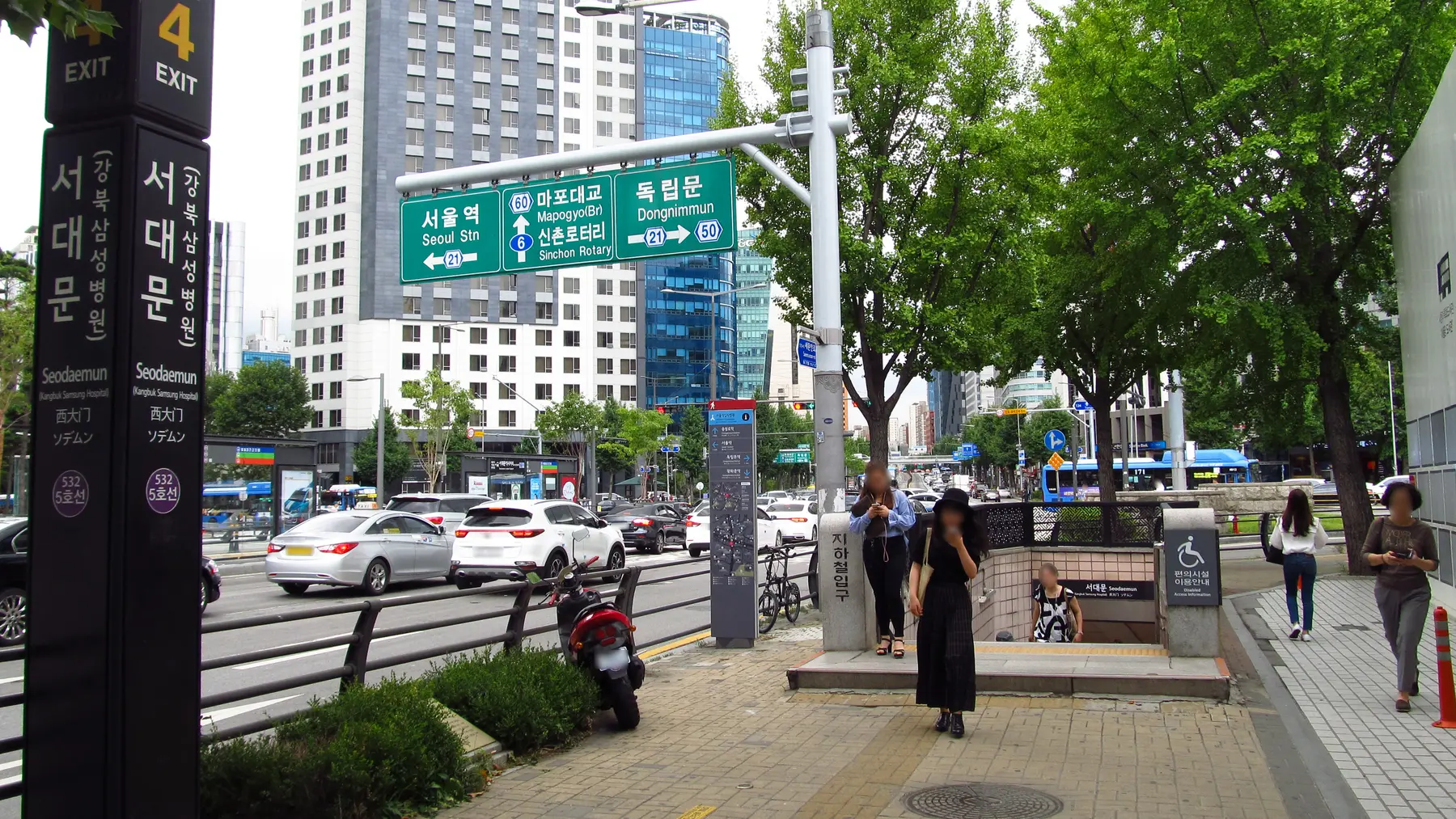
You have reached the café. Your phone is quite certain about this.
In front of you is a narrow doorway beside a business selling something you cannot identify. There is a staircase, a collection of signs and no visible coffee. You walk past, check the map, then walk back with the air of someone who meant to do that.
Look up.
The café might be on the third floor. You may be standing directly beneath the window seat you saved a photograph of three weeks ago.
Seoul asks you to make this small adjustment: a place can be open for business without presenting itself neatly at pavement level. Once you start reading the floors as well as the street, an ordinary block becomes much more interesting.
01
The street is only the beginning
A ground-floor shop is easy to understand. There is a window, a door, perhaps a menu. You can decide whether you like it without interrupting your walk.
Upstairs requires a little commitment. You have to find the entrance before you can judge the room.
That can feel oddly personal. A shared staircase resembles the way into someone’s office or home. You worry about opening the wrong door, or arriving somewhere that expects you to know the rules.
The useful distinction is whether you have found a public business entrance. A matching name on the directory, a floor number on the listing and a sign pointing towards the stairs give you something to follow. You do not need to look as though you have been there before.
You are allowed to be a customer finding the door.
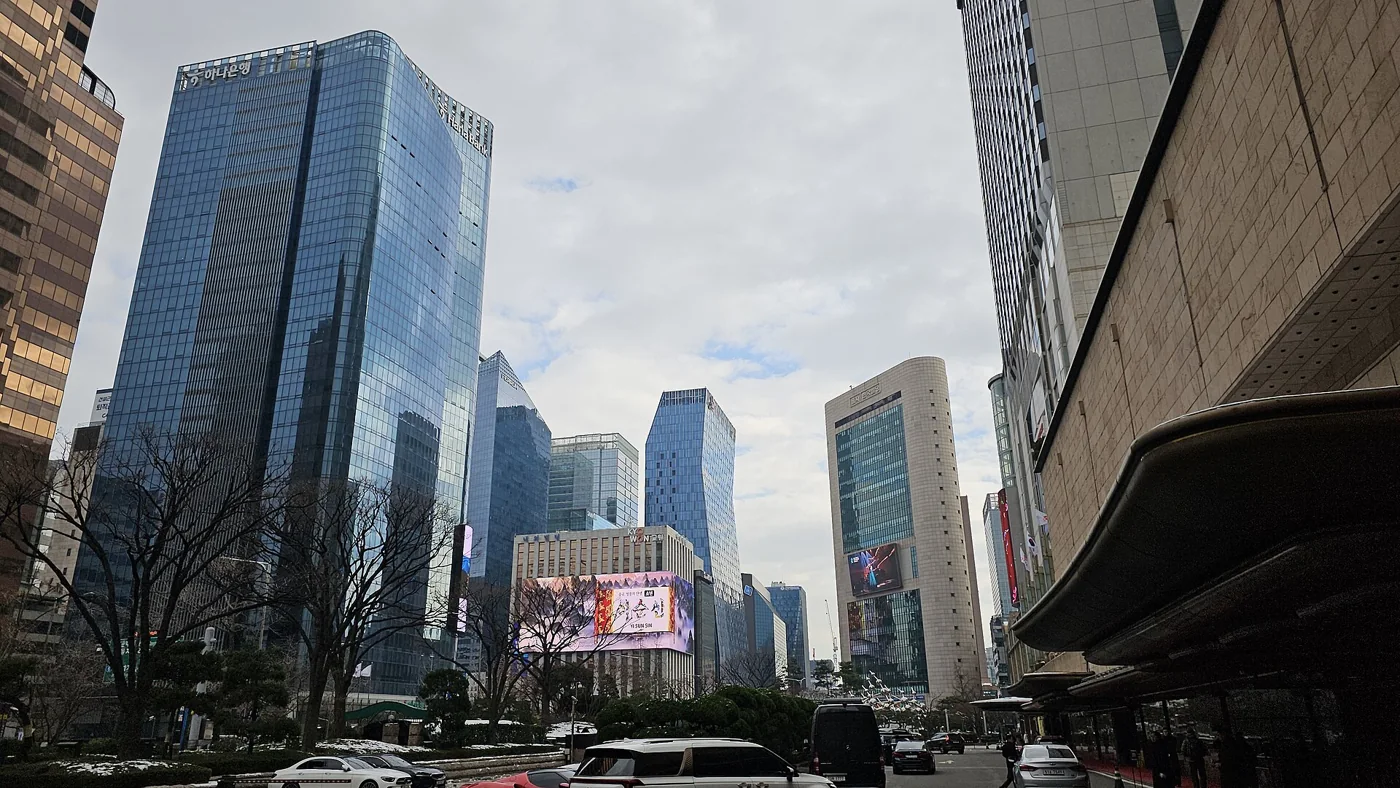
02
Euljiro makes you look twice
Euljiro is a good place to understand why the outside does not tell the whole story.
Its hardware, tile and printing businesses are part of the neighbourhood’s working life. Alongside them, cafés, restaurants and shops occupy buildings whose exteriors offer few clues to what is inside. Seoul’s tourism authority describes that contrast in its architectural guide to the area.
That changes how you walk here. A row of trade signs deserves a second glance. A small business name beside a doorway might be more useful than the largest sign on the building.
Start with one café or bar you actually want to visit. Save its Korean name, check the floor and look at recent entrance photographs. Then give yourself time to find it.
Trying to discover six places before dinner turns the afternoon into a series of navigational disputes. One successful staircase is enough to begin with.
And remember that the workshops are workplaces. Leave room for deliveries, avoid blocking doors and ask before photographing people at work. Their day does not pause because you have found the street photogenic.
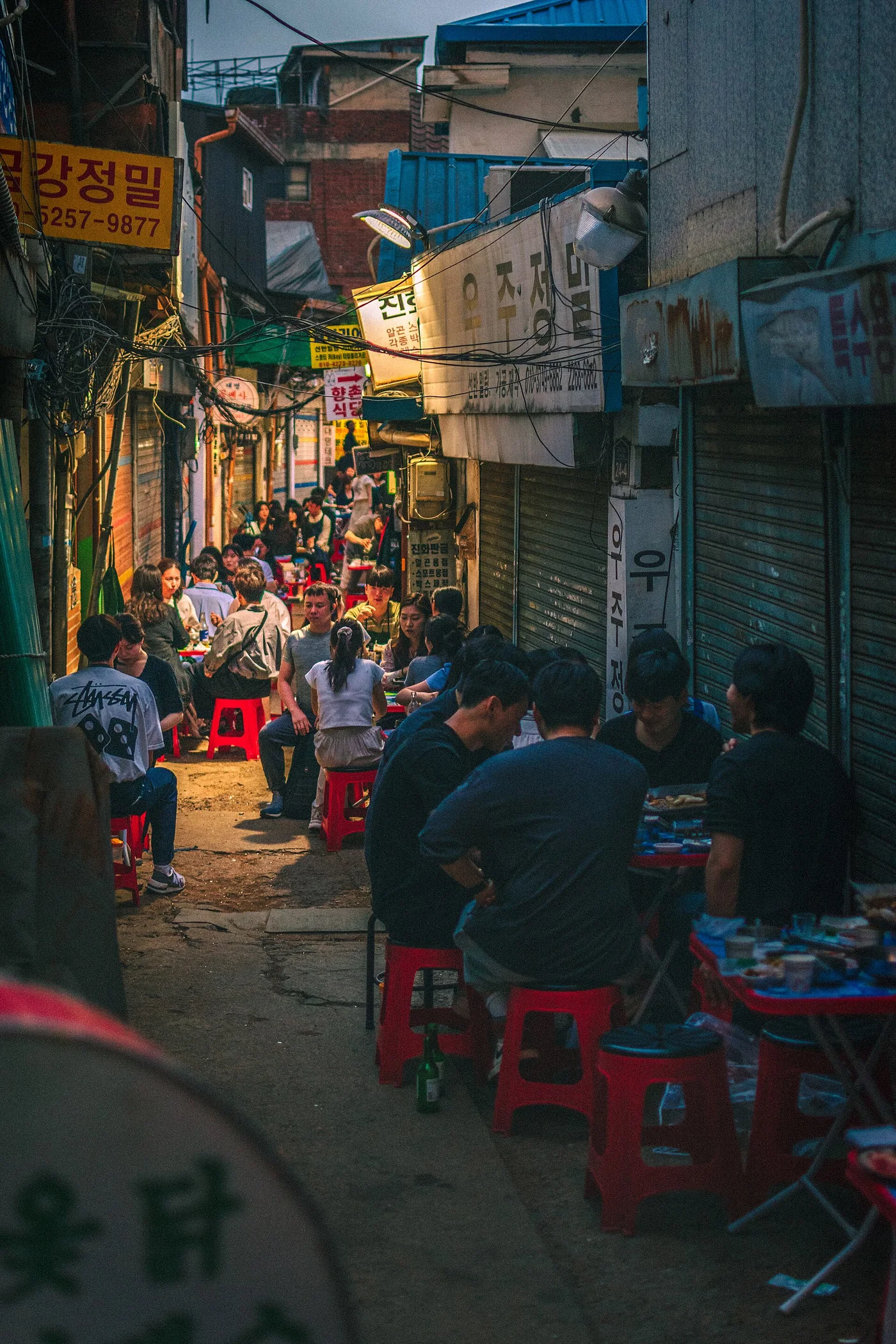
An Euljiro alley in the evening, photographed May 20, 2023. The street has its own life before you even look upstairs.
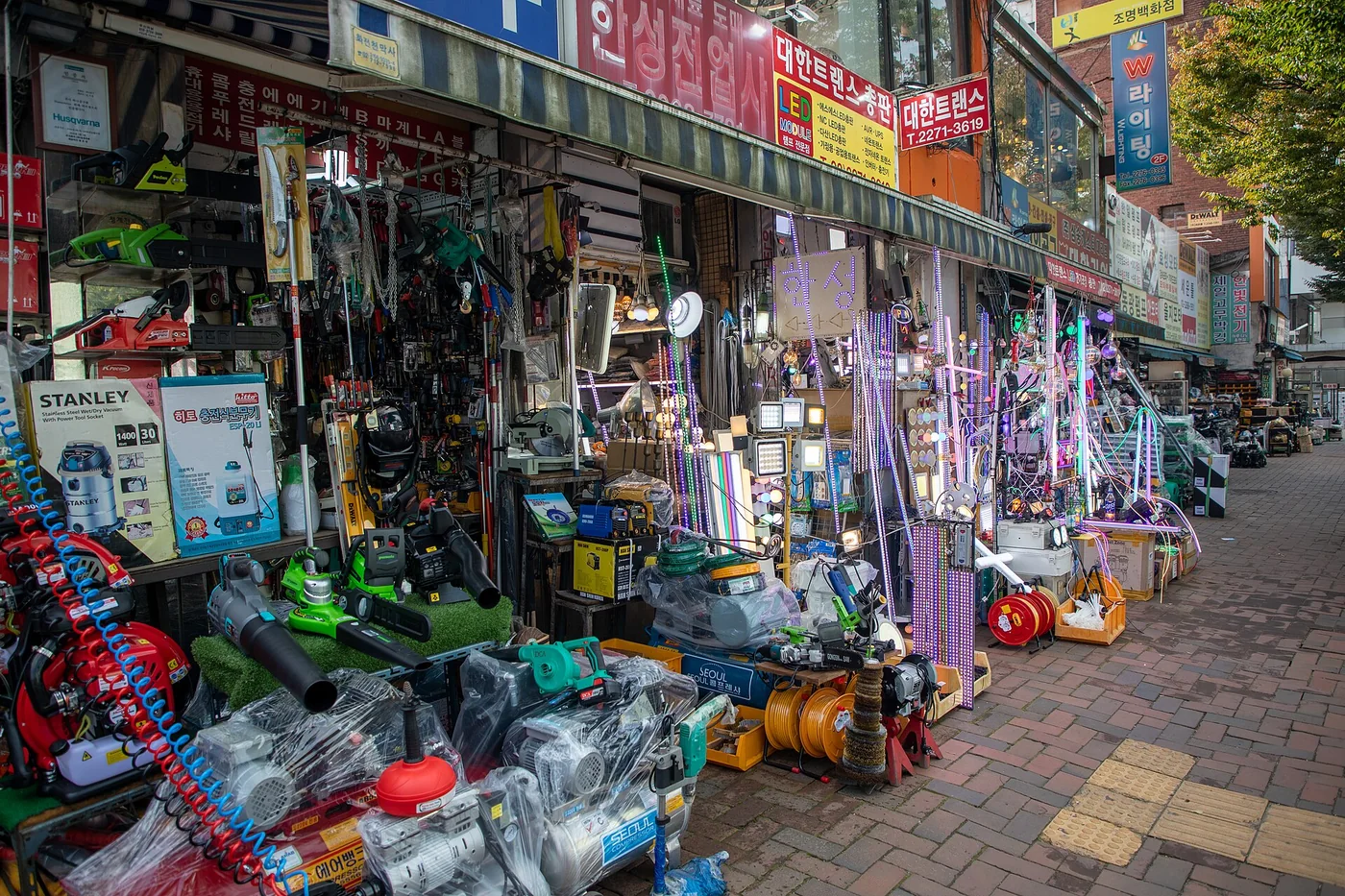
A lighting shop and stacked signs in Euljiro, photographed October 21, 2021. Trade premises are working businesses; keep their entrances clear.
03
The floor number is part of the address
When a listing includes a floor, keep it with the address. It may explain the last part of the journey better than the map pin.
If you use British or Australian floor numbering, this is the small trap: Korea’s first floor is the ground floor.
Look for a building directory or a smaller sign beside the entrance. The staircase may be next to the shop you are facing; it may also be reached from another side of the building. Compare the entrance with the business’s photographs before assuming the map has sent you to the wrong place.
If the route leads to a locked residential entrance or a door marked private, stop and recheck. An interesting window is not an invitation to explore every floor.
| What you see | Where to go |
|---|---|
| 1F or 1층 | Street-level floor |
| 2F or 2층 | One floor above street level |
| 3F or 3층 | Two floors above street level |
| B1 or 지하 1층 | First basement level |
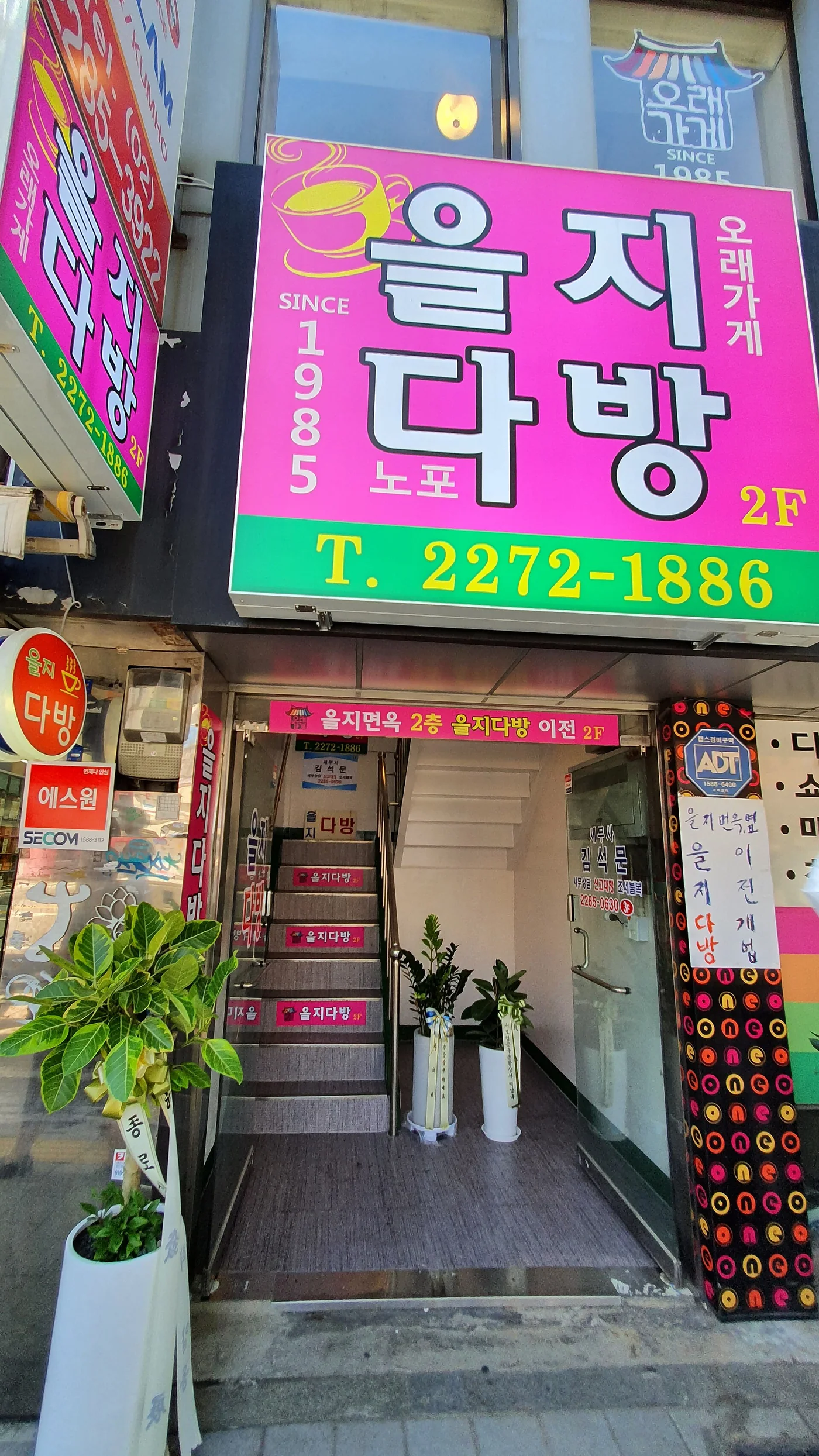
The 2F sign above Eulji Dabang’s entrance makes the floor part of the directions. Photographed July 30, 2022; an archive wayfinding example, not confirmation of current opening.
04
A basement can be the destination
The same habit works downwards.
In Sangsu, Jebi Dabang brings coffee and live performance into the same venue. Its operator describes a café by day and an evening space for drinks, performances and exhibitions. The Korea Tourism Organization identifies a small stage on the first basement level.
It is a useful example of why you should check more than the exterior. The room you came for may sit below the pavement, and the experience may depend on when you arrive.
For a music venue, check the actual performance schedule. For a café, check the ordering floor. A building with several public levels does not necessarily serve the same purpose on each one.
05
Getting through the door
Before setting off, save the Korean business name and a photograph of its entrance. An interior shot tells you why you want to go. An entrance shot helps you get there.
Check the business’s own updates as well as the map listing, especially if you are travelling across town for it. A photograph of a beautiful room can circulate long after the business has moved.
At the doorway, look for the name and floor before following other people upstairs. They may be going somewhere entirely different.
If someone is there to ask, these two questions are enough:
여기 카페 맞아요? Is this the café?
지금 영업하세요? Are you open now?
Showing the saved business name on your phone is often easier than trying to pronounce it from memory.
Once inside, pause long enough to see how the room works. Look for a counter, a waiting list or a sign asking customers to order before taking a seat. Finding the entrance does not mean you have missed some secret induction. You can still ask what to do next.
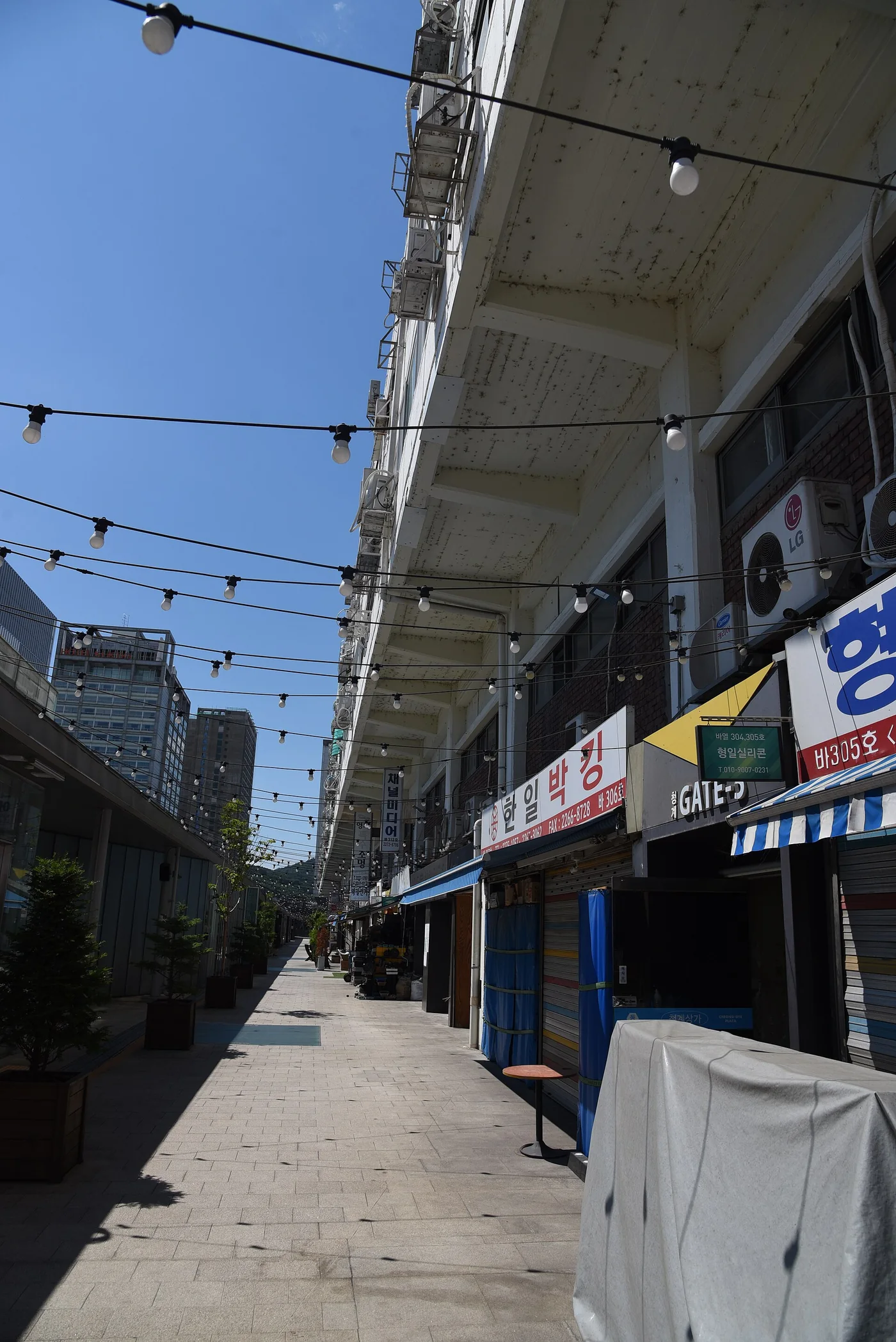
An upper-floor corridor at Daelim Sangga, photographed July 30, 2022. Public shop corridors and private premises need to be distinguished.
06
Choose a staircase worth taking
There is no prize for the least obvious entrance.
A second-floor café may be mediocre. A bright, easy-to-find restaurant on the main road may be excellent. Choose somewhere because you want the food, music, books or room, then use the floor number to reach it.
And if you need step-free access, establish the whole route before going. An elevator symbol or a photograph of a lift does not answer whether there are steps at the building entrance, or whether the toilet is on another level. Ask specifically about the entrance, seating floor and toilet.
For everyone else, leave a little space in the day for the places you had to look twice to notice. Order something. Sit by the window if there is a seat.
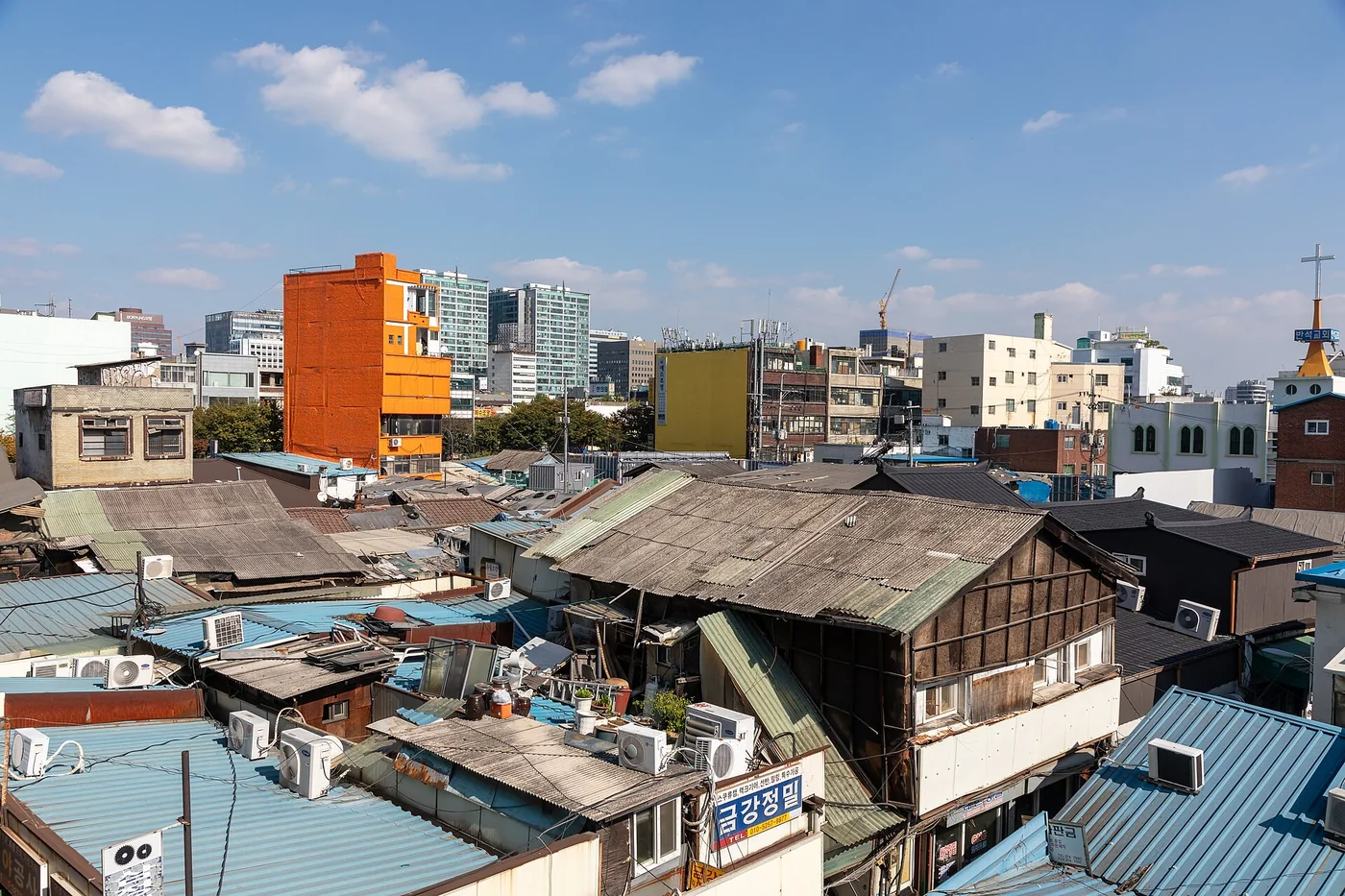
From upstairs, you can watch the pavement where you were standing a few minutes earlier, convinced there was nothing there.
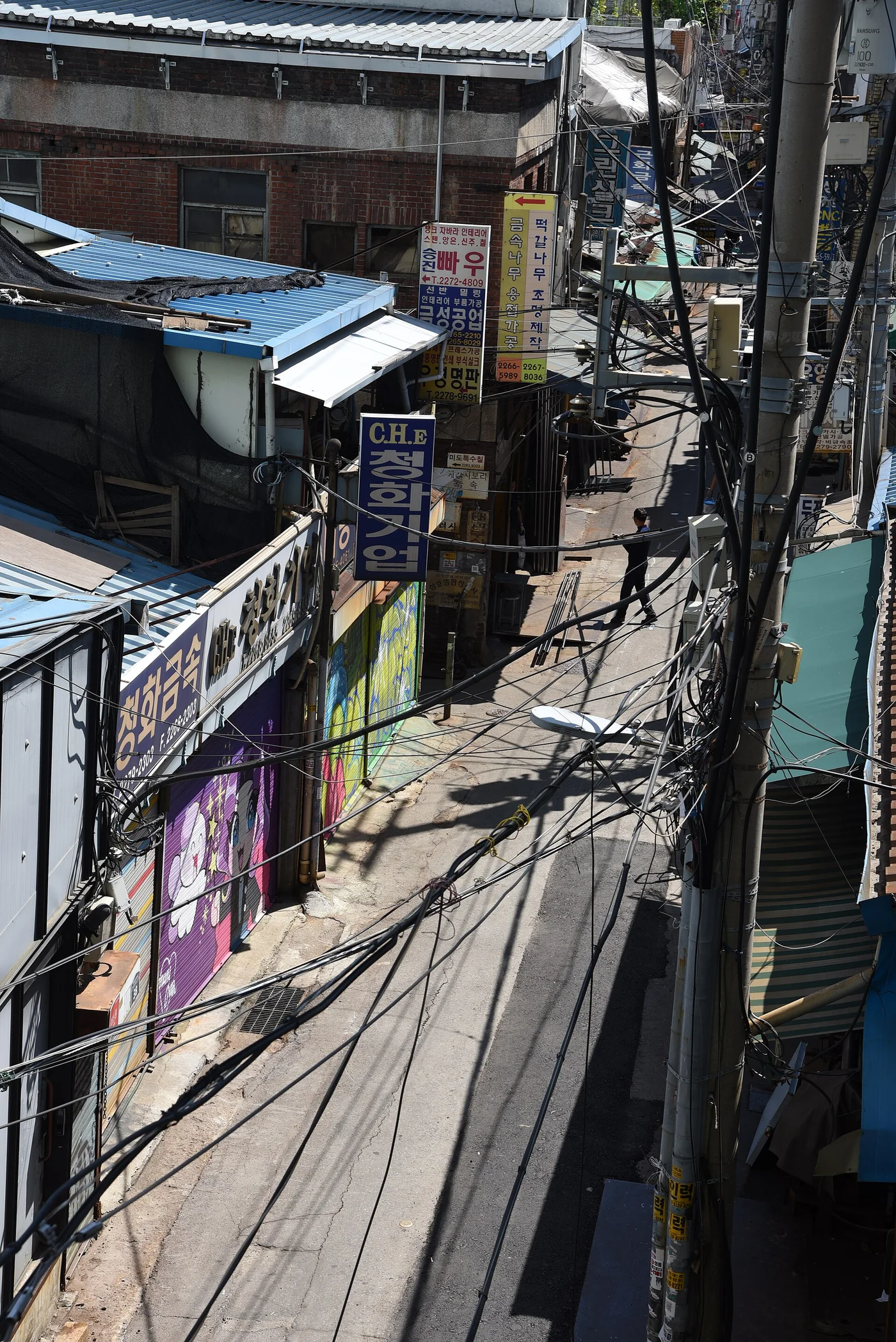
Looking down into Euljiro’s printing alleys from Daelim Sangga, July 30, 2022. The same streets look different from above.