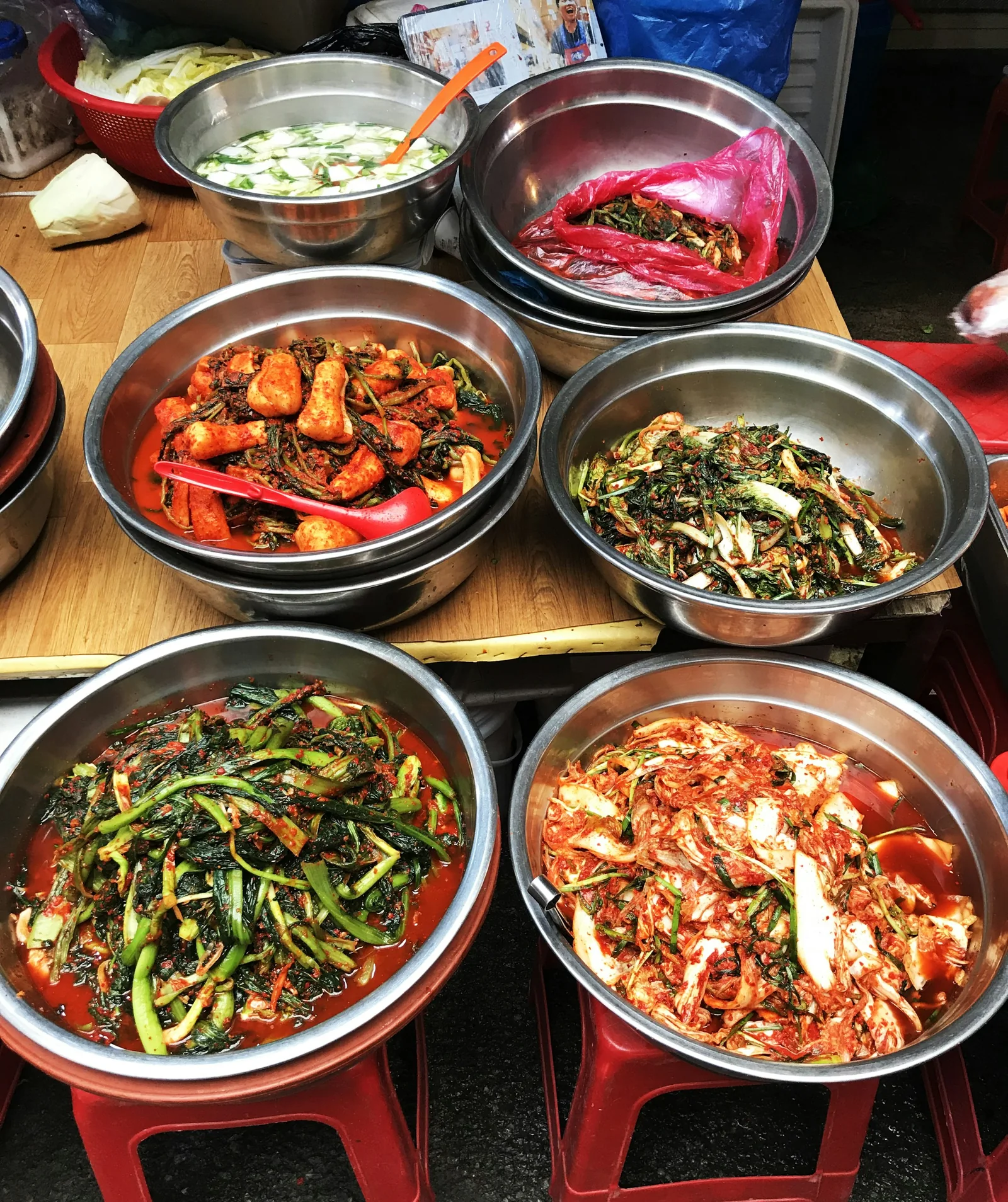
A Korean meal with kimchi, seasoned vegetables, and shared side dishes
Photo by Giselle Herrera · Unsplash License

01 · The quick take · Food & Culture

What to Eat First in Korea; and How the Meal Works

LocationKorea
Trip lengthTwo days / five meals
Estimated steps7k–13k stepsAcross two days

The little dishes arrive before you have quite decided where to put your chopsticks. Start with a hot bowl, learn the table's rhythm, then let the market tempt you into the next meal.

Tell me moreThe fuller guide · 15 min readHide the fuller guideReturn to the quick take

02 · The guide

The fuller picture.

A Korean meal often arrives as a little collection: rice, a hot bowl, kimchi and dishes you have not yet learned to name. Start there. Once the table's rhythm feels familiar, move on to a shared dinner or a market snack that catches your eye. This guide covers what to order, how to ask useful dietary questions and how to turn the choices into a Seoul food weekend.

01

Learn the everyday table first

Begin with a table you can explore: baekban or another rice-based set brings rice, soup or stew, kimchi and several banchan together. This format teaches the basic rhythm of a Korean meal. Take bites in whatever sequence tastes good; the dishes are designed to balance one another rather than arrive in Western courses.

Good first choices include seolleongtang, doenjang jjigae, sundubu jjigae, gimbap, kalguksu, and bibimbap. They vary in spice, richness, and ordering complexity, giving you a useful base before more elaborate shared meals.

02

Plan one shared dinner

Some menus expect company: Korean barbecue, dakgalbi, hot pot, large seafood plates and many set meals are designed for sharing. Check the minimum order; two diners may need two portions of the same main item. Staff often cook barbecue at the table; follow their lead rather than constantly turning the meat.

Use lettuce wraps sparingly, add ssamjang and a small amount of garlic, and eat the wrap in one bite if possible. Rice, stew, or noodles may be ordered near the end. There is no prize for copying every custom perfectly; attentiveness and patience matter more.

03

Choose by mood and place

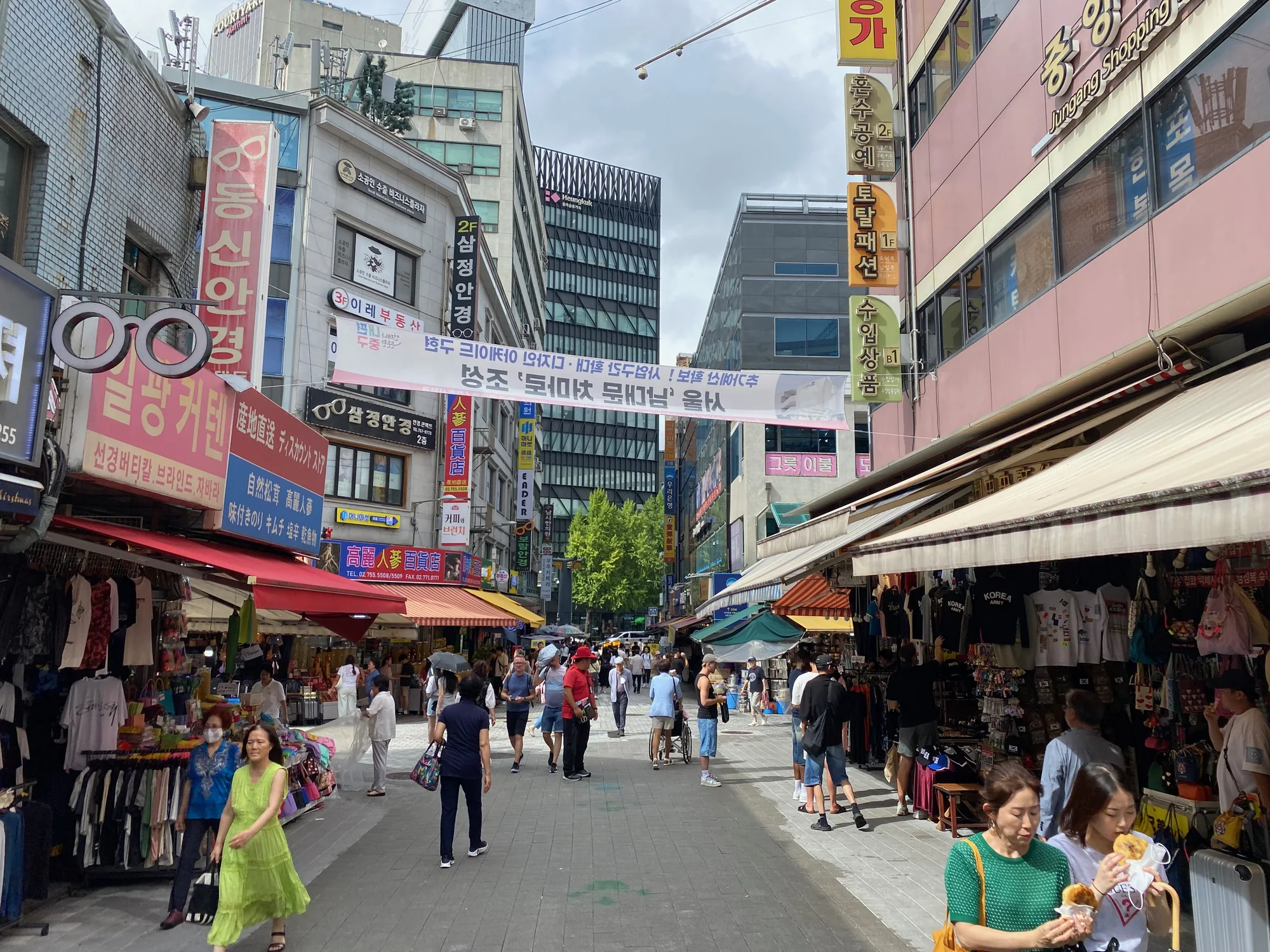
Let the market tempt you into one or two specialties, with room left for a meal sitting down. On a cold morning, choose gukbap or haejangguk. In summer, try naengmyeon or Busan milmyeon. In Jeonju, make room for bibimbap or kongnamulgukbap; on the coast, consider grilled fish or seafood with clearly posted pricing.

Regional food is most convincing when it fits the day. Crossing Seoul for an online-famous snack can cost more in time than the dish is worth. Ask what a neighborhood does reliably, then choose a busy, clean place with a menu you understand.

04

Communicate dietary needs precisely

The invisible ingredients deserve the clearest questions: broth, kimchi seasoning, sauces and garnishes can complicate vegetarian, vegan, halal, gluten-free and allergy-safe travel. A statement such as no meat can be interpreted differently from no meat, fish, seafood, fish sauce, or broth.

Carry a Korean-language card listing the exact ingredients you cannot eat and whether cross-contact is dangerous. Use the VISITKOREA special-diet resources to identify suitable districts or restaurants, and contact places ahead when the restriction is medically serious.

05

Read the room

Before asking for chopsticks, have a look around: water and cutlery may be self-service, with the cutlery tucked into a drawer under the table. Pay at the front counter unless staff bring a terminal. Tipping is generally not expected in ordinary restaurants. Banchan refills may be available, but ask only for what you will eat.

At peak times, small restaurants may expect diners to eat efficiently rather than linger over coffee. Move to a café for a longer conversation. The simplest sign that you understand the meal is not a perfect gesture; it is treating staff, food, and the people sharing your table with care.

Check before you go

Official links and live information

Details last checked September 25, 2026. Entry rules, schedules, prices, transport coverage, and operating hours can change, so verify time-sensitive details before committing time or money.
Go deeperThe complete, copyable planHide the detailed planReturn to the fuller guide

The deep dive · Two days / five meals

A First Korean Food Weekend, Meal by Meal

Begin with a hot bowl and let the weekend widen into a market counter and a dinner to share. These are everyday meals you can actually fit around sightseeing. Stay near convenient transit, choose restaurants near the day's other stops, and keep the dietary checks below close at hand.

StartYour Seoul neighborhood
FinishGwangjang Market
AllowTwo days / five meals
Estimated steps7,000–13,000 stepsAcross two days

Planning estimate for the suggested walking sections, not a tracked route. Your hotel and the restaurants you choose determine the in-between walking.

Before you leave

Set up the day.

  • Save the Korean dish terms: 백반 (rice set), 국밥 (soup with rice), 칼국수 (knife-cut noodles), 빈대떡 (mung-bean pancake), and 비빔밥 (mixed rice).
  • For allergies or vegetarian diets, carry a precise Korean-language ingredient card. Broth, kimchi seasoning, and sauces can contain fish, seafood, or meat even when the visible ingredients are vegetables.
  • Check each restaurant's current hours and minimum order. This plan names one documented market stall; substitute another open stall if it is closed or the line is excessive.

Follow the route

Your plan, in order.

Times are suggested planning anchors. Copy the route, then adjust it for your date, opening hours, and pace.

  1. Day 1 · 09:00
    01

    Local soup breakfast

    Let a bowl of gukbap or seolleongtang near your hotel be the first introduction. Order one bowl per person; add seasoning only after tasting the broth. Watch where water, cutlery, and kimchi are placed. This is an uncomplicated introduction to the everyday Korean table.

  2. Day 1 · 12:30
    02

    Baekban or bibimbap lunch

    Choose a set-meal restaurant near the sights you are visiting. Baekban shows how rice, soup, and shared banchan work together. If you choose bibimbap, taste first, mix thoroughly, and add gochujang to your preferred heat level. Check whether extra banchan is self-service or requested from staff.

  3. Day 1 · 18:30
    03

    Shared barbecue dinner

    Book or walk into a barbecue restaurant near your evening base. Check the minimum number of meat portions and whether staff cook at the table. Order a modest first round, use lettuce wraps and shared sides, then add rice or stew if still hungry. A solo diner should look for a dedicated one-person option instead.

  4. Day 2 · 10:00
    04

    Light breakfast and a walk

    Keep breakfast light if you plan to taste at the market. Gimbap is a portable option, while kalguksu makes a substantial meal on a cold day. Review your diet card before ordering; broth and fillings vary.

  5. Day 2 · 12:00
    05

    Gwangjang Market

    Map search: 광장시장

    Enter the food street and look at several stalls before buying. Soonheenae Bindaetteok is an officially listed stop for mung-bean pancake, which contains pork in its described version. Share one pancake, then choose one different dish rather than purchasing a full portion at every counter. Confirm the posted price.

  6. Day 2 · 17:30
    06

    A final neighborhood dinner

    Return to a district you enjoyed. Order one dish you now understand and one new one; perhaps doenjang jjigae, sundubu jjigae, or grilled fish. Pay at the front counter if the restaurant uses that system; ordinary restaurants do not expect a tip.

Make it your trip

Useful changes.

  • Vegetarian or severe allergy: do not treat this exact menu as safe. Use a restaurant that confirms the ingredients, broth, sauce, and cross-contact policy before ordering.
  • Market too crowded: eat at a nearby seated restaurant and return at a quieter hour, rather than blocking the aisle to compare food.
  • Regional extension: in Jeonju substitute a local bibimbap meal; in Busan try dwaeji gukbap or milmyeon near your route.

Sources checked September 25, 2026

Verify before you go

Schedules, admission, train availability, restaurant hours, and weather can change. The sources below are the starting points for final checks. Route times are editorial estimates.