
Food & Culture · Deep dive
A First Korean Food Weekend, Meal by Meal
Two Seoul days that teach the structure of a meal, the market rhythm, a shared dinner, and useful dietary questions.
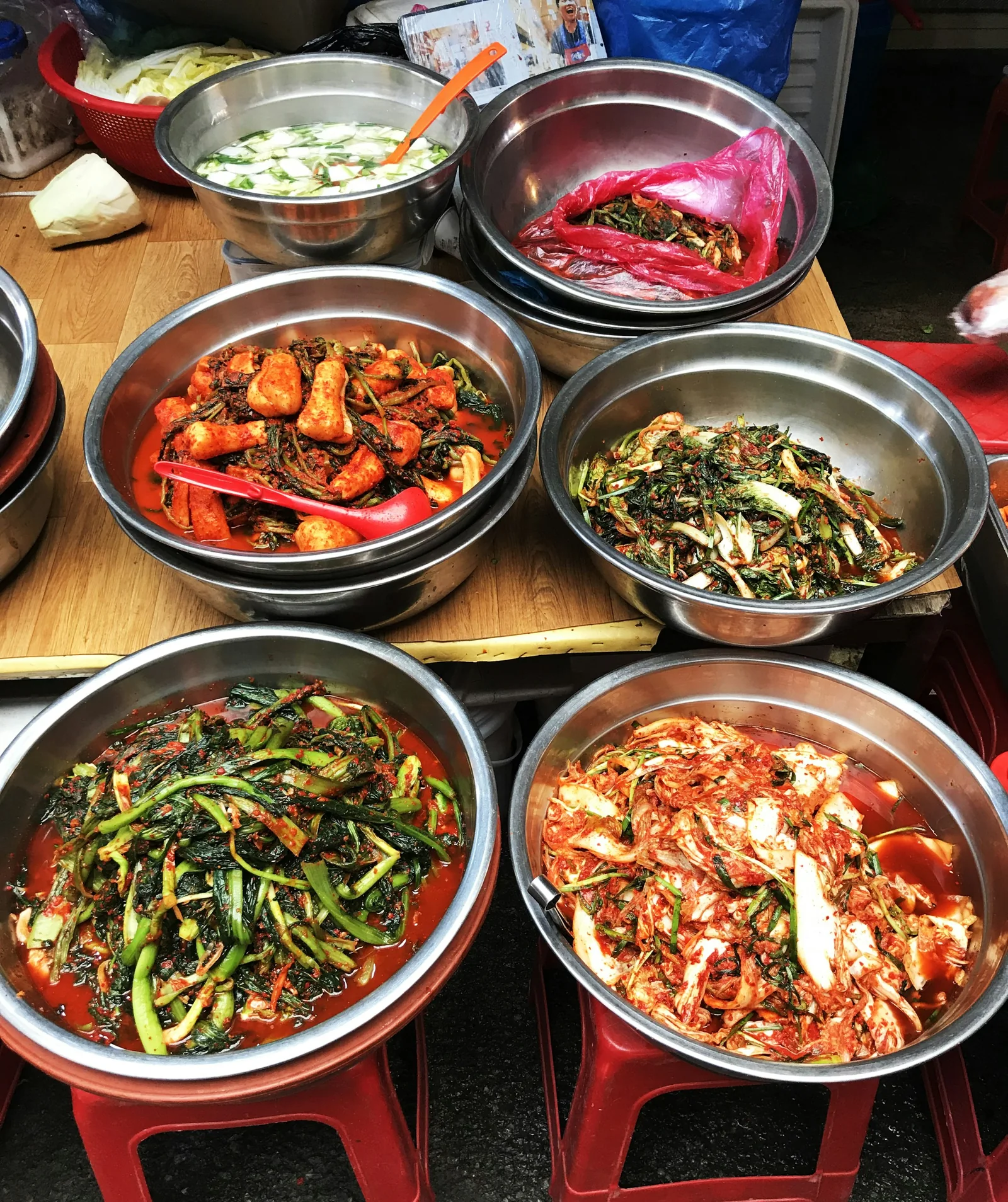
Begin with a hot bowl and let the weekend widen into a market counter and a dinner to share. These are everyday meals you can actually fit around sightseeing. Stay near convenient transit, choose restaurants near the day's other stops, and keep the dietary checks below close at hand.
Planning estimate for the suggested walking sections, not a tracked route. Your hotel and the restaurants you choose determine the in-between walking.
Before you leave
Set up the day.
- Save the Korean dish terms: 백반 (rice set), 국밥 (soup with rice), 칼국수 (knife-cut noodles), 빈대떡 (mung-bean pancake), and 비빔밥 (mixed rice).
- For allergies or vegetarian diets, carry a precise Korean-language ingredient card. Broth, kimchi seasoning, and sauces can contain fish, seafood, or meat even when the visible ingredients are vegetables.
- Check each restaurant's current hours and minimum order. This plan names one documented market stall; substitute another open stall if it is closed or the line is excessive.
Follow the route
Your plan, in order.
Times are suggested planning anchors. Copy the route, then adjust it for your date, opening hours, and pace.
- Day 1 · 09:0001
Local soup breakfast
Let a bowl of gukbap or seolleongtang near your hotel be the first introduction. Order one bowl per person; add seasoning only after tasting the broth. Watch where water, cutlery, and kimchi are placed. This is an uncomplicated introduction to the everyday Korean table.
- Day 1 · 12:3002
Baekban or bibimbap lunch
Choose a set-meal restaurant near the sights you are visiting. Baekban shows how rice, soup, and shared banchan work together. If you choose bibimbap, taste first, mix thoroughly, and add gochujang to your preferred heat level. Check whether extra banchan is self-service or requested from staff.
- Day 1 · 18:3003
Shared barbecue dinner
Book or walk into a barbecue restaurant near your evening base. Check the minimum number of meat portions and whether staff cook at the table. Order a modest first round, use lettuce wraps and shared sides, then add rice or stew if still hungry. A solo diner should look for a dedicated one-person option instead.
- Day 2 · 10:0004
Light breakfast and a walk
Keep breakfast light if you plan to taste at the market. Gimbap is a portable option, while kalguksu makes a substantial meal on a cold day. Review your diet card before ordering; broth and fillings vary.
- Day 2 · 12:0005
Gwangjang Market
Map search: 광장시장
Enter the food street and look at several stalls before buying. Soonheenae Bindaetteok is an officially listed stop for mung-bean pancake, which contains pork in its described version. Share one pancake, then choose one different dish rather than purchasing a full portion at every counter. Confirm the posted price.
- Day 2 · 17:3006
A final neighborhood dinner
Return to a district you enjoyed. Order one dish you now understand and one new one; perhaps doenjang jjigae, sundubu jjigae, or grilled fish. Pay at the front counter if the restaurant uses that system; ordinary restaurants do not expect a tip.
Make it your trip
Useful changes.
- Vegetarian or severe allergy: do not treat this exact menu as safe. Use a restaurant that confirms the ingredients, broth, sauce, and cross-contact policy before ordering.
- Market too crowded: eat at a nearby seated restaurant and return at a quieter hour, rather than blocking the aisle to compare food.
- Regional extension: in Jeonju substitute a local bibimbap meal; in Busan try dwaeji gukbap or milmyeon near your route.
Sources checked September 25, 2026
Verify before you go
Schedules, admission, train availability, restaurant hours, and weather can change. The sources below are the starting points for final checks. Route times are editorial estimates.