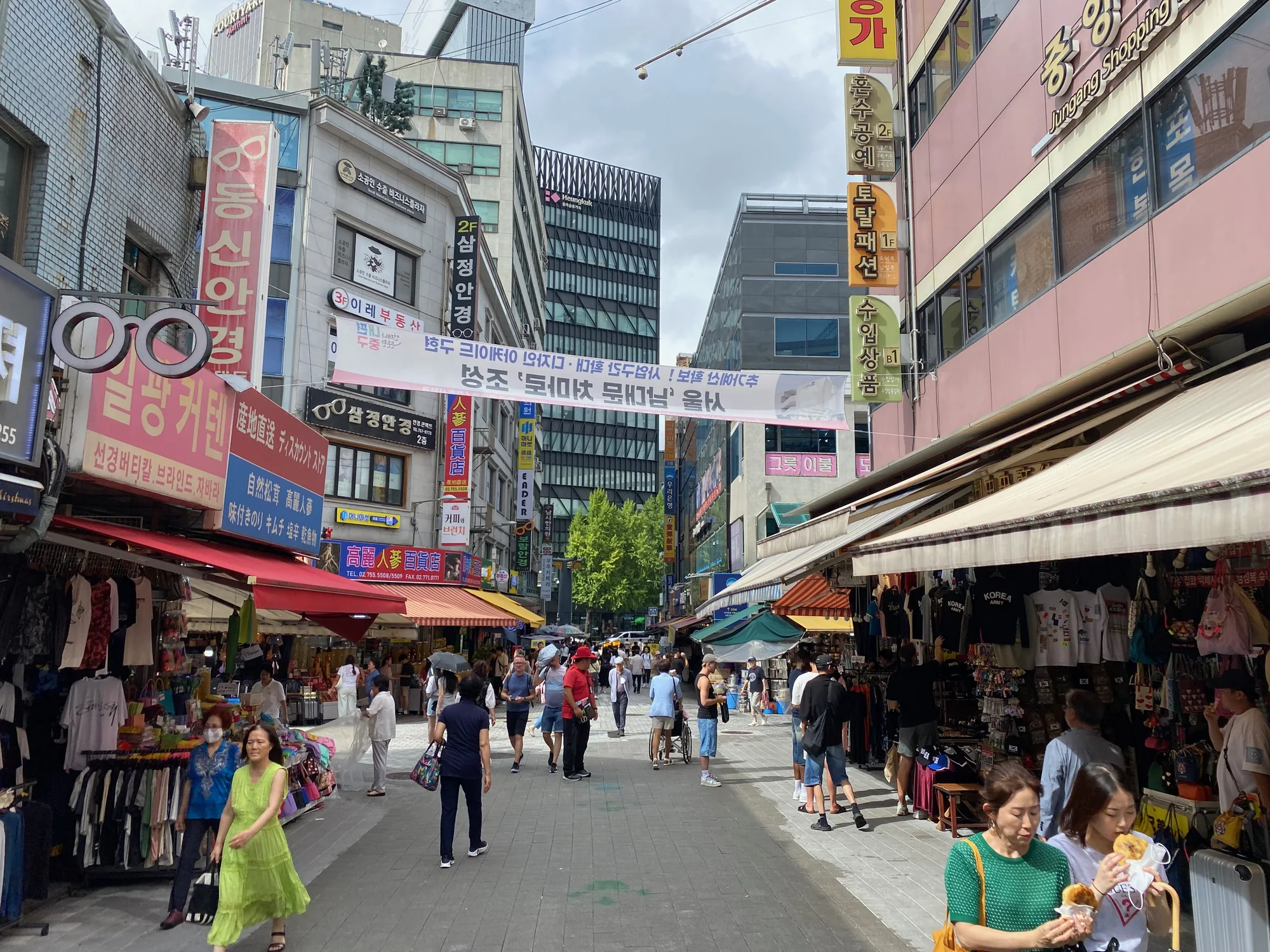
A rice bowl you will use at home is a better souvenir than something bought because the coach was leaving. Give Namdaemun Market half a day: start from Hoehyeon, browse kitchenware, choose one lunch alley and finish toward Sungnyemun. Recent Korean reporting points to renewed interest in everyday purchases here. The market has been doing that job for generations; the useful part is knowing where to look and what to check before paying.
01
The appeal is the everyday stuff
The useful souvenir is having a moment: September 2026 Korean coverage described overseas visitors buying gim, dishes and bath goods, while younger local shoppers sought tableware and small accessories. That is a better way to understand the current buzz than pretending the market has just been discovered. It is an old, working network of specialist lanes and multi-floor arcades where practical purchases and browsing belong together.
Give yourself a mission, not a rigid checklist. A pair of bowls, a compact cooking utensil, children's clothes or a small gift is enough. Compare material, dimensions and prices in more than one shop before committing. Market stock and vendors change; a social-media photo is not a guarantee that the same piece will still be there.
02
Go upstairs for bowls, then follow the lanes
For bowls, start with a floor rather than a vague market pin: the association lists crockery and kitchenware businesses at 남대문시장4길 3, 중앙상가 C동 3층. Search that Korean building and floor, then find the stair or lift entrance on site. This is a useful specific target when the street-level racks feel overwhelming; some units are geared to wholesale or restaurants, so ask politely whether they sell one piece before comparing a set.
Look for the material and care instructions as well as the pattern: ceramic chips in luggage, stainless-steel sizes and whether a piece is microwave or dishwasher safe are more consequential than a pretty shelf photo. Ask for protective wrapping before paying for breakables. Elsewhere, the association lists textiles around 4-gil 9, children's clothes around 8-gil 16 and souvenir stalls around 4-gil; use those lanes only if they match your shopping list.
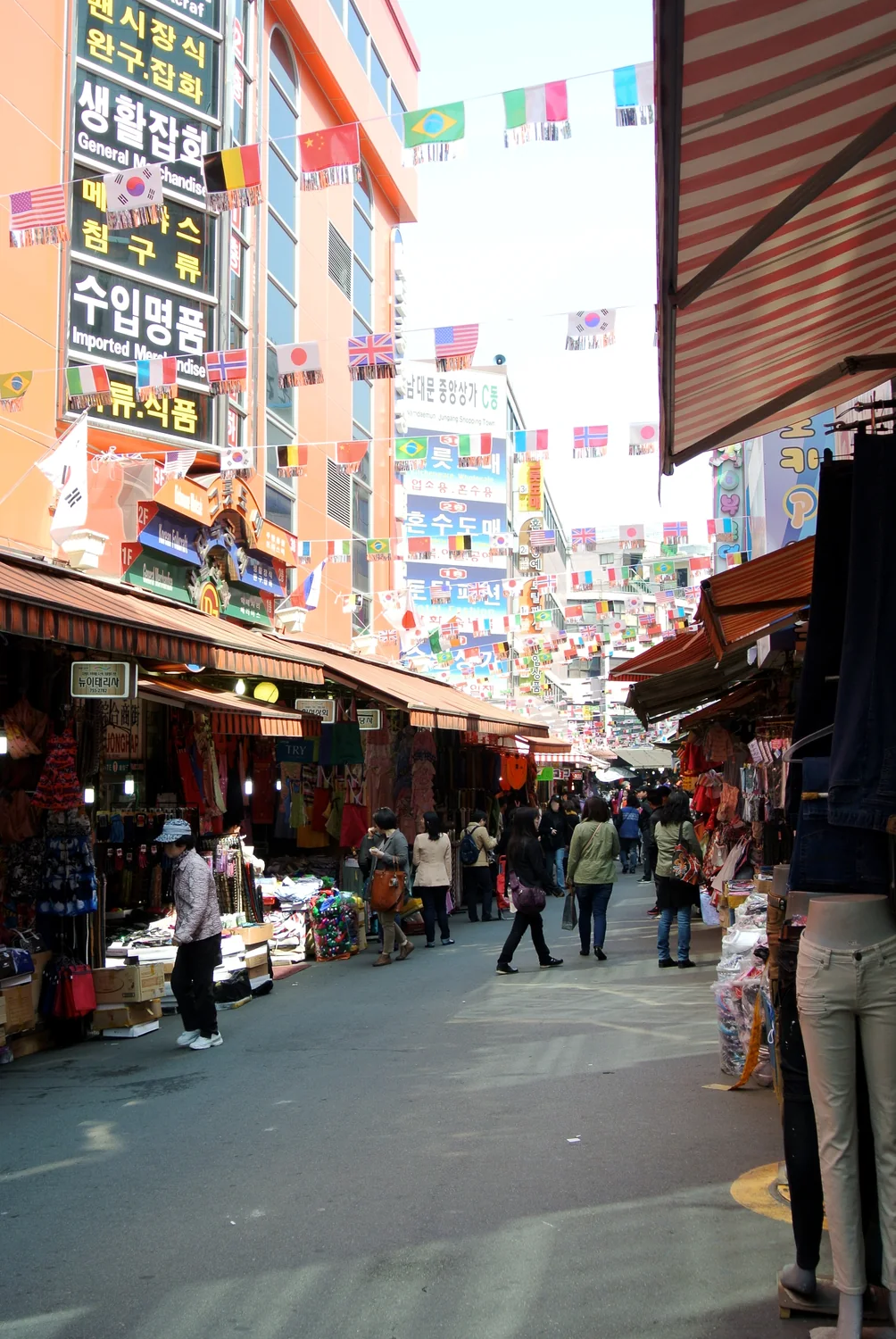
Namdaemun's compact lanes reward a slow browse. This archival photograph was taken in 2013; storefronts and tenants change.
03
Choose your lunch alley
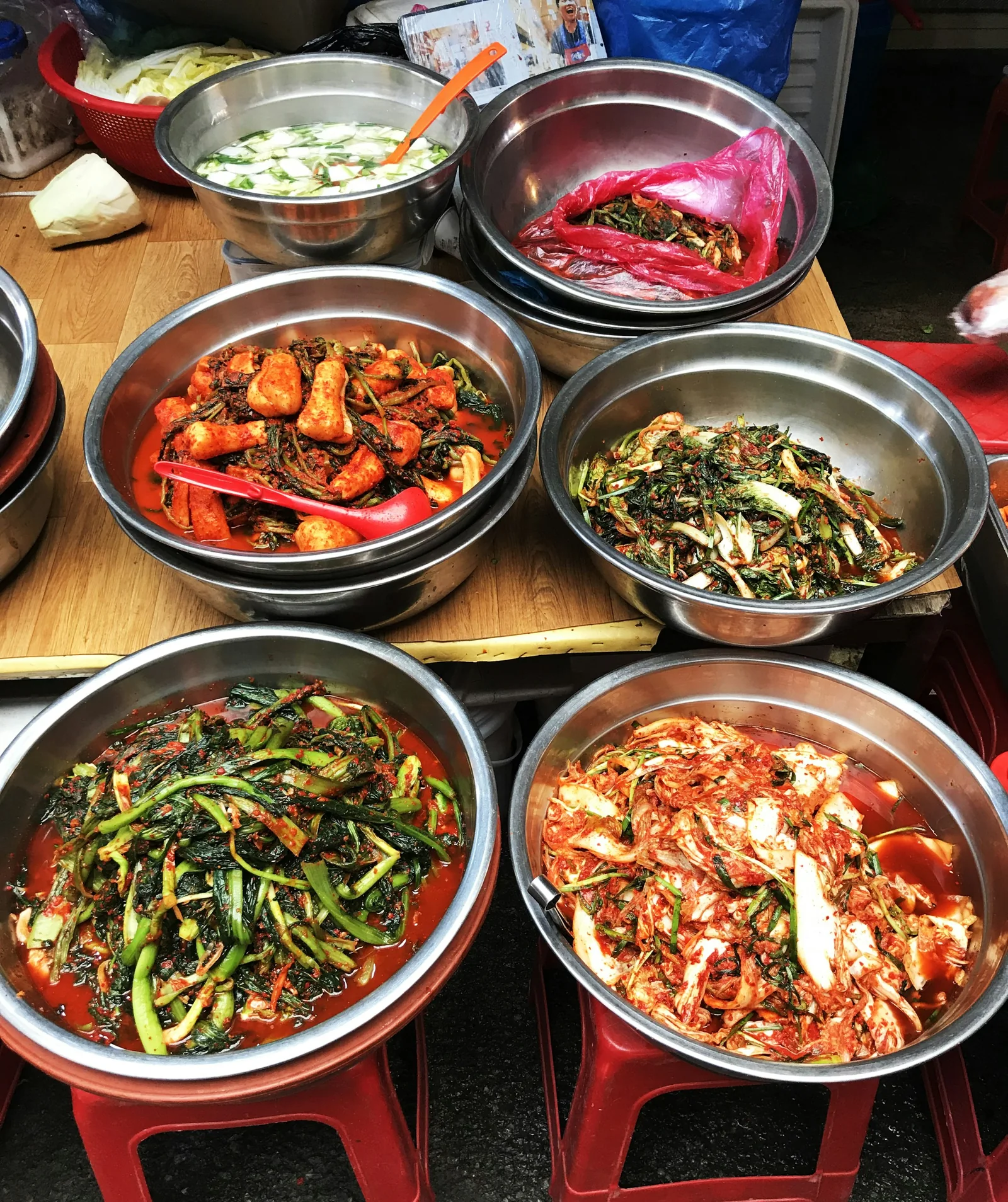
For a filling noodle lunch, aim for 칼국수골목 (Kalguksu Alley) at 남대문시장4길 42-1. The association describes knife-cut noodles, sujebi and barley bibimbap served along narrow shared counters. It notes that some stalls offer a small taste of another dish with an order; consider that a possible bonus rather than a universal deal. Seats are close and queues can spill into the walking lane.
갈치조림골목 (Galchi Alley), at 남대문시장4길 18-6, is for a sit-down rice meal built around spicy braised cutlassfish and radish. Ask about portion size and minimum order before sitting, especially alone; the fish contains bones. If you do not eat fish or spice, make the noodle alley your first check but ask about broth ingredients. Both alleys have multiple independent businesses with their own hours and prices.
04
Shopping without a bad surprise
Pack for browsing rather than buying everything: a tote, a little Korean won and a payment card will cover the basics. Ask for the total and whether a card is accepted before you buy; avoid assuming all booths use the same payment method or price. For gifts such as gim, check the package date, sealed wrapping and baggage or customs rules for your destination. Imported ceramics and branded goods are not automatically made in Korea; check the label if provenance matters to you.
Avoid an oversized suitcase in narrow market aisles. The Korea Tourism Organization lists a foreign visitor lounge by Gate 2 with information and luggage storage, but check that the service is operating on your date before relying on it. There is also an official tourist information center near Hoehyeon Exit 5. Watch delivery carts, keep entrances clear and ask before making a close-up photograph of a seller.
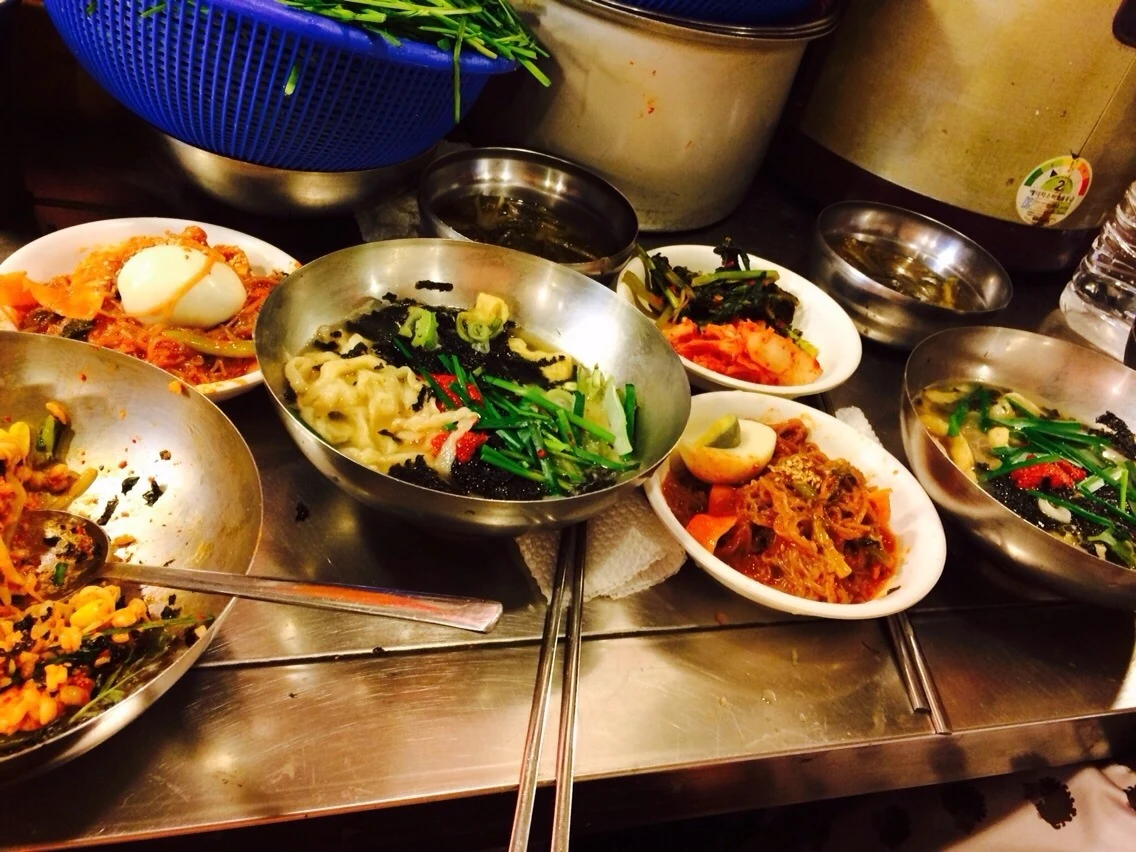
Kalguksu, barley rice and cold noodles in Namdaemun’s noodle alley, photographed in 2014.
05
A good finish is right outside the market
Finish with Sungnyemun (숭례문), the historic gate behind the Namdaemun name, once lunch is done. Use a signed pedestrian crossing; traffic makes a straight-line map pin misleading. If the market feels too crowded, call it a successful short visit rather than forcing another shopping loop. Myeongdong or central Seoul can follow, but this market is worth visiting as its own outing.
A practical planning window is Tuesday–Friday around 10:00–14:00, then lunch whenever the open stalls suit you. That window is advice for a first-time daytime visit, not a promise that every shop is open. Sunday schedules, wholesale floors and major Korean holidays are particularly variable. Recheck the market association's notices and the business you actually want to visit.
Check before you go
Official links and live information
Details last checked September 28, 2026. Entry rules, schedules, prices, transport coverage, and operating hours can change, so verify time-sensitive details before committing time or money.
- Specialty streets and food-alley addresses ; Namdaemun Market association (Korean)
- Bowl wholesalers in Jungang C building, 3F ; market association (Korean)
- Kalguksu Alley details ; market association (Korean)
- Galchi Alley details ; market association (Korean)
- Namdaemun Market Tourist Information Center at Hoehyeon Exit 5 ; Visit Seoul
- Visitor services at Gate 2 ; Korea Tourism Organization
- Current shopping interest ; Hankyung, September 2026 (Korean)
- Getting to the market ; Namdaemun Market association (Korean)