Some trips need an early train, a color-coded map and a slightly unreasonable belief in your own walking speed. This is not one of them.
Onyang works best when you give it a smaller job. Get out of Seoul. Find lunch. Have a proper bath. Sleep somewhere close enough that getting back to your room does not become the evening's main event. In the morning, look at the beautiful, ordinary things people used to live with, then go home.
That may not sound like enough for an overnight. That is precisely the appeal.
Onyang Oncheon is an established hot-spring district inside Asan, not an isolated resort hidden in the hills. The station, shops and daily business are part of the experience. If you arrive expecting a Japanese ryokan town transplanted into Korea, you will spend the first afternoon looking for a place that does not exist. Arrive for a Korean town with hot water at its heart, and the pieces fit much more pleasantly.
01
Start by choosing the right kind of bath
The word oncheon means hot spring. It does not tell you whether you will be soaking privately, sharing a bathhouse or wearing a swimsuit in a pool.
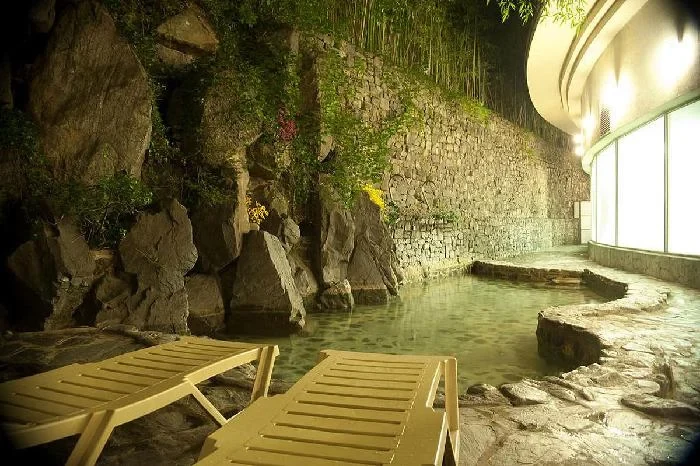
For this route, the simplest choice is accommodation in the central Onyang district, with a clearly described bathing arrangement. A communal hot-spring bath gives the stay a proper bathhouse rhythm. A genuinely private hot-spring room makes more sense if you want to bathe together, are uncomfortable with communal nudity or simply like closing your own door.
The important word is genuinely. A photograph of a bathtub proves there is a bathtub. It does not prove the water is thermal, the bath is large enough for two or that the room you are buying is the room in the picture.
| Your priority | Look for | The question to ask |
|---|---|---|
| A traditional bathing experience | A central hotel or bathhouse with a communal hot-spring bath | Does this room rate include bath admission, and how often? |
| Bathing together in private | A named private-bath room category | Is the tub private and supplied with hot-spring water? |
| Swimsuit pools and water play | A spa complex such as Paradise Spa Dogo | Which pools are operating on our date, and where are we sleeping? |
Asan's official tourism site treats Onyang, Dogo and Asan's other hot-spring area as separate choices. Do the same. A booking that says “Asan” can still leave you well away from the station-and-market overnight described here.
02
Make the station your anchor
Search for 온양온천역, Onyang Oncheon Station, rather than treating every station with Asan in its name as interchangeable. A fast train to Cheonan-Asan is not an arrival in the middle of the hot-spring district. It is an arrival followed by another local journey.
Compare the complete route from your Seoul accommodation, including that final transfer. The fastest train on paper is not always the easiest door-to-door trip. Use Korail's current timetable for conventional rail and a route planner for metro connections; this guide does not depend on catching one particular service.
Once there, keep the first day centered on the station, market and your accommodation. There is no need to rent a car just to turn three close-together decisions into three parking decisions. A taxi is a useful option for the museum the following morning, especially with luggage or in cold weather.
03
Give lunch the first proper appointment
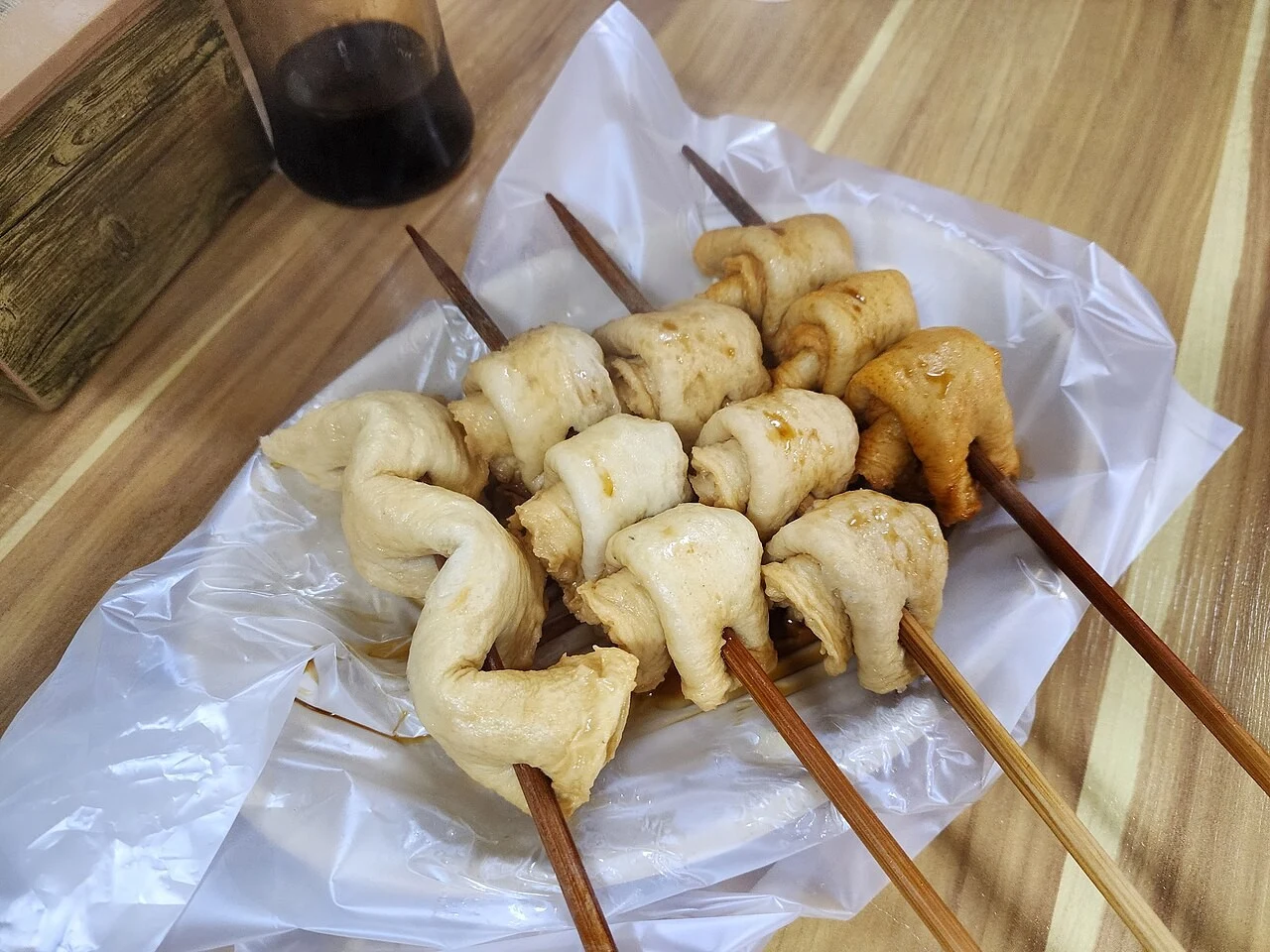
Onyang Oncheon Market is a permanent market, not a place that only comes to life on a few festival dates. Asan lists food shops, side dishes, agricultural produce, rice cakes and bread among its regular offerings.
That makes it a good place to arrive hungry but undecided. Walk a little before choosing lunch. Read the menus, see what is being cooked and decide whether you want a seated meal or several smaller things. There is no prize for discovering the one “correct” stall.
A bowl of noodles, a simple rice meal or a snack that catches your eye will do more for this afternoon than a cross-town detour to a restaurant you saved six months ago. Pick somewhere with a menu and price you can understand, and leave a little room for something sweet afterward.
Keep the permanent market separate in your mind from the nearby station-area five-day market. They are related parts of the neighborhood, not a reason to assume all the regular shops shut whenever it is not a market day.
04
Check in before you run out of interest in carrying your bag
This is where staying overnight earns its keep. You are not trying to squeeze the bath between lunch and a train home. You can leave your things, change the tempo and let the afternoon get smaller.
Onyang Tourist Hotel is one central bathing lead. Chungnam's tourism listing gives its hot-spring bath address as 1459 Oncheon-daero and lists day admission separately from accommodation. Treat it as a place to investigate, not a claim that we have stayed there or that a particular room package is available.
Before paying for any hotel, confirm the room category, bath access, bath closing time and whether the tub in your room is the experience you are actually buying. Get those four answers together. A low room price is less useful if you discover at check-in that the bath you came for is an extra, or already closing.
There is also a perfectly good day-trip version: use a public bath and return to Seoul. Choose the overnight because you want the slower evening and easy morning, not because bathing itself requires a hotel reservation.
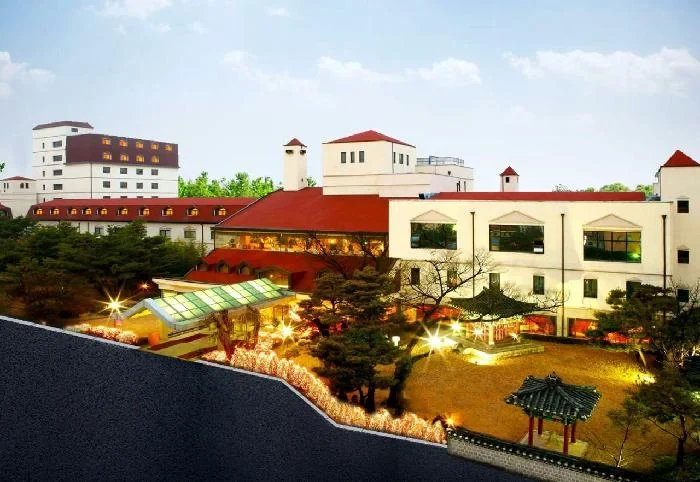
Onyang Tourist Hotel in the hot-spring district, 2020.
05
Let the bath be the activity
You do not need to make the experience more elaborate than it is. Wash before entering the shared tubs, keep your phone put away in changing and bathing areas, and follow the facility's signs. Separate communal bathing usually means bathing without a swimsuit. A shared pool zone is a different arrangement.
If you are traveling as a couple using separate bath areas, agree on a meeting place and time before you split up. It is a small decision that prevents the world's least relaxing round of “where are you?” messages.
Start gently, take breaks and drink water. More heat is not a better performance. This is a travel suggestion, not a medical treatment, and there is no reason to turn an ordinary bath into an endurance test.
Afterward, the evening plan can be dinner and a short stroll. It can also be dinner and absolutely no stroll. Onyang is a particularly good place to resist the urge to add an attraction simply because the map has one.
06
Spend the morning with things made for everyday life
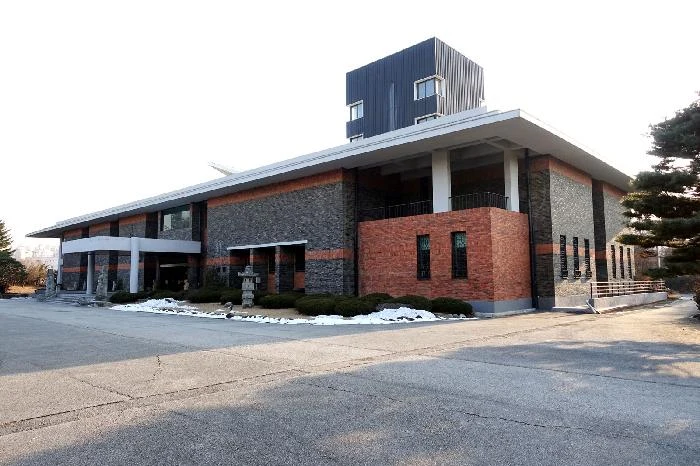
Onyang Folk Museum among the trees, 2020.
Onyang Folk Museum is a good companion to a bath-and-market trip because its subject is living, rather than sightseeing as a competitive sport. Its collections include the objects, tools and material culture of ordinary Korean life. The grounds add another change of pace.
Give yourself time to notice one thing properly: a storage vessel, a piece of furniture, a tool whose purpose takes a moment to work out. You do not need to become an expert in every room. The pleasure is often in recognizing a familiar domestic problem solved in an unfamiliar way.
Chungnam currently lists opening hours of 10:00–17:30, with last entry at 16:30, and a regular Monday closure, except when Monday is a public holiday. Its listed adult admission is ₩8,000. Check the museum before your visit for holiday or exhibition changes.
For a Sunday-to-Monday stay, that closure matters: visit on Sunday before bathing, or choose another morning plan. A Tuesday-to-Wednesday or Saturday-to-Sunday overnight fits the museum-first morning more neatly.
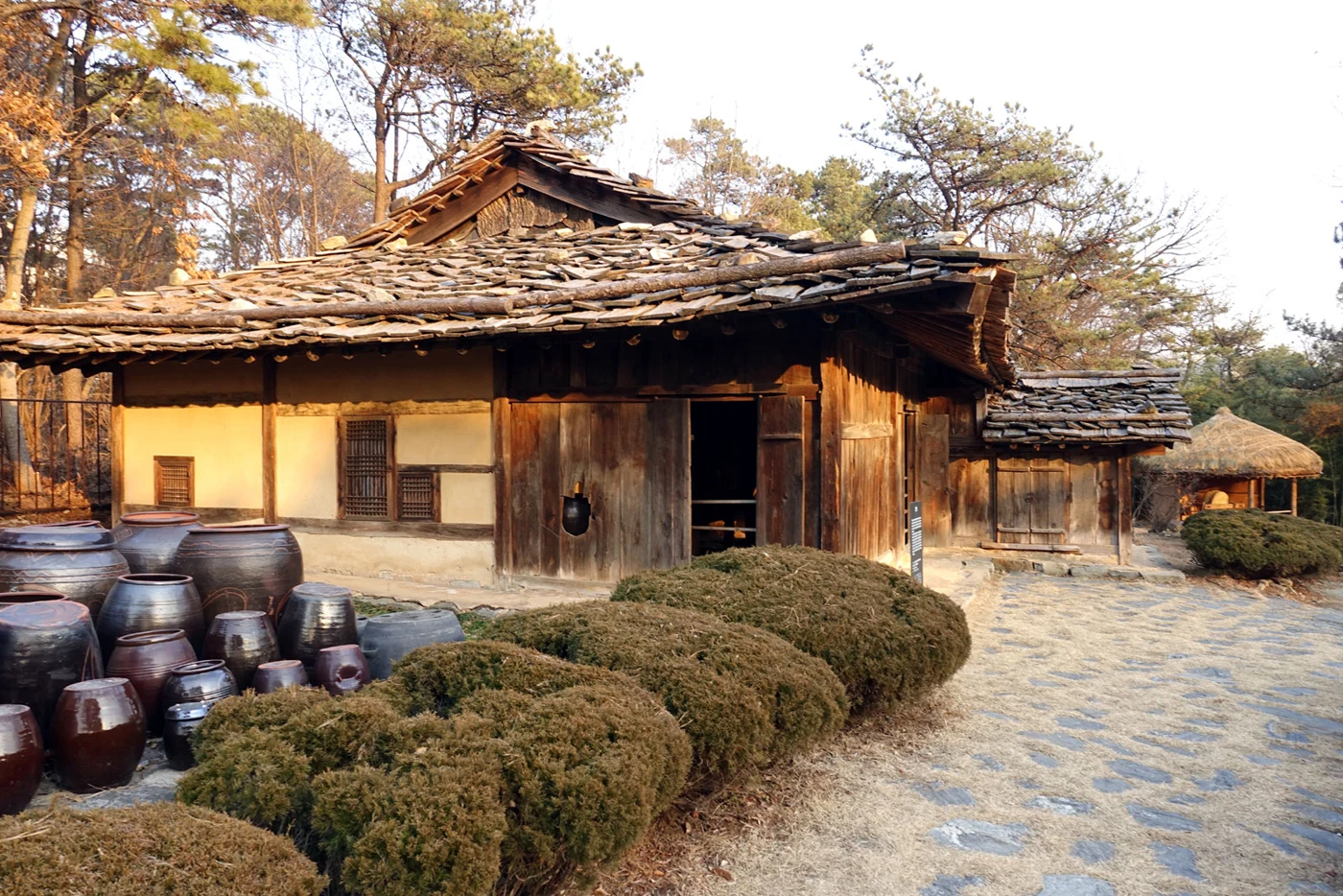
A wood-shingle house in the museum grounds, 2020.
07
What to leave for another trip
Oeam Folk Village, Hyeonchungsa and the wider Asan area all deserve consideration. They do not all deserve compulsory membership in this overnight.
If you want a full sightseeing day with a car, build that trip deliberately. If you want a warm, low-effort break, choose one museum and let the rest stay on the list. The best version of this route has enough room to discover that you would rather have another coffee.