There is a small but important difference between wanting a hot bath and wanting to disappear into a hotel until tomorrow.
The first can fit between lunch and dinner. The second is the reason you have packed a bag.
Korea offers both, but the names on the booking pages can make them sound more interchangeable than they are. A jjimjilbang might have natural hot-spring water. A hot-spring hotel might send guests to a communal bath. A place called a spa might expect a swimsuit in one zone and no swimsuit in another.
Forget the label for a minute. Decide how you want to spend the time, who you want to spend it with and where you intend to sleep. The right choice gets much easier after that.
01
These are overlapping experiences, not opposing water sources
A jjimjilbang, 찜질방, is generally built around shared heated rooms and relaxation spaces, often alongside separate communal bathing facilities. The hot rooms are usually enjoyed in the facility's clothing. The bathing areas have their own arrangements.
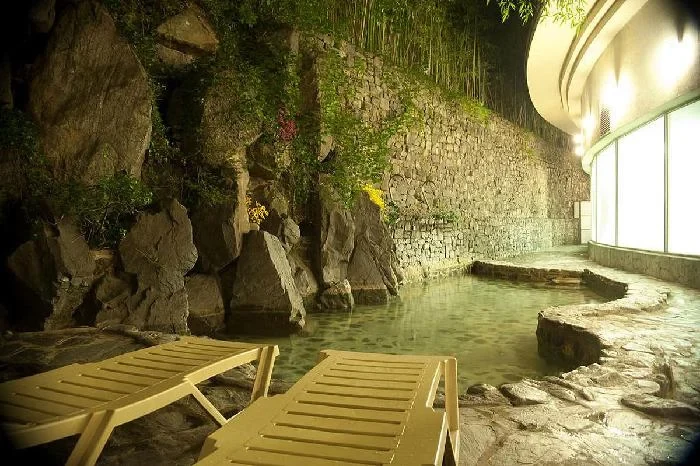
Oncheon, 온천, describes a hot spring, not the entire business model. You can encounter hot-spring water in a large urban bathhouse, a hotel, or a pool-and-spa complex. Busan's Spa Land, for example, describes natural hot-spring water alongside its themed heated rooms.
A hot-spring hotel adds accommodation. It does not automatically add a private bath, a secluded setting, dinner or unlimited admission. Those are features of a specific room or package, not benefits carried by the word “hotel.”
| The decision | Jjimjilbang visit | Hot-spring hotel stay |
|---|---|---|
| Main purpose | A warm break within the day | An overnight built around rest and bathing |
| Where you relax | Shared lounge and heated-room spaces | Your room, plus whatever communal facilities are included |
| Bathing together | Not generally in the separate communal tubs | Only with a suitable private bath or shared swimsuit area |
| Sleep | Do not assume overnight operation or a proper bed | A booked room and its stated bedding |
| Cost to compare | Admission, time limit, food, extras and luggage storage | Room total, bath access, meals and transport |
| Best fit | You already have a hotel and a free afternoon | You want the evening and morning to be part of the experience |
02
Choose the jjimjilbang for the afternoon you want back
There is a point in a city trip when another shopping street is technically possible but emotionally quite unnecessary. That is good jjimjilbang territory.
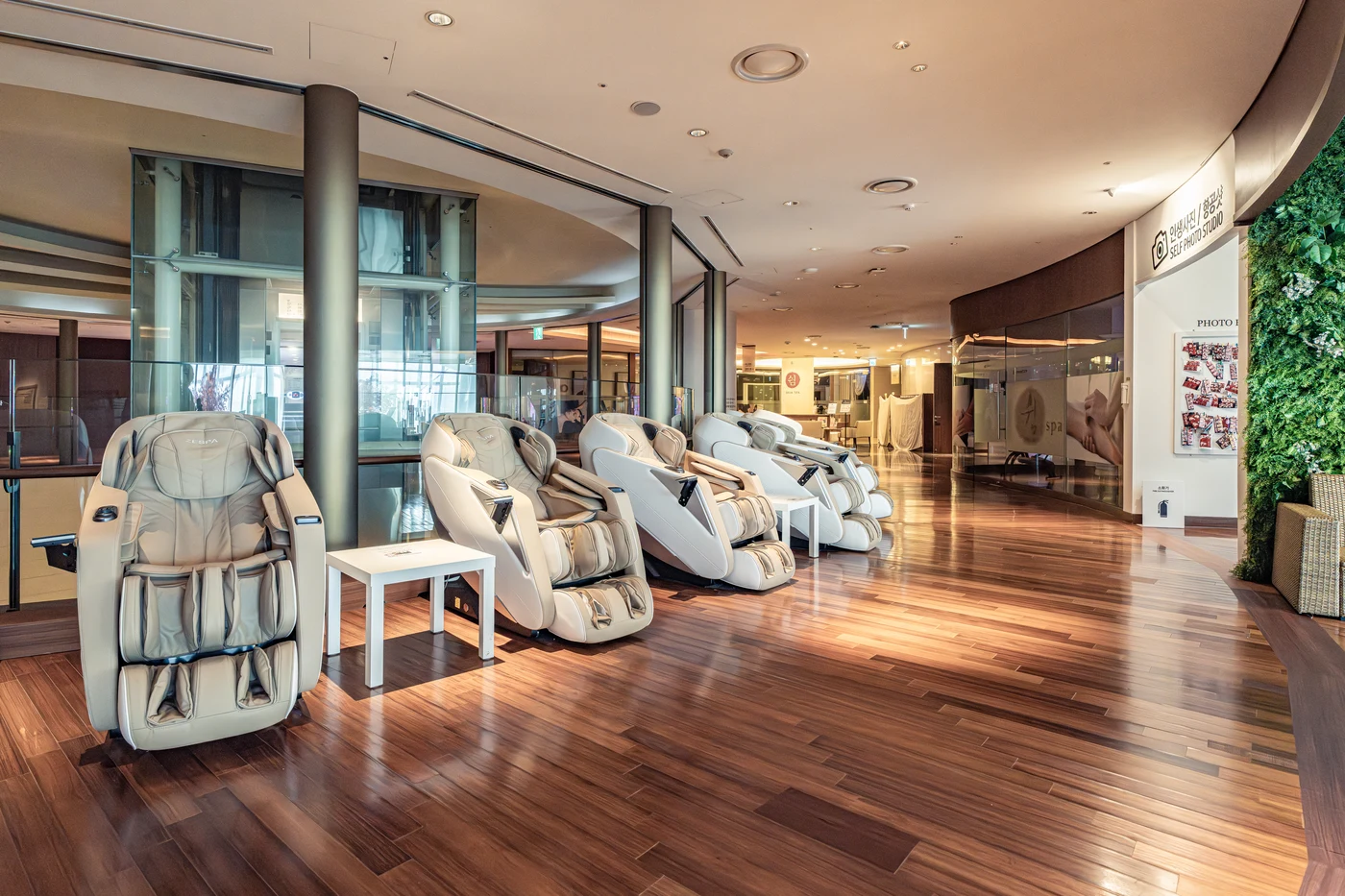
Instead of another transfer and another attraction, you have a place to wash, sit somewhere warm and spend time without being expected to buy the next thing. You can move between bathing, a shared lounge and the heated rooms without making each step a separate excursion.
Busan's Spa Land is a clear example of the day-visit model. Its operator currently lists 09:00–22:00, last admission 21:00, and standard adult admission of ₩26,000 for up to four hours. Additional time is charged at ₩5,000 an hour. This is an example to compare against, not a national price for jjimjilbangs.
The same operator also describes a spending-based extension to six hours. Do not buy snacks you do not want simply to win more time you do not need. Four pleasantly idle hours can be quite enough.
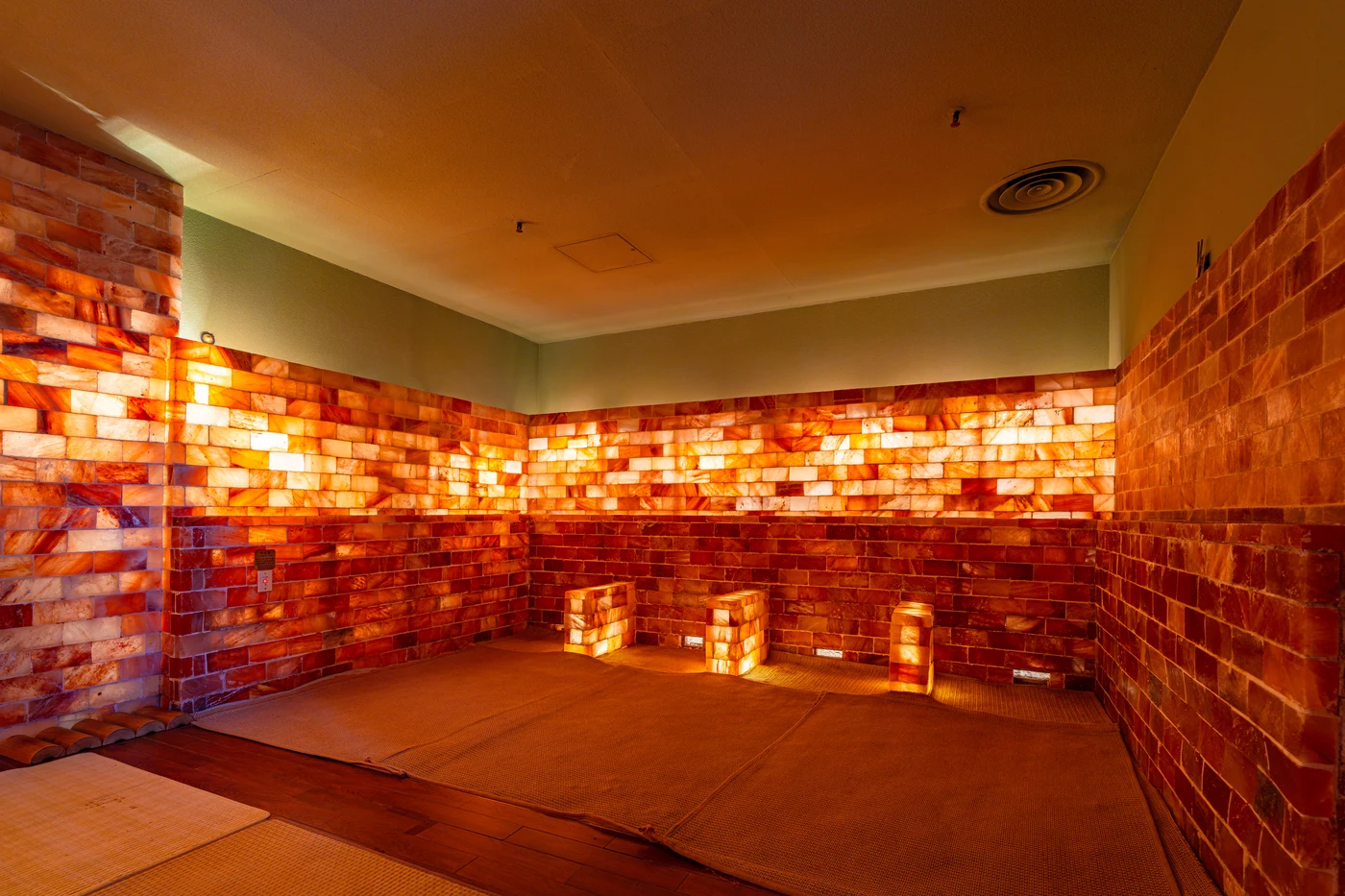
A glowing salt-brick room at Spa Land.
03
Choose the hotel when the room is part of the point
A hotel becomes worthwhile when you want to stop managing the rest of the day. Your bag is upstairs. Your next appointment is breakfast. Leaving the bath does not mean putting your coat on and navigating back across town.
That convenience is the real purchase. Not a marble lobby. Not a promise that hot water has made the entire stay luxurious. The value is being able to have an early bath, a quiet evening or another unhurried morning without turning each one into a journey.
Hotel Nongshim in Busan's Dongnae area is a useful example of why room categories matter. Its official site distinguishes ordinary accommodation from named spa-room categories and separately describes Hurshimchung, the public hot-spring facility. A spa room and admission to a communal bath are different things to book.
For a couple seeking privacy, start with the actual room specification. For a traveler who enjoys communal baths, an ordinary comfortable room plus clearly stated bath access may be the more sensible purchase. Neither option is inherently more authentic.
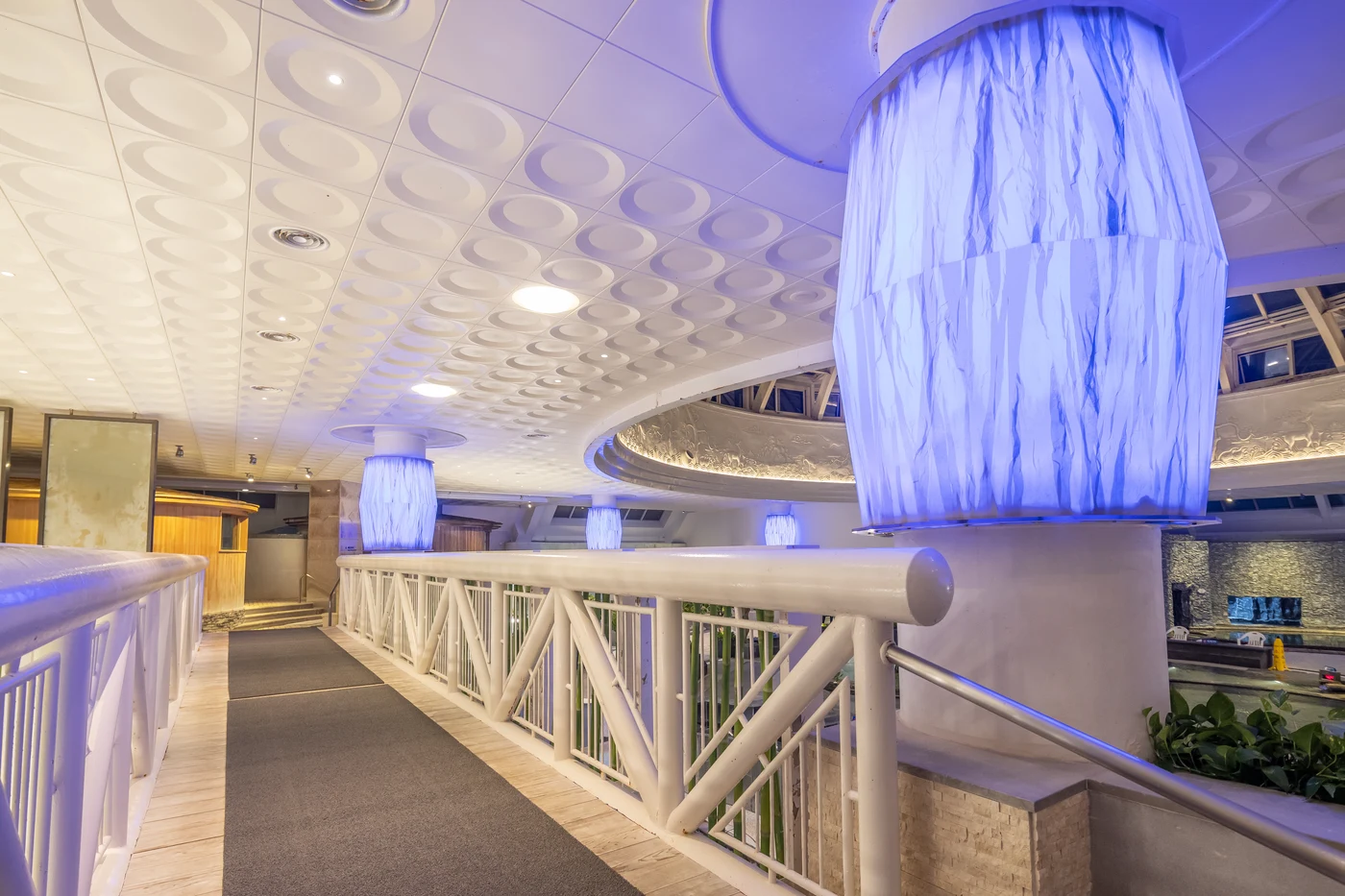
Walkways open onto Hurshimchung’s large bathing hall.
04
The togetherness question matters more than the towel hat
Two people can spend a very nice afternoon at the same jjimjilbang without bathing together. The usual pattern is to use separate changing and bathing areas, then meet in the shared clothed spaces.
If your imagined holiday photo is the two of you soaking side by side, that is a different brief. Look for a private bath with a clearly stated capacity or a mixed swimsuit pool. Do not book first and hope the distinction sorts itself out at reception.
Paradise Spa Dogo makes the pool distinction particularly clear: its guidance requires swimwear or appropriate beachwear in the spa pool areas, while the hot-spring bathing facilities are a separate part of the visit. A swimsuit-pool complex is a third option, not a synonym for a private hotel bath.
Families should check changing-room arrangements and the facility's child rules before booking, including the practical question of which adult will accompany which child. Spa Land currently admits elementary-school-age children and older, with a same-sex guardian required for elementary-school children. It is not a toddler-friendly substitute for a family pool.
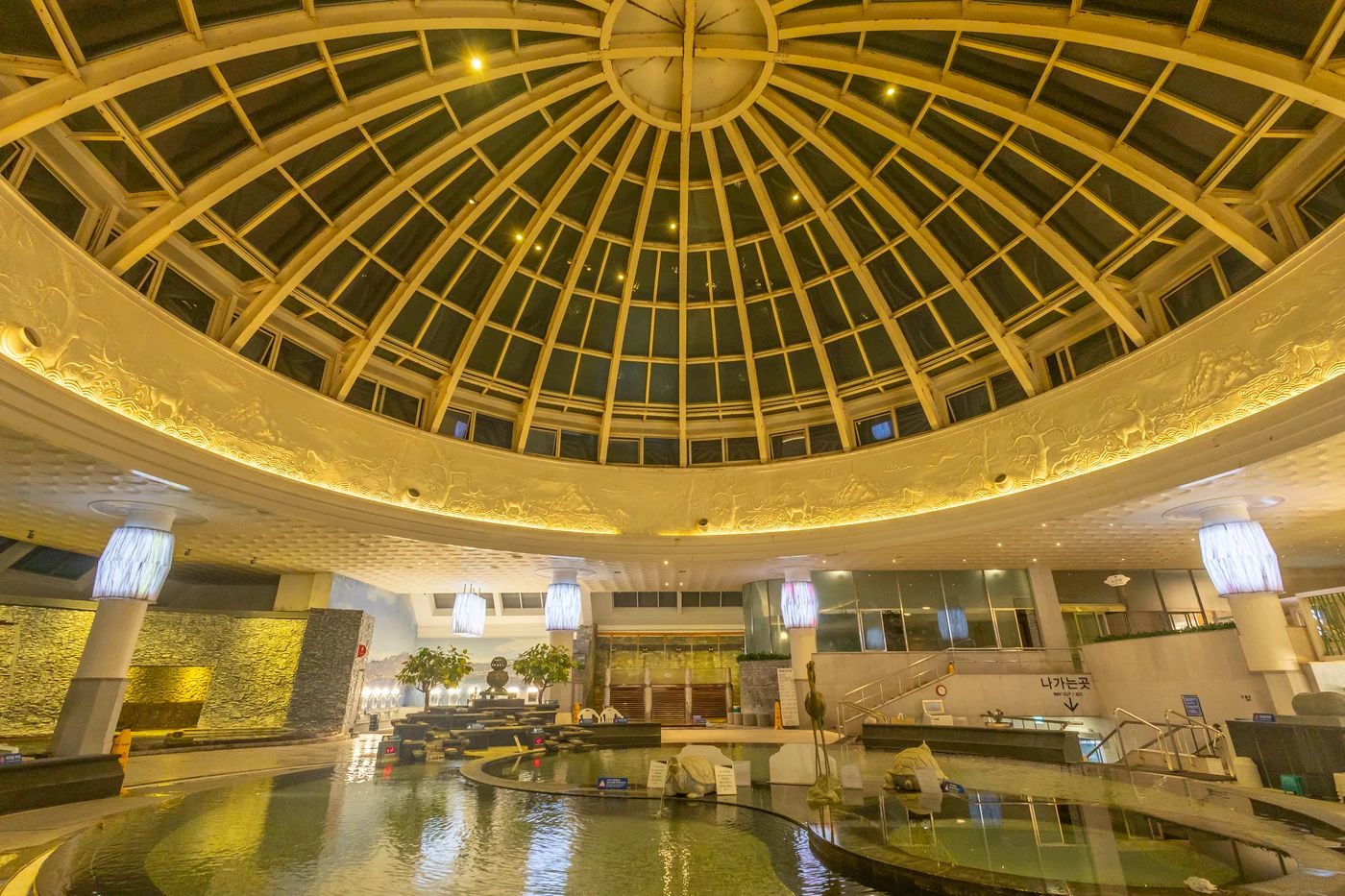
The dome brings light into Hurshimchung.
05
Compare the complete bill
A day ticket is not always the cheap choice, and a hotel is not always the expensive choice. It depends on what you would otherwise buy.
If you already have a good hotel room, an afternoon admission is the incremental cost. Booking another hotel for the same night merely to reach a bath can be poor value. If you have not booked accommodation, compare the hot-spring hotel with the room you would have bought anyway, then add whatever bath tickets and transport the alternative requires.
Keep three columns in your notes: the basic price, the extras you will actually use, and the travel cost. A scrub, massage, restaurant meal or premium lounge should only enter the calculation if you want it. None is automatically included because the building has hot water.
The official Dogo tariff illustrates why the ticket name matters too. For its September 1–December 17, 2026 low season, the operator lists a bath-only ticket separately from a spa ticket covering the bathing facilities and indoor/outdoor pools. It is not one identical experience with several mysteriously different prices.
06
Do not confuse a lounge with a hotel room
Some jjimjilbangs offer overnight use. Others close in the evening. A familiar-looking photograph of people stretched out on the floor proves neither that the venue is open all night nor that it offers the sleep you want.
For a first visit, treat a jjimjilbang as a day activity unless you have specifically confirmed overnight admission, sleeping arrangements, luggage rules and when you must leave. Shared rest space can mean people walking past, lights, conversation and less control over your environment than a private room.
It is a poor time to discover that trade-off on the night before an early international flight. If sleep matters, buy sleep. You can still enjoy the bath beforehand.
Spa Land's published 22:00 closure makes this especially straightforward: it is not an overnight accommodation option.
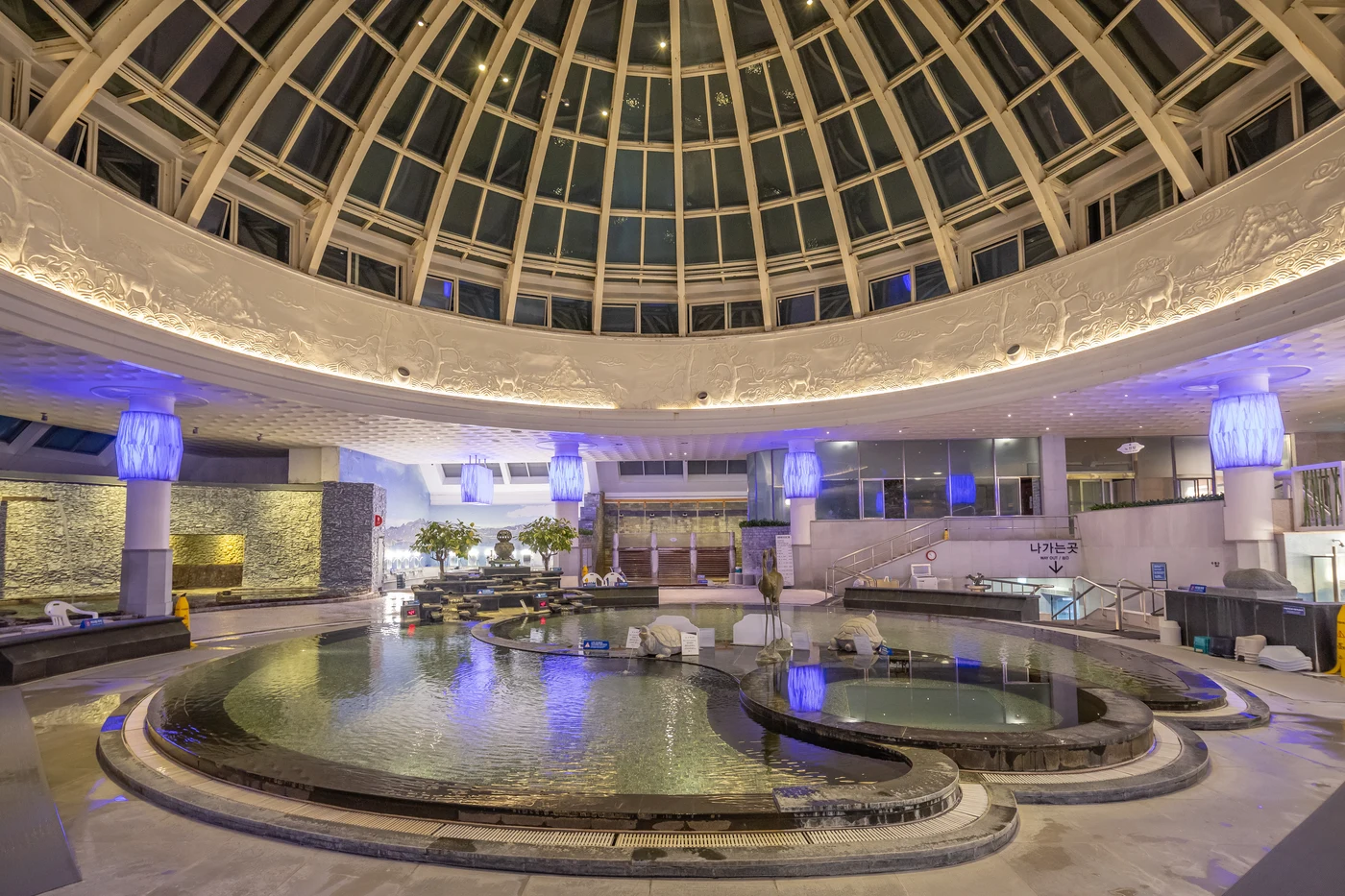
A broad view across the hot-spring baths.
07
The small practicalities that make it feel easy
Before arriving, check the luggage policy. Spa Land says large suitcases cannot be taken into the internal locker rooms and provides separately charged suitcase lockers outside. The published charge is ₩3,000 for five hours, then ₩1,000 per extra hour. A clothing locker and a suitcase locker are not the same thing.
At the facility, follow the local sequence: shoes away, belongings secured, clothing or towels collected, then the appropriate changing and bathing area. Wash before entering communal tubs. Keep phones and cameras out of changing and bathing spaces. The absence of a photograph is part of respecting everyone else's afternoon, not a missed content opportunity.
If you have visible tattoos, need step-free access or have a specific privacy requirement, ask the individual venue before you pay. Do not apply another country's bathing rules, or another Korean venue's rules, to the place you are visiting. For example, Dogo's guidance discusses covering large tattoos in its pool areas; that is a venue-specific instruction, not a nationwide policy.
Take breaks, drink water and leave the heat when you have had enough. Anyone with a medical reason to avoid hot environments should follow their clinician's advice. The travel goal is a comfortable visit, not a therapeutic claim.
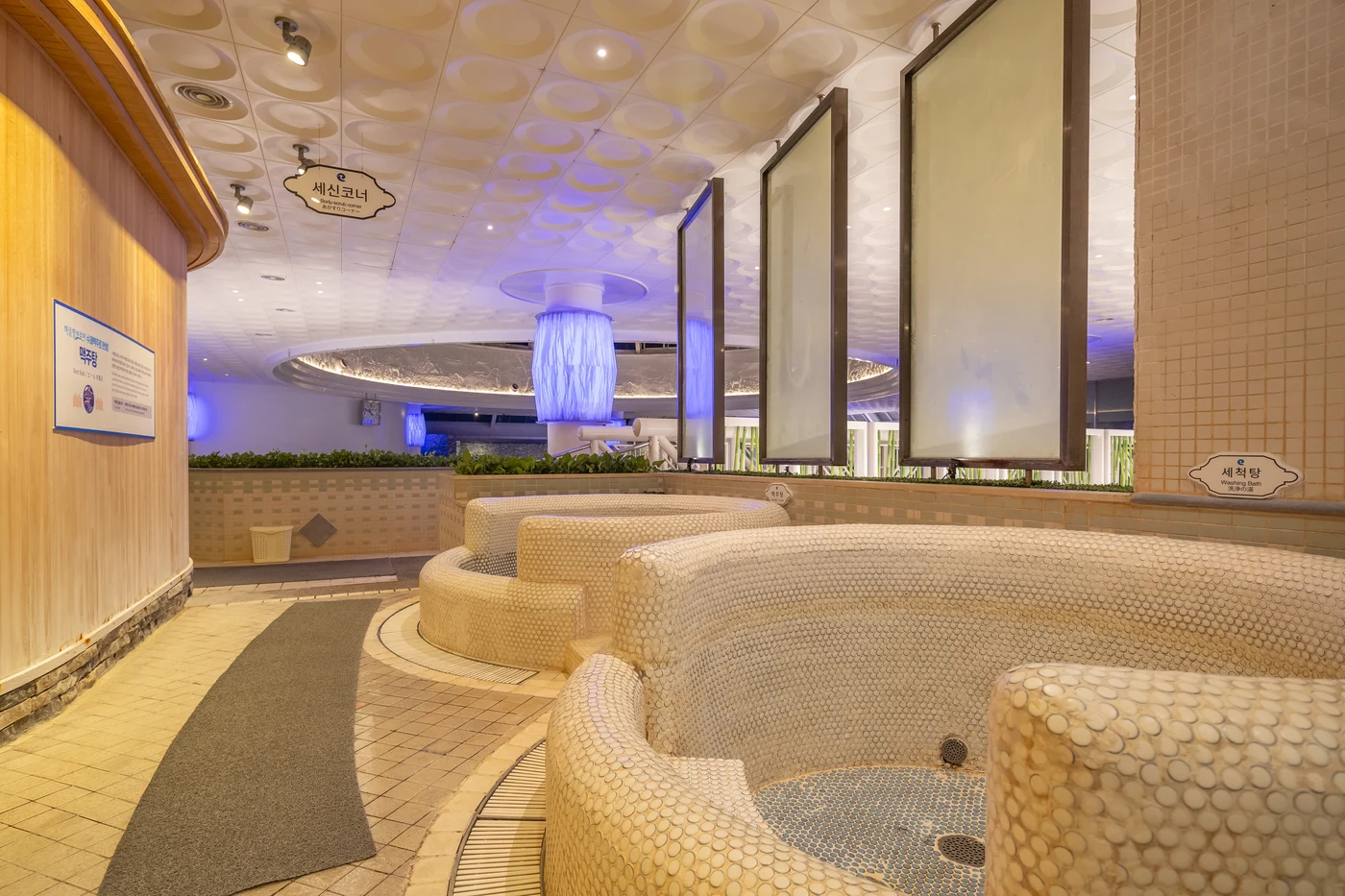
Smaller bathing spaces within the larger hall.
08
The verdict
Choose the jjimjilbang if you want a few warm hours, already have accommodation and are happy with shared spaces. It can be a lovely interruption to a busy trip.
Choose the hot-spring hotel if the slow evening, private room and following morning are what you are looking forward to. Confirm whether you want a communal bath or a private in-room one before comparing prices.
Choose a swimsuit spa instead if the central wish is mixed-group pool time. You do not need to force that wish into either of the other categories.
The best choice is the one that removes a small disappointment before it happens: the bath you cannot share, the lounge you cannot sleep in, the room whose ordinary bathtub was doing rather a lot of work in the photograph.