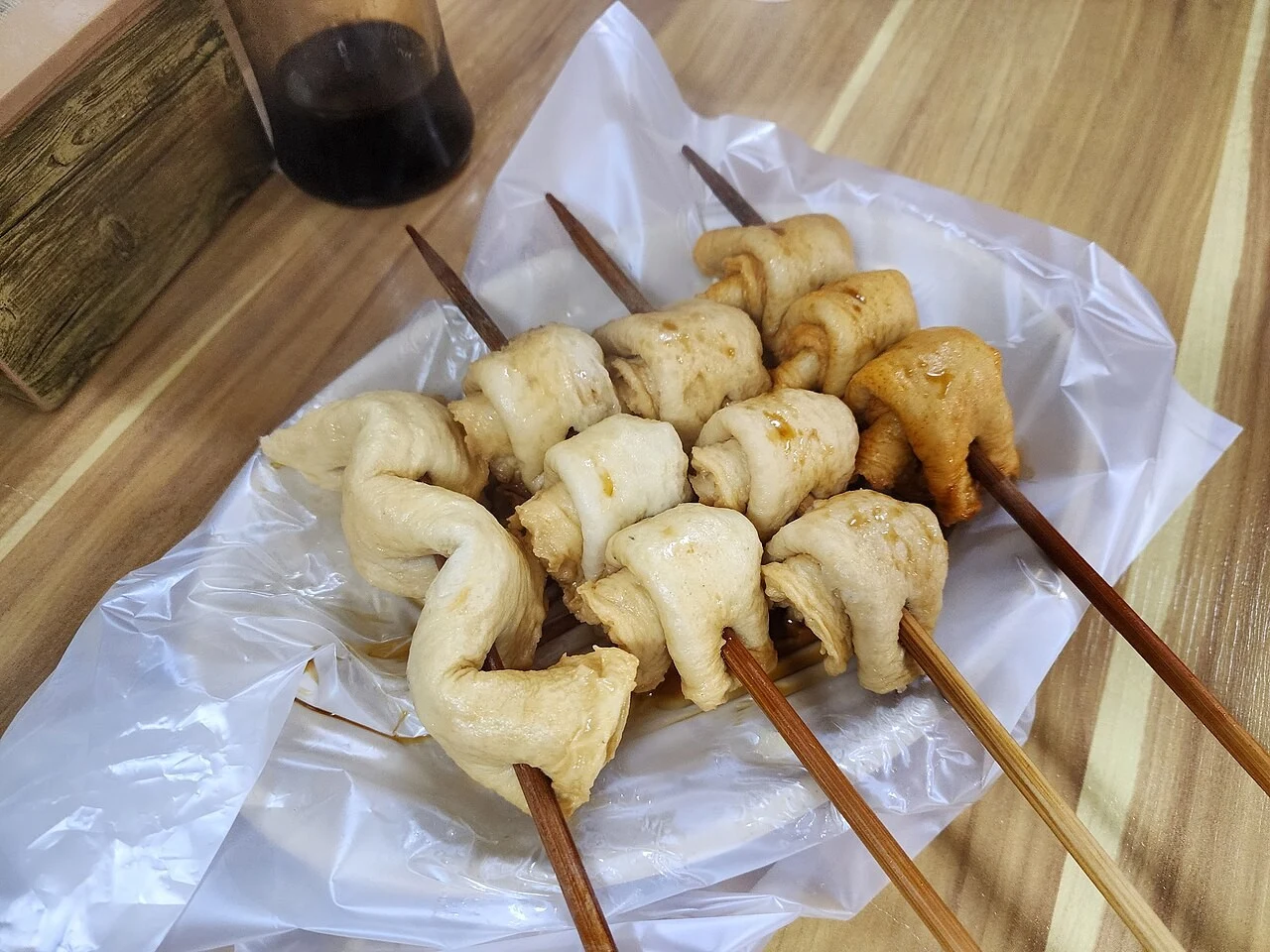
The first skewer is easy. It is sitting in hot broth, you are hungry, and holding something warm suddenly feels like an excellent travel decision.
The second purchase is where Busan starts making its case.
There are sheets folded like small accordions, plump bars, balls, rolls and pieces that look as though they wandered in from a bakery. Cheese appears. Vegetables appear. Something crisp sits beside something springy. Before long, “fish cake” begins to sound like a description with several important pages missing.
Eomuk does not need a solemn tasting ritual. It does reward a little curiosity. Instead of buying a bag of the first shape you recognize, give yourself a small comparison: plain and filled, broth-softened and crisp, something for now and something that belongs in a kitchen later.
01
First, what are you actually eating?
Eomuk is a prepared fish-paste food, shaped and cooked in different ways. Fish flesh is combined with other ingredients to give the mixture flavor and structure. The recipe matters: the balance of fish, starch, vegetables and additions can change both the texture and the taste.
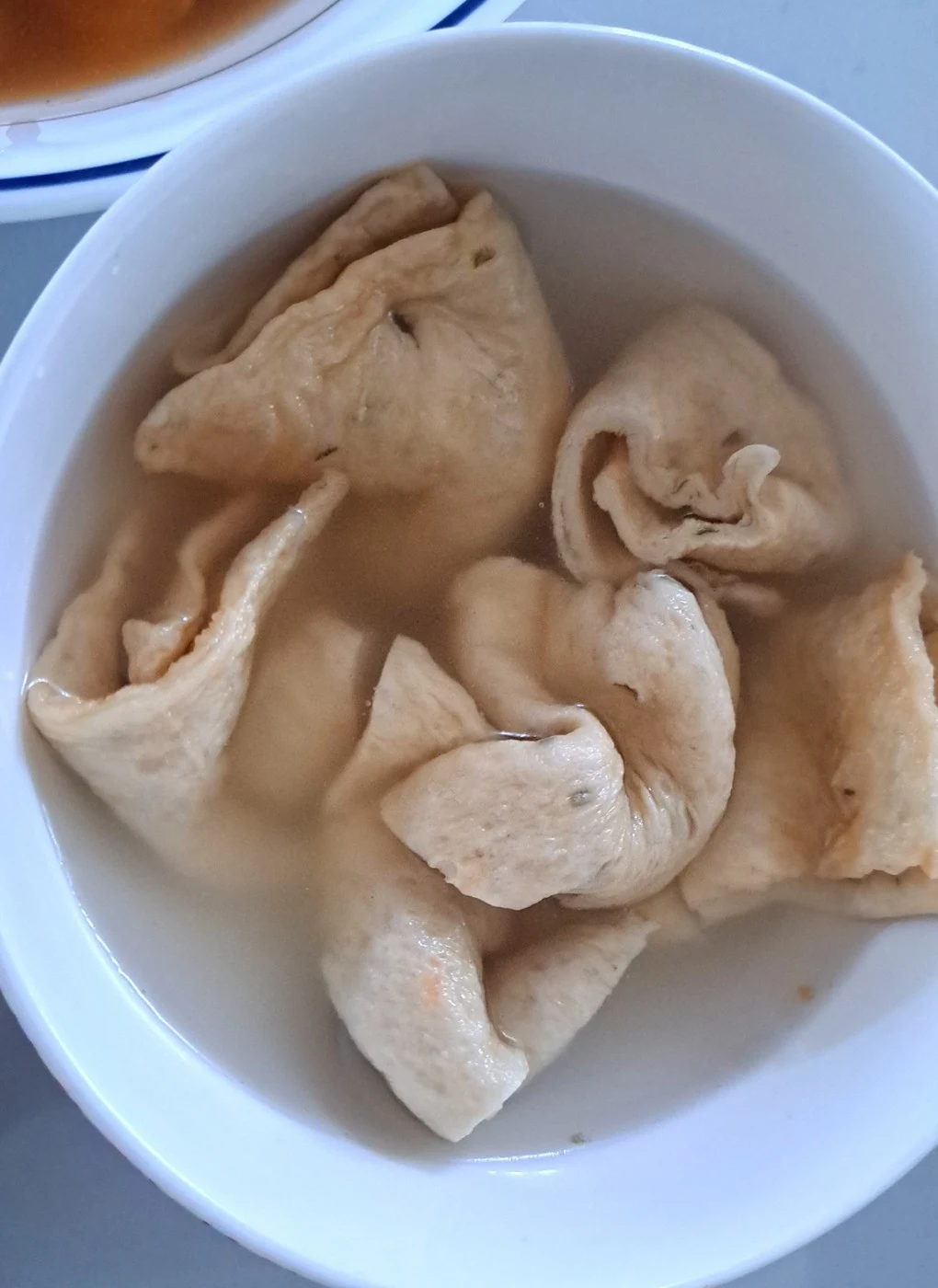
That means two pieces carrying the same broad name can behave very differently. One is thin and flexible, ready to soak up broth. Another has enough body to enjoy on its own. A filled piece makes the center part of the attraction.
Do not let color do all the explaining. A pale piece is not automatically bland, a darker one is not automatically premium, and a large one is not automatically better value. Look at the description, the ingredients and what you actually feel like eating.
You will also hear odeng, 오뎅, in everyday speech. Eomuk is the straightforward Korean word to use when ordering; it is not a separate luxury category.
02
Why Busan gets a whole article
Busan has an established fish-cake industry as well as the counters where visitors first encounter it. Samjin traces its beginnings to 1953 and identifies December 2013 as the opening of its fish-cake bakery format in Yeongdo. That bakery idea is useful for travelers: you can see individual pieces, choose contrasting styles and treat the shop as somewhere to browse rather than merely buy a sealed package.
But this is not an article about declaring one company the winner. Samjin is a practical example with a visitable Yeongdo base and a current workshop booking system. Goraesa provides another way to expand the category: its own catalogue includes fish-cake noodles, an excellent reminder that eomuk need not arrive on a stick.
The point is range. Busan gives you reasons to move beyond “I tried fish cake” toward “I found the kind I like.”
03
Build a small tasting instead of a large tray
There is a particular danger to arriving at a bakery-style counter while hungry: everything looks like a sensible addition until you are carrying lunch for four.
Start with two pieces. Make one plain enough to tell you about the fish cake itself. Make the other different in shape, filling or finish. If you are sharing, choose contrasting pieces and ask whether they can be cut. You can always go back for another.
| Style | What to notice | Good reason to choose it |
|---|---|---|
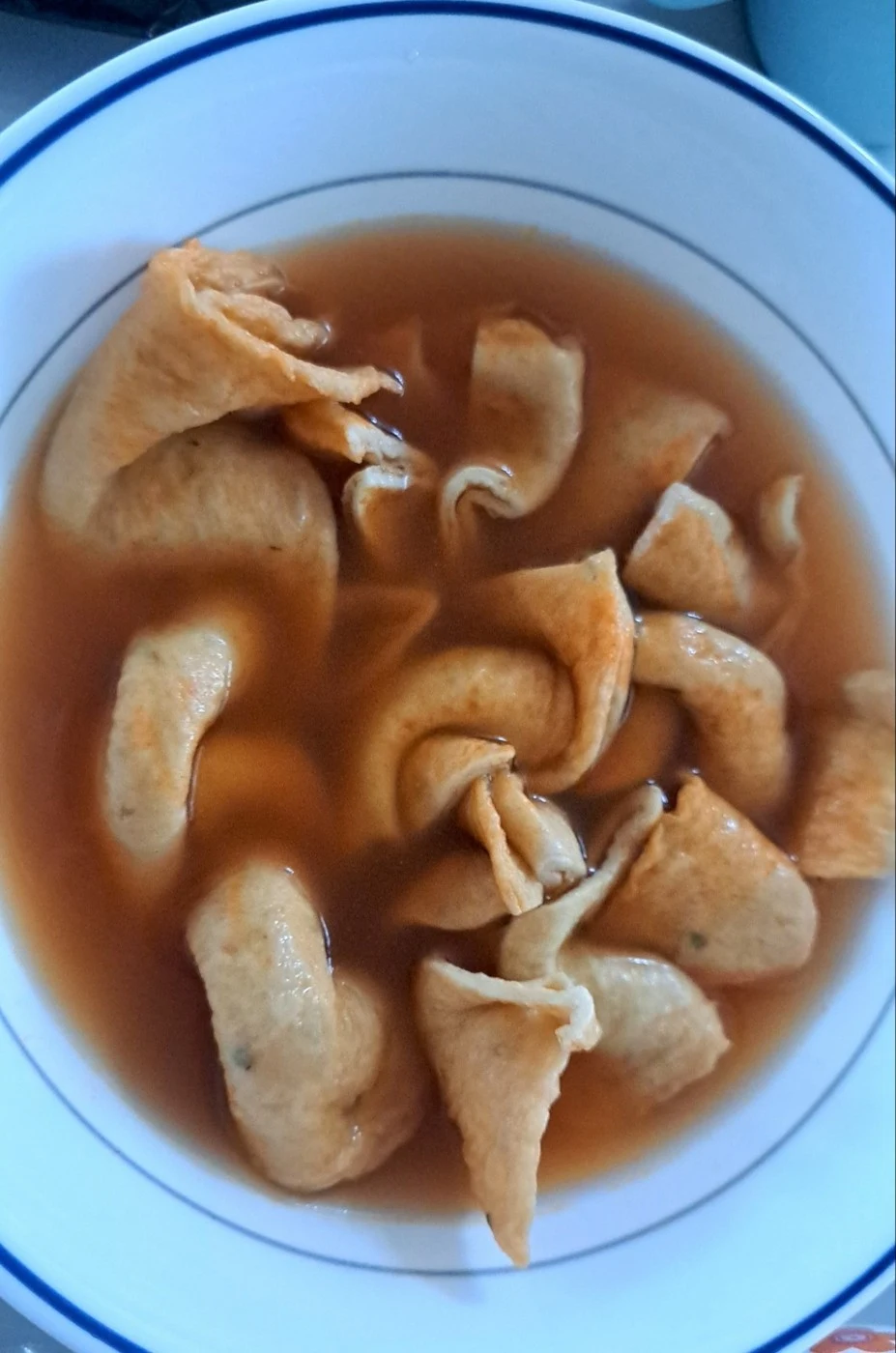
| Plain skewer in broth | Softness, spring and how much broth it takes up | A simple first reference point |
| Thicker bar or shaped piece | Texture through the center | You want more substance without a filling |
| Cheese or vegetable-filled piece | How the filling changes the balance | A contrasting second taste |
| Croquette-style piece | The outside as well as the middle | You want something crisp rather than broth-softened |
| Packaged cooking eomuk | Ingredients, storage and intended use | You have a kitchen and a plan to cook |
| Fish-cake noodles | The fact that the noodles themselves are eomuk | You want to see how far the category stretches |
These are styles to look for, not a promise that every counter stocks each one. If a piece is sold ready to eat, ask how the staff recommends serving it. A product intended for a soup pot at home is not automatically today's best snack.
04
The broth counter has its own rhythm
Watch the counter for a moment before taking anything. Some places ask you to order first; others track the skewers you eat. Let the person running it show you how their system works.
Ask about broth rather than assuming every cup is included. Keep used skewers where staff indicates, use the provided utensils and avoid moving between shared sauces and your food in a way that puts your mouth back at the communal container.
Most importantly, give the first bite a moment. The air can feel cold while the center of the fish cake remains impressively hot. The snack will still be there after you stop trying to eat it immediately.
05
Make Yeongdo the activity, not just the shopping stop
If you want the deeper version, Samjin's current reservation page lists its second experience venue at 36 Taejong-ro 99beon-gil, Yeongdo-gu. It operates Tuesday through Sunday, 09:00–18:00, with Monday closure. Ordinary individual workshop listings are currently ₩20,000; the separate advanced class is ₩25,000.
A class is a better reason to cross town than the possibility of buying one familiar snack. Book it first, then build the surrounding hours around it. The booking page links to a Global Booking route, which is a useful starting point for international visitors, but a translated booking page does not itself guarantee an English-speaking instructor.
Choose the class for the process: working with the mixture, forming a piece and seeing how the finished food changes. Choose the shop if what you really want is twenty enjoyable minutes and something warm to eat. Neither choice is the more authentic one.
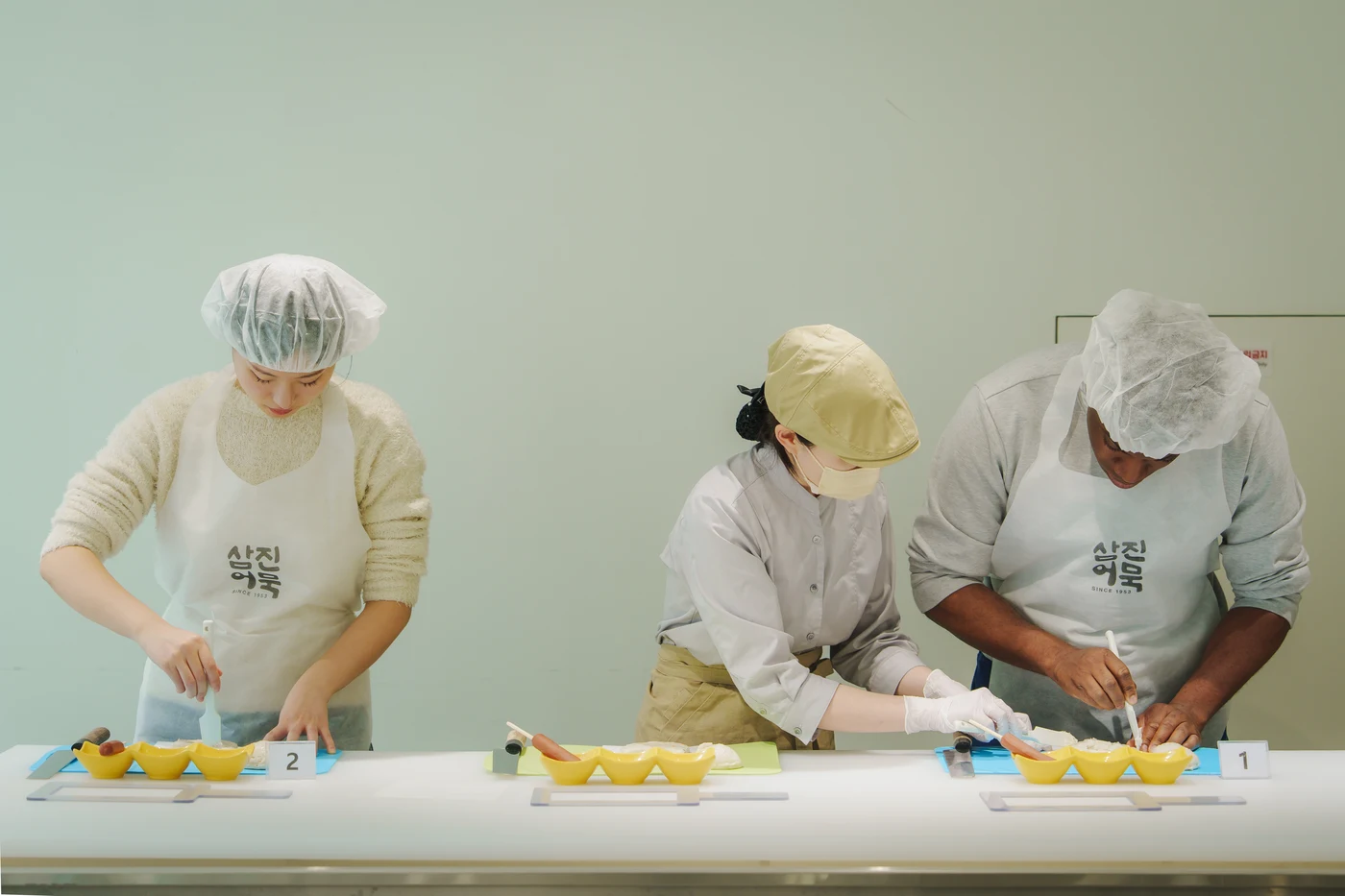
An eomuk workshop becomes a hands-on afternoon.
For families, use the age conditions shown on the specific product you are booking. For a group, check that everyone is comfortable handling fish and that the organizer can address any dietary restrictions. Do not assume an accompanying adult or a nonparticipating friend is automatically included in the ticket.
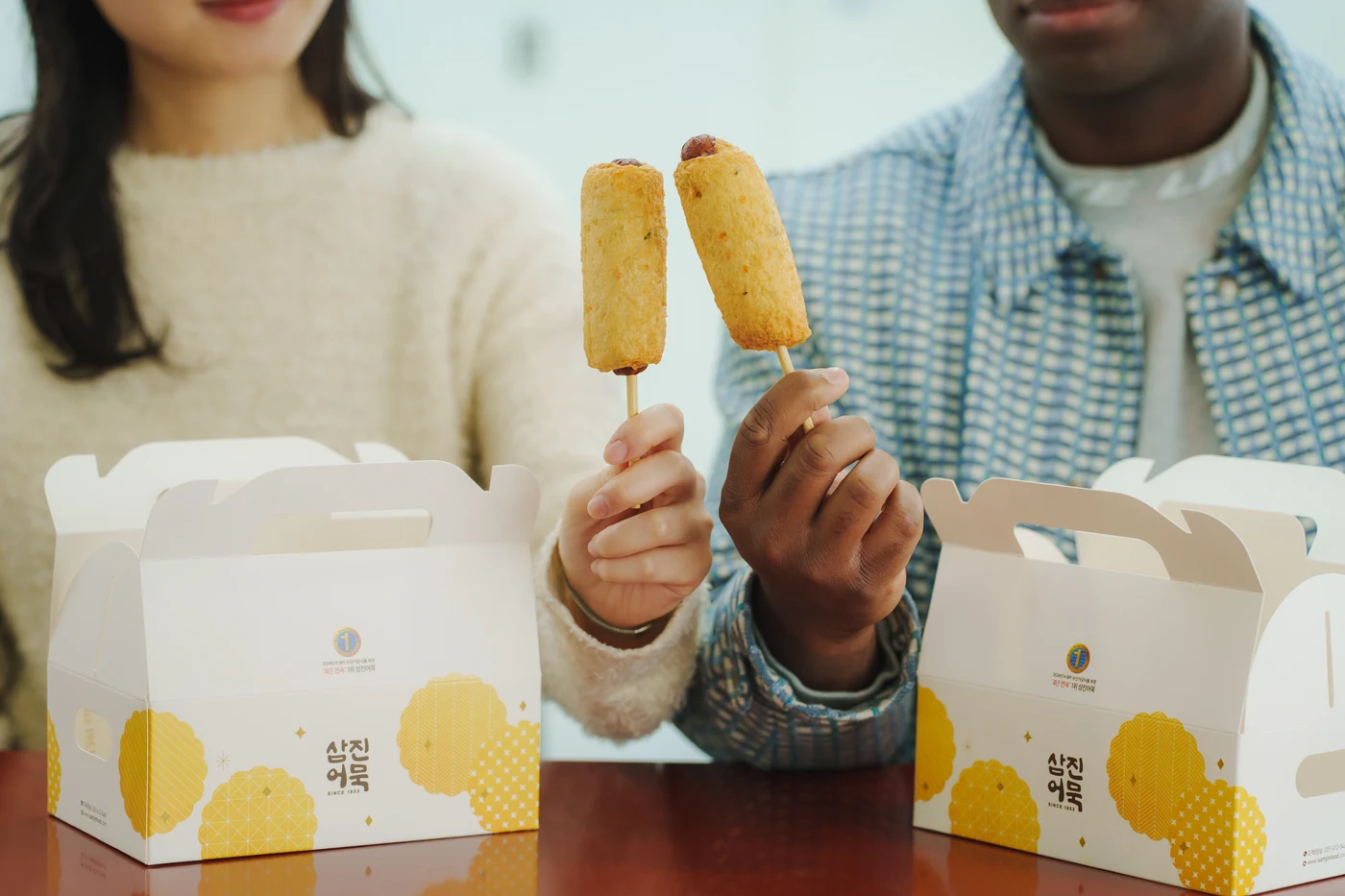
The finished skewers are part of the reward.
06
Keep the route on one side of Busan
Busan is an easy city in which to mistake a list of good places for a good day.
For a Yeongdo workshop, build a west-side day around Yeongdo and the Nampo area. For a short taste during a shopping day in Centum City, use a nearby branch instead. Samjin's official store directory lists both Yeongdo and Centum City locations; the experience does not require visiting every one.
If your hotel is near Haeundae and you are not taking a class, there is no obligation to cross the city for a branded bag. An interesting food stop should improve the day around it, not swallow it.
Our suggestion: choose either the workshop version or the snack-counter version. Give the rest of the afternoon to somewhere you wanted to be anyway.
07
Take some home, but buy for the journey you have
A nicely packed box can make a very good souvenir. It can also make a very awkward companion to six more hours of sightseeing.
Ask the seller how the exact product must be stored, how long it can remain out of refrigeration and whether any cold packaging is suitable for your actual journey. Follow the label rather than assuming all vacuum-packed fish cake is shelf-stable. Samjin's history includes the development of room-temperature distribution products, but that is not a storage instruction for everything under its name.
For an international flight, the destination country's rules are a separate question from the shop's packaging. Check them before buying. A box that travels well on a domestic train is not automatically admissible overseas.
And if the answer is that it does not suit your journey, eat your souvenir in Busan. Not every good purchase needs to survive the flight home.
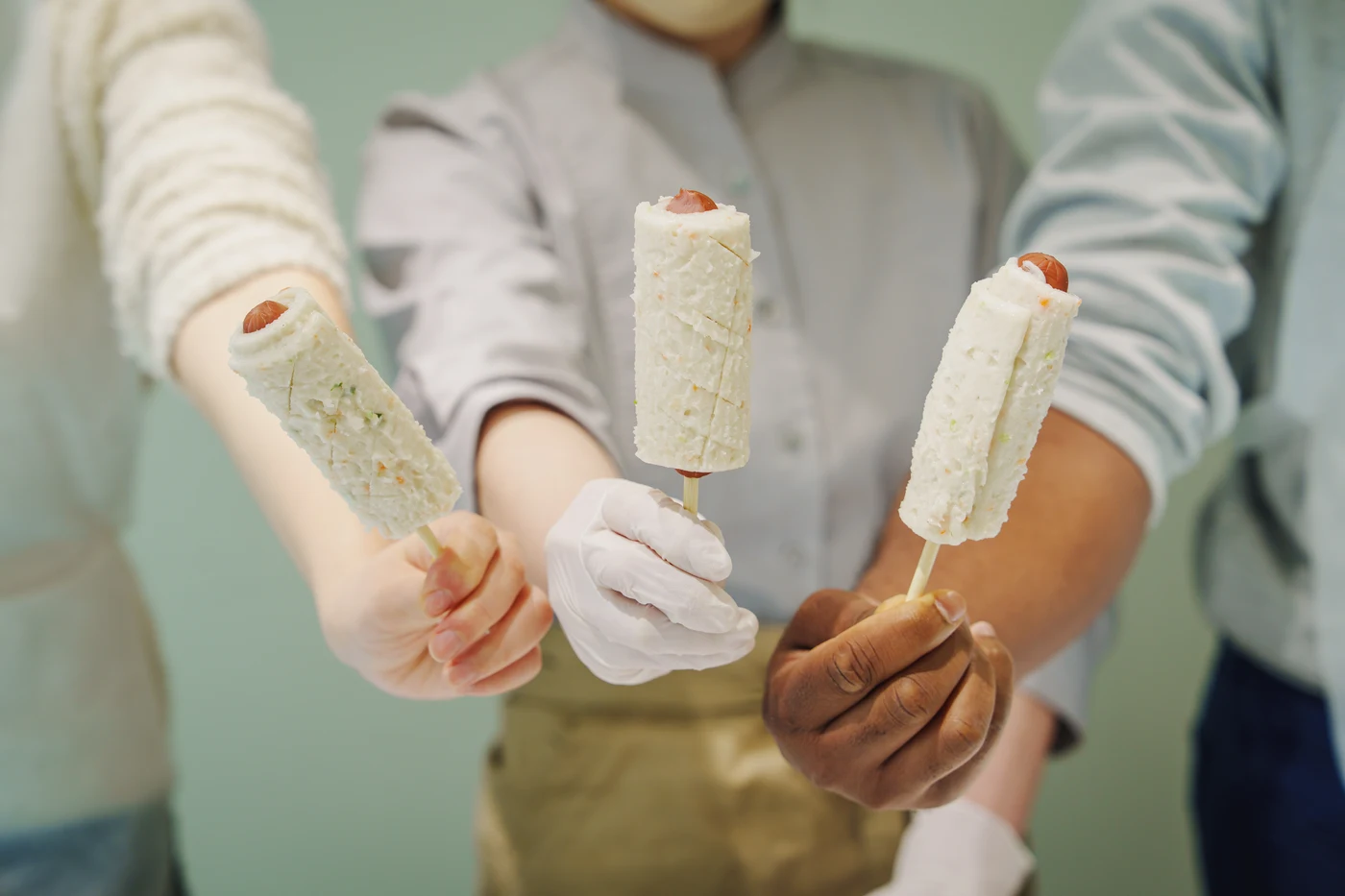
Fish paste takes shape before cooking.
08
A few questions worth knowing
| English | Korean |
|---|---|
| Which one is not spicy? | 안 매운 건 어떤 거예요? |
| Can I eat this as it is? | 이거 바로 먹어도 되나요? |
| Does it contain wheat? | 밀이 들어 있나요? |
| How long can it stay unrefrigerated? | 냉장 보관 없이 얼마나 괜찮나요? |
| Please pack it to go. | 포장해 주세요. |
Eomuk is not vegetarian. Depending on the product, other ingredients may include wheat, egg, soy, dairy or shellfish. For an allergy, a casual “probably not” is not enough: use the ingredient label and ask about shared preparation. Food Safety Korea advises checking the listed ingredients and allergen information rather than judging a food by its name or appearance.