Kimchi usually arrives in a dish small enough to overlook. A few red folds of cabbage, a pair of chopsticks, perhaps a refill before you have thought to ask for one. It is easy to treat it as something that simply comes with lunch.
Kimjang makes that little dish considerably harder to take for granted.
There is cabbage to salt, wash and drain. Radish to prepare. Seasoning to work between leaves rather than merely paint across the top. There are containers to fill and people to feed. The finished photograph is red and cheerful. Much of the work happens before anyone puts on the photogenic gloves.
If I were choosing one food experience for a November trip, I would look beyond another tasting menu and consider making something. Not because a short class can turn a visitor into a keeper of family tradition, but because an hour spent handling the ingredients changes what you notice at the next meal.
01
The important part is the making and sharing
Kimchi is the food. Kimjang is the seasonal practice of making it in quantity and sharing it. UNESCO inscribed the Republic of Korea’s kimjang tradition in 2013, recognizing a communal practice rather than declaring one cabbage recipe the winner.
Traditionally, preparations followed the year: seafood set aside for fermentation, salt obtained, peppers dried, and a late-autumn making day chosen with the weather in mind. Families and neighbors pooled work and exchanged the results. Recipes carried household preferences as well as regional ones.
That distinction matters to a visitor. The interesting question is not only “What goes into kimchi?” It is also “Who is making it, who taught them, and who will receive a container?” A supermarket packet can tell you its ingredients. It cannot tell you all of that.
Nor should the tradition be turned into a charming story in which large quantities of food prepare themselves. Salting, rinsing, lifting and cleaning are real work. Joining in means listening to the person running the table, not only arriving for the photograph.
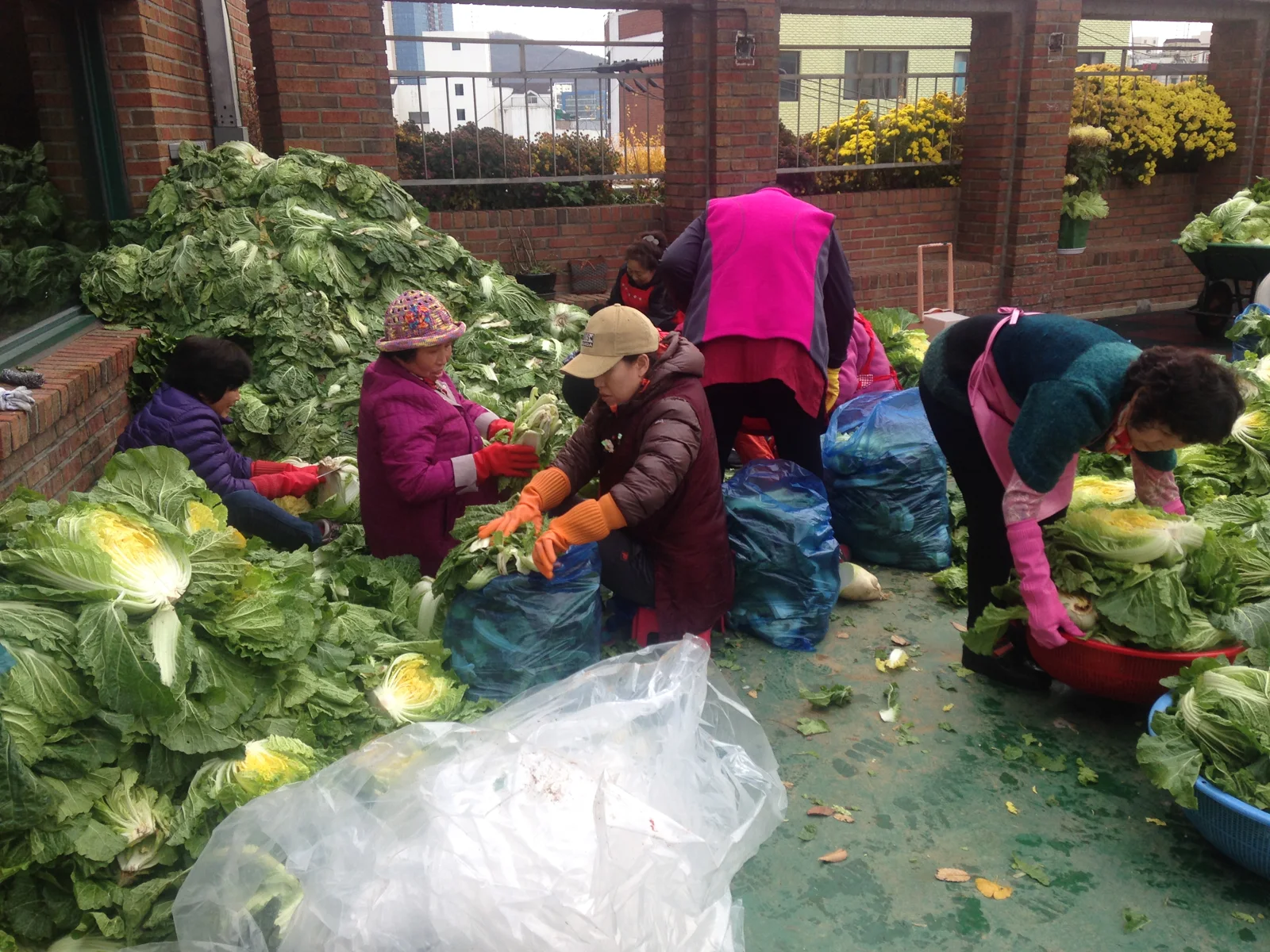
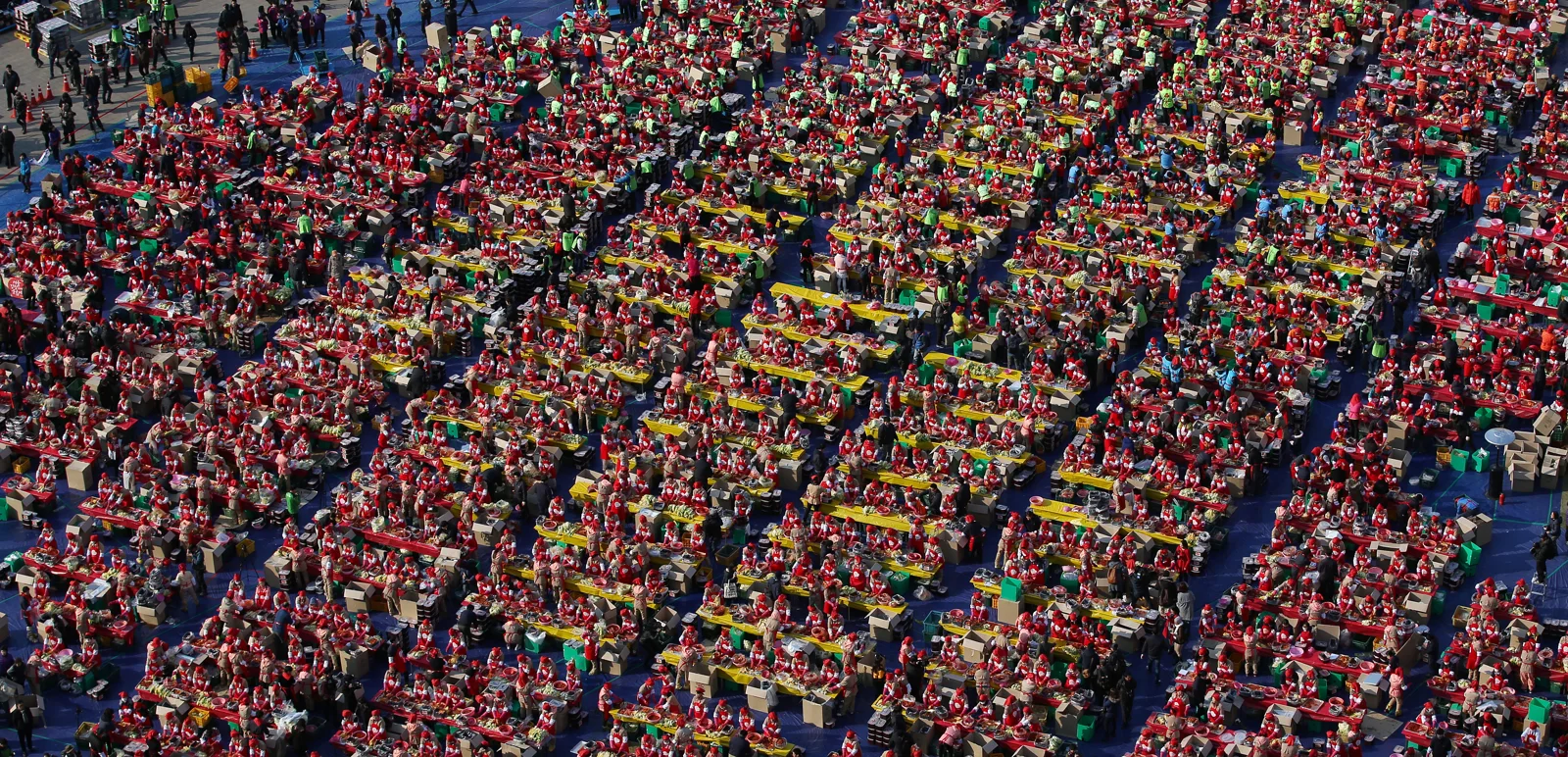
The work begins well before the containers are filled. Korea, November 2016.
02
Follow the cabbage, not just the red paste
For the familiar whole-leaf cabbage style, the process is easier to understand as a sequence: prepare and salt the cabbage, rinse and drain it, make the filling, season between the leaves, then pack it for storage and fermentation. Exact ingredients, proportions and timing belong to the recipe you are using.
Notice how much attention goes into water and texture before the seasoning appears. A beginner session may start with cabbage that has already been salted. That is a sensible way to fit the activity into an afternoon, but it is worth asking what happened beforehand. You are joining a stage of the process, not compressing every stage into sixty minutes.
Then look closely at the filling. Radish strips, garlic, ginger, chili powder and a savory fermented ingredient can all have a role, but there is no reason to expect every household or teacher to use an identical mixture. Ask what is in this batch. Ask why.
The red bowl is the obvious photograph. The bowl of pale cabbage waiting beside it often explains more.
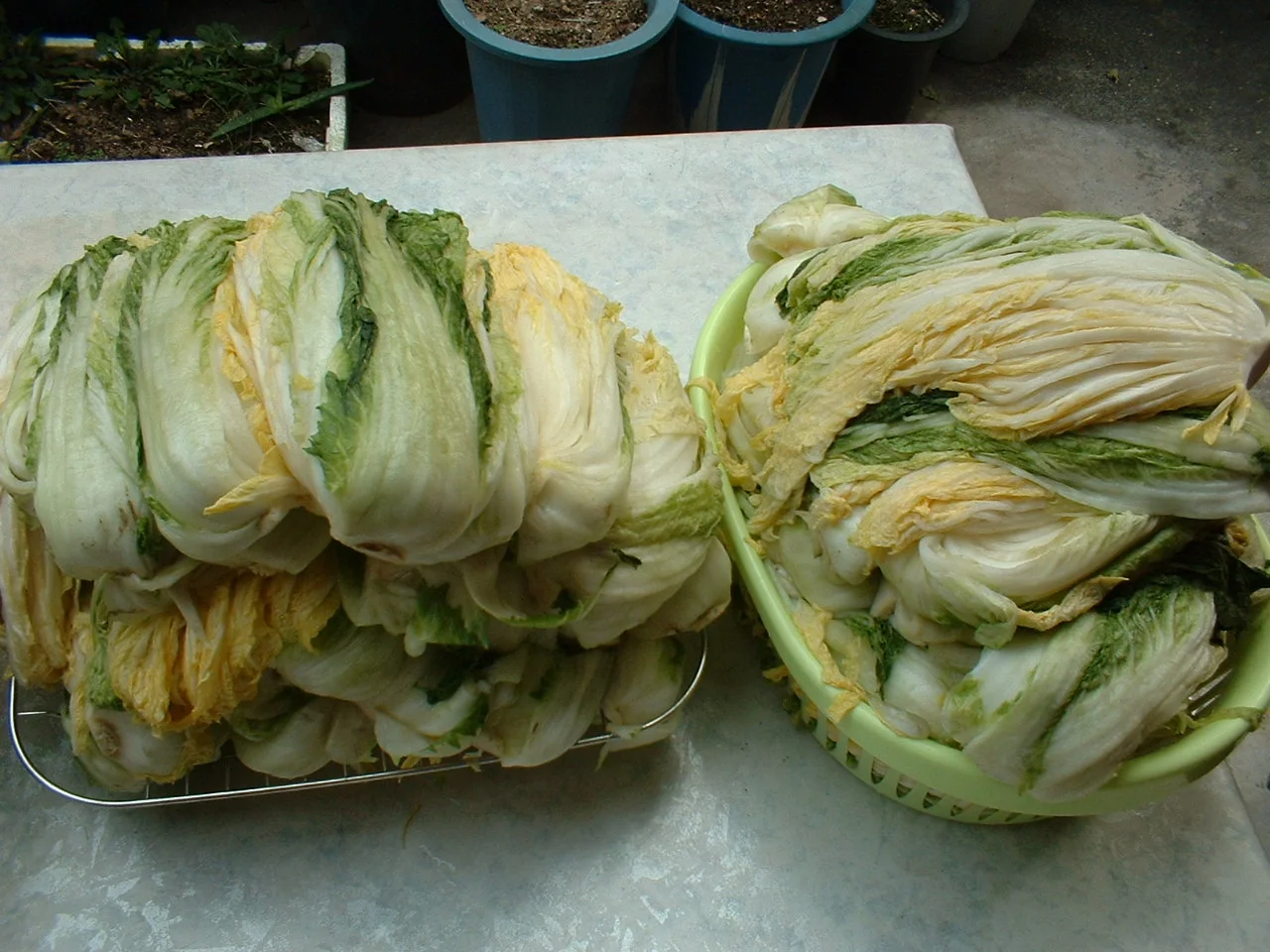
Pale leaves, thick stems, and the preparation behind the red finish. September 2005.
03
Fresh kimchi deserves its own meal
Newly seasoned cabbage and a more mature kimchi are different pleasures. Taste them alongside one another if your class offers both. Pay attention to crunch, salt, chili and acidity rather than trying to decide which version is the “proper” one.
The meal associated with kimjang is another good reason to pay attention. Fresh kimchi with suyuk, slices of boiled pork, is a familiar pairing; bossam brings pork, leaves and condiments together as wraps. The contrast does much of the work: mild pork beside strongly seasoned cabbage, one bite assembled to suit the person eating it.
I would happily give that meal the space usually reserved for an elaborate dinner booking. Ask for bossam (보쌈) or suyuk (수육), find out the portion size, and take your time. In a restaurant, ask which kimchi accompanies the dish rather than assuming it was made that morning.
Do not count on a pork meal being included in a kimchi class. A tasting, a cooking session and a full lunch are three different things on a booking page. Make sure the thing you want is actually the thing you are buying.
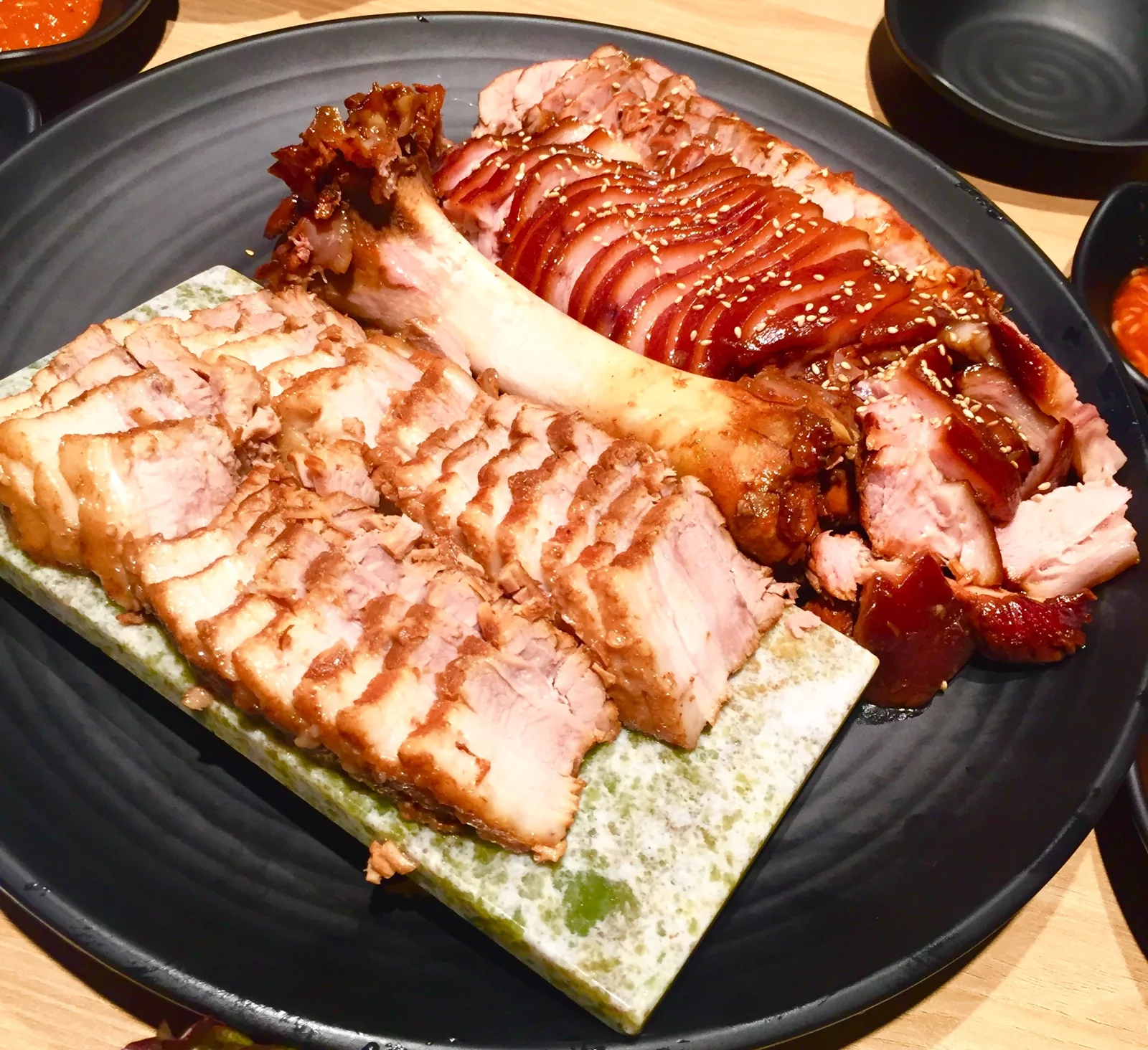
Bossam and jokbal: pork made for a shared table. November 2015.
04
Choose the experience that fits your trip
For most first-time visitors with a few days in Seoul, I would choose a small English-language class. You get a clear start time, someone explaining the steps, and an activity that fits beside a neighborhood walk. It is an introduction, not a household’s entire winter supply.
A regional festival makes more sense if food culture is a reason for the journey itself. The scale, local produce and shared activity are part of the attraction. So are the less glamorous questions: how much kimchi will you leave with, where will you keep it, and how will you get back?
An invitation from a friend or host is a different kind of opportunity again. Ask what help is useful, follow the household’s lead and check before photographing people. A family kitchen is not a demonstration station merely because a visitor is present.
| Choose | Best fit | Ask before committing |
|---|---|---|
| A city class | A first lesson during a Seoul stay | Language, minimum enrolment, recipe and take-home amount |
| A regional festival | A food-led trip with room for local logistics | Reserved session, batch size, exact venue and return transport |
| A personal invitation | Time shared with people you already know | What to bring, how to help and whether photographs are welcome |
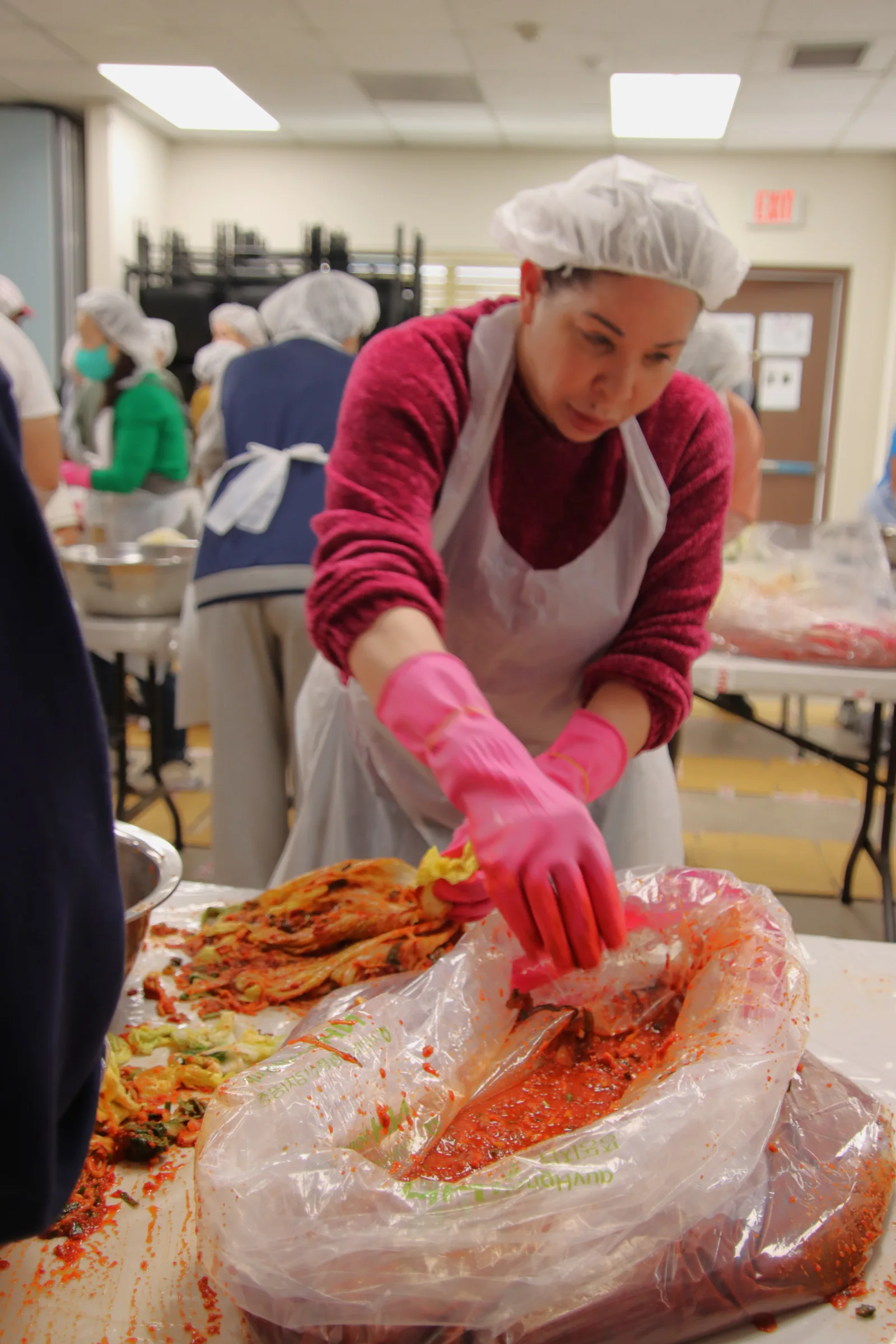
One batch, leaf by leaf. Camp Walker, November 2025.
05
A manageable Seoul option: Museum Kimchikan
Museum Kimchikan in Insadong lists its 2026 Kimchi! Basic individual program in English. It runs for sixty minutes, normally Tuesday–Friday at 10:00 and 14:00. The November–December curriculum lists cabbage kimchi, while the summer-to-October version uses radish.
The published adult total is ₩40,000: ₩35,000 for the activity plus ₩5,000 museum admission. Sessions require at least four participants overall, so a solo reservation does not guarantee the class will run. Confirm your date directly if the booking page will not load.
A container and carrying bag are provided. You take the kimchi away yourself; the museum does not offer shipping. Its individual-program page sets the cancellation and party-size change deadline at 10:59 three days before the experience. Read that policy before paying.
The museum is at 인사동길 35-4, on floors 4–6 of the Insadong Maru main building. Its directions place it about a ten-minute walk from Anguk or Jonggak station. Museum visiting hours are Tuesday–Sunday, 10:00–18:00, with final admission at 17:30. Monday and specified holidays are closed; museum opening does not mean a class is available.
My suggested afternoon would be the class, some time in the museum, then a gentle Insadong browse. Arrange where the kimchi can go afterward. It is a less relaxing afternoon if you are carrying a container through three more districts because you forgot it would be yours.
06
Go this November: Goesan’s kimjang season
For 2026, Goesan Kimjang Festival runs November 5–8 around the Organic Expo Plaza in Goesan, North Chungcheong Province. The county also schedules separate village kimjang experiences across November 1–30. These are dated options for this season, not permanent weekly programs.
The main festival’s reserved One-Stop Kimjang takes place at the plaza. Drive-through Kimjang has moved to Goesan Sports Complex, where participants use individual car-side booths. That second format is designed for people leaving with a load of food, not for someone passing through with a daypack.
Reservations opened October 8. The county lists November 5 sessions at 14:00 and 16:00, then 10:00, 12:00, 14:00 and 16:00 on November 6–8. Remaining places were not verified for this guide. Ask the organizer about the batch, cost and English support before arranging travel; festival admission and a booked kimchi-making session are separate questions.
Save 괴산유기농엑스포광장 for the main venue and 괴산종합운동장 for drive-through participation. Book your outward and return transport around the confirmed session, including the local transfer. An overnight can make a food-led visit less rushed, but I would not book a room until the activity itself is settled.
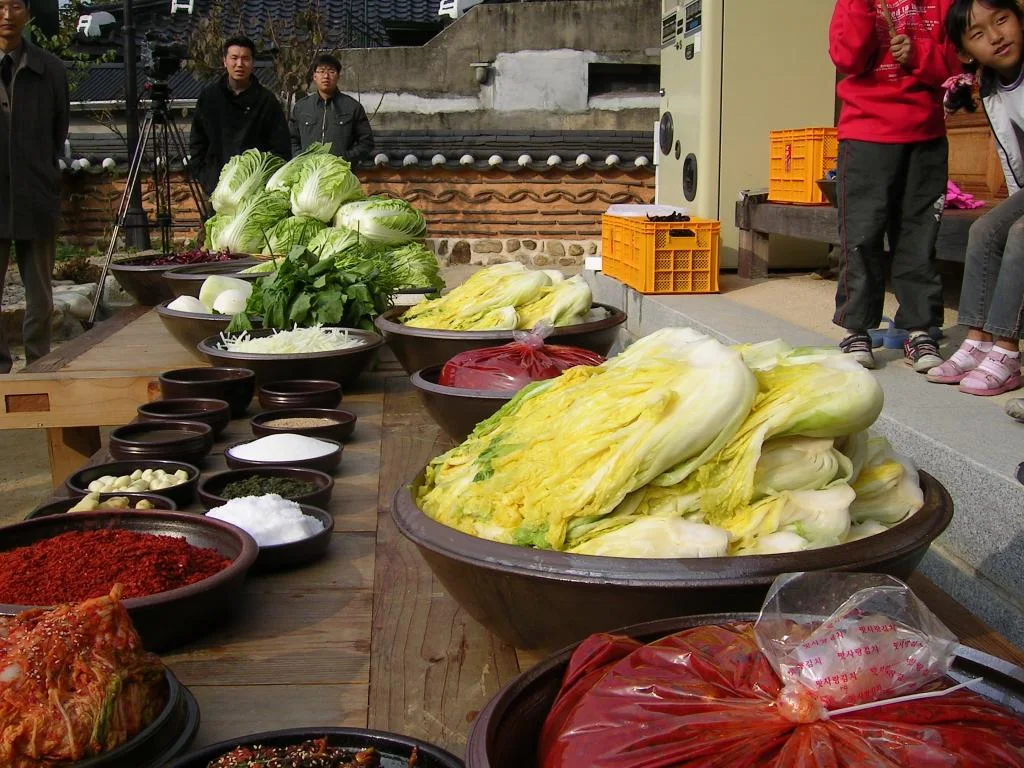
A worktable ready for the next stage. Korea, May 2006.
07
Five questions before you put on the gloves
First: what will we actually do? Some sessions emphasize seasoning prepared cabbage; others include more preparation or an additional cooked dish. Neither is automatically better. Choose the one that matches your curiosity.
Second: what is in the mixture? Fish sauce and salted seafood can appear in kimchi, and some recipes use other animal ingredients. If you need a vegetarian, vegan or allergen-specific version, send the requirement before booking and get a clear answer about both the recipe and the working setup. A red vegetable dish is not enough information.
Third: how much comes home with me? A festival batch intended for a household is a different commitment from a class container. Ask for the finished weight, not simply the number of cabbages.
Fourth: can I understand the teaching? “Foreign visitors welcome” and “instruction in English” do not necessarily mean the same thing. Confirm the language and whether your preferred session is definitely running.
Fifth: where does the container go afterward? Ask for storage instructions, whether your accommodation can refrigerate it, and when you should eat it. Leave the last answer to the people who made that particular batch with you.
| English | Korean |
|---|---|
| Is the class taught in English? | 영어로 진행하나요? |
| Does this contain fish sauce or salted seafood? | 액젓이나 젓갈이 들어가나요? |
| How much kimchi do we take away? | 김치는 얼마나 가져가나요? |
| How should I store it? | 어떻게 보관하면 되나요? |
| Is a meal included? | 식사도 포함되어 있나요? |
08
The souvenir does not have to board the plane
I would put a kimchi-making class early enough in the stay to enjoy the result locally, with suitable refrigeration arranged. You learn something, make something, and then get to eat it. That is already a complete souvenir.
If you want to fly with it, ask the airport, airline and destination’s official customs or biosecurity service about the actual product and packaging. Carry-on security, leakage and food-import permission are separate issues. A container supplied by a class is not an international transport clearance.
Do not leave an unwanted batch with a hotel desk or assume a host wants it. Agree on any sharing first. A recipe card or the name of an ingredient you finally understand may travel more comfortably than a large tub.
09
What to notice at the next meal
Afterward, return to that small dish at lunch. Look at how the cabbage is cut. Notice whether the flavor is fresh and direct or more rounded and sour. Ask whether a different kimchi is made from radish, stems or leaves. You do not need to announce that you have become an expert.
One class cannot stand in for the work and knowledge that pass between generations. It can, however, make the ordinary table less anonymous. The refill is no longer just a refill. Someone prepared those vegetables, chose the seasoning and gave them time.
That is the part I would want to bring home: not a claim to have “done” kimjang, but a little more attention when someone puts kimchi on the table.
References
- UNESCO: Kimjang, making and sharing kimchi; inscribed in 2013
- Museum Kimchikan: 2026 English-language Kimchi! Basic individual program
- Museum Kimchikan: visitor information and closure days
- Museum Kimchikan: address and station approach
- Pulmuone: 2026 museum program changes and cooking-class options
- Goesan County: November 5–8 festival and November village programs
- Goesan County: reservation system, sessions and changed drive-through venue
- Goesan Kimjang Festival: current program and reservation enquiries
- Korea Tourism Organization: freshly made kimchi and suyuk in kimjang culture; 2017 cultural reference, not a current event listing