The green bottle has excellent public relations.
It gets the barbecue scenes, the late-night confessions, the tiny glasses refilled just when someone is trying to leave. Spend enough time watching Korean television and you could reasonably conclude that Korea has one drink, served with several different emotional problems.
Then a menu arrives with three kinds of makgeolli, something called yakju, and a bottle that costs considerably more than dinner. Someone mentions a pear-scented spirit. Someone else suggests a spoon.
This is where the drinks list gets interesting.
Soju and beer are the everyday starting points. But Korea also has a broad culture of fermented grain drinks, distilled spirits, fruit wines and infusions, with differences that disappear when everything gets translated as “traditional liquor.” The trick is to learn a few families, then follow the flavors that appeal to you. You do not need to memorize a cellar before ordering dinner.
01
First, a map of the drinks menu
Sul or sool (술) simply means alcohol. It is a useful umbrella word, rather than the name of one style. Beneath it, ask three questions: what was fermented, was it filtered, and was it distilled?
| On the menu | What it tells you | Why try it? |
|---|---|---|
| 맥주 · Maekju | Beer, from familiar lagers to craft styles. | A straightforward starting point with fried or grilled food. |
| 희석식 소주 · Diluted soju | A drink made by diluting highly purified alcohol, often with other permitted ingredients. | The everyday restaurant-soju experience. |
| 탁주 / 막걸리 · Takju / makgeolli | Cloudy fermented grain drinks with retained solids. Makgeolli is the familiar name; takju is the broader category. | Texture, acidity and grain flavor, ranging from light to substantial. |
| 약주 / 청주 · Yakju / cheongju | Clear fermented grain drinks. These names overlap culturally but are distinct classifications on labels. | A rewarding direction for wine drinkers. |
| 증류식 소주 · Distilled soju | A fermented base is distilled, with style varying by grain, equipment and maturation. | Aromatic spirits to sip and compare. |
| 과실주 · Gwasilju | Fermented fruit wine. | Korean berries, grapes, apples and other local produce. |
| 리큐르 · Liqueur | A category that can include flavored or infused spirits. | Fruit, spice and botanical flavors; read the ingredients. |
This is a reading aid, not an exhaustive legal taxonomy. Strength and sweetness vary within every family. Check the individual bottle.
“Rice wine” is convenient English, but it hides the mechanism. Rice provides starch, which must be converted into fermentable sugars. Grapes already contain the sugars that wine yeast needs. Calling both wine is useful at the table; it does not make their brewing identical.
02
Beer, soju, and the table everyone recognizes
Beer: the easy answer is still an answer
A cold lager with fried chicken does not need an elaborate defense. Cass and Terra are familiar names to recognize; Korea also has craft breweries making styles beyond pale lager. The label “Korean beer” tells you where to begin looking, not whether the glass will be hoppy, dark, sour or light.
If your immediate goal is dinner rather than a tasting session, ordering the house beer is perfectly reasonable. Save the questions about grain and fermentation for a bottle that invites them.
Everyday soju: read the small number
The familiar green bottle is usually diluted soju. Producers start with highly purified alcohol and dilute it to the desired strength; the final blend may also include sweeteners and other ingredients. It should not automatically be described as rice vodka. The raw material and production method deserve a look of their own.
Strength changes, too. HiteJinro's current Korean product information lists Chamisul Fresh at 15.7% ABV. Older descriptions calling it 16%, 16.5% or 17% may refer to earlier formulations or other markets. A brand name is not a permanent alcohol percentage.
Try it chilled with dinner if you want to understand its everyday role. The point of that first small pour is context: the food, the shared table, the unobtrusive bottle. It need not be the most complex spirit you have ever tasted to belong to the meal.
Other names to recognize include Chum Churum (처음처럼) and Saero (새로). Saero's current official page also lists 15.7%. These are examples of mainstream brands, not a claim that every restaurant carries them or that one leads every regional market. “Zero sugar,” when it appears on a label, describes sugar; it does not mean zero alcohol.
Fruit soju and canned drinks: read past the fruit
Peach, grape and other fruit-flavored bottles are a familiar entry point, including ranges sold abroad. They can be approachable if you like sweetness, but the word “soju” on an English menu may gather together products with different formal classifications.
A useful contemporary example is Saero Omija, which Lotte introduced in 2026 with Mungyeong omija juice. Its announcement identifies a 12% product classified as a general distilled spirit. It is a different proposition from fermenting omija into fruit wine. Canned fruit drinks and highballs add still more options; the base might be a spirit, wine or another formulation. Look at the ingredients and percentage rather than guessing from a lemon on the can.
Somaek: a mixture, rather than another category
Somaek (소맥) combines soju and beer. The name joins so from soju and maek from maekju. There is no single compulsory ratio, and the result is stronger than the beer alone when made with a higher-strength soju. The elaborate mixing performances are optional. You can order your beer and leave it as beer.
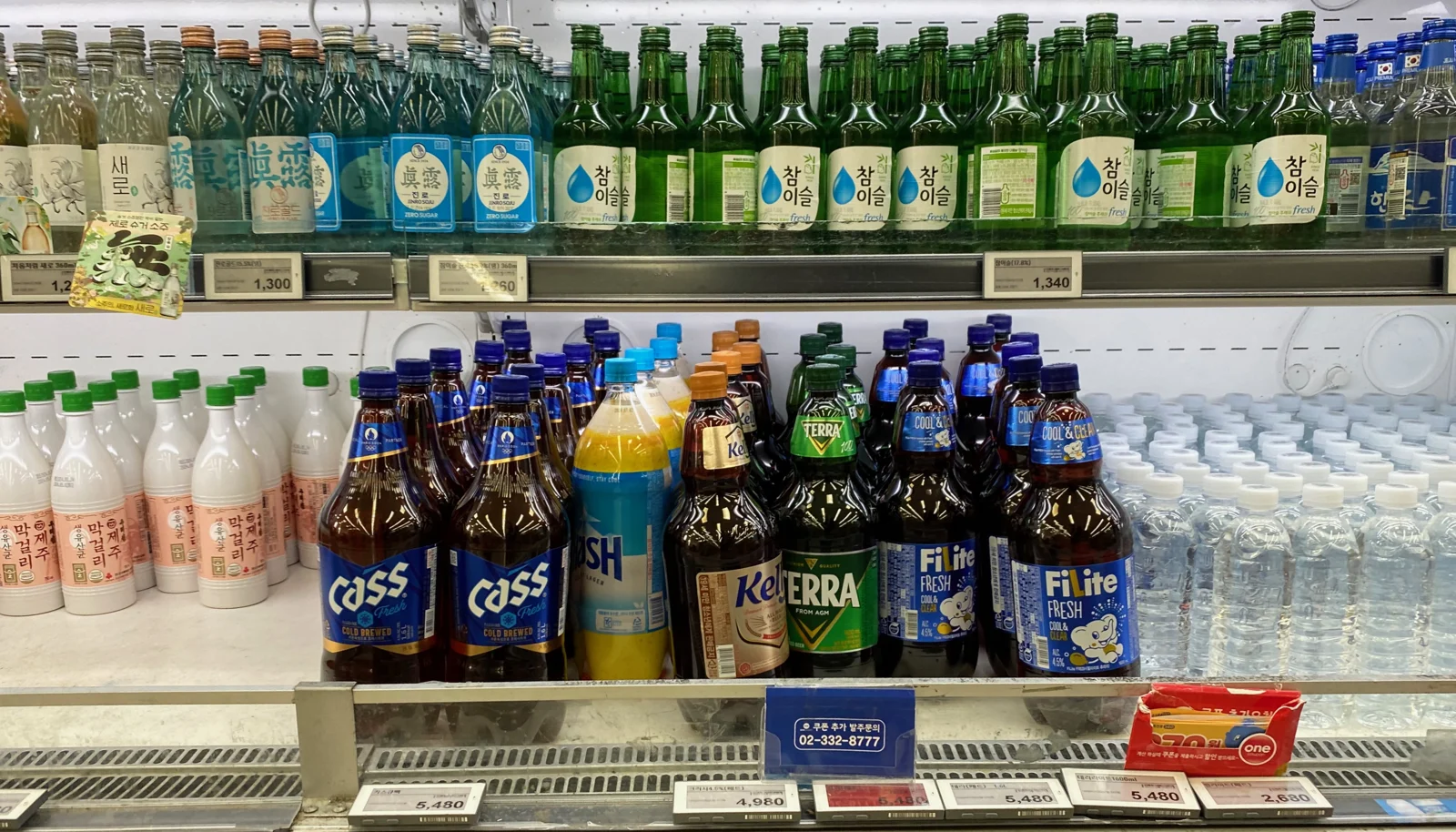
A Korean drinks shelf, August 24, 2024. Archive photograph; labels, strengths and stock may have changed.
03
The word behind much of the flavor: nuruk
Nuruk (누룩) is a grain-based fermentation starter, not simply another word for yeast. Traditional nuruk can carry a community of microorganisms and the enzymes that help turn grain starch into sugars; yeasts then make alcohol. Those processes can proceed alongside one another in the same brew.
That helps explain why a drink made from rice can suggest fruit, flowers, earth or yogurt without the brewer adding all those things. An aroma is not an ingredient list.
Traditional mixed-culture nuruk and starters made with selected, controlled cultures give brewers different tools. Some use combinations. “Made with nuruk” is a useful beginning to a conversation, but it does not guarantee one flavor, an ancient recipe or a better bottle.
I would ask what the brewer wanted the drink to taste like before asking how old the method is. A careful contemporary interpretation can be more interesting than a vague promise of tradition.
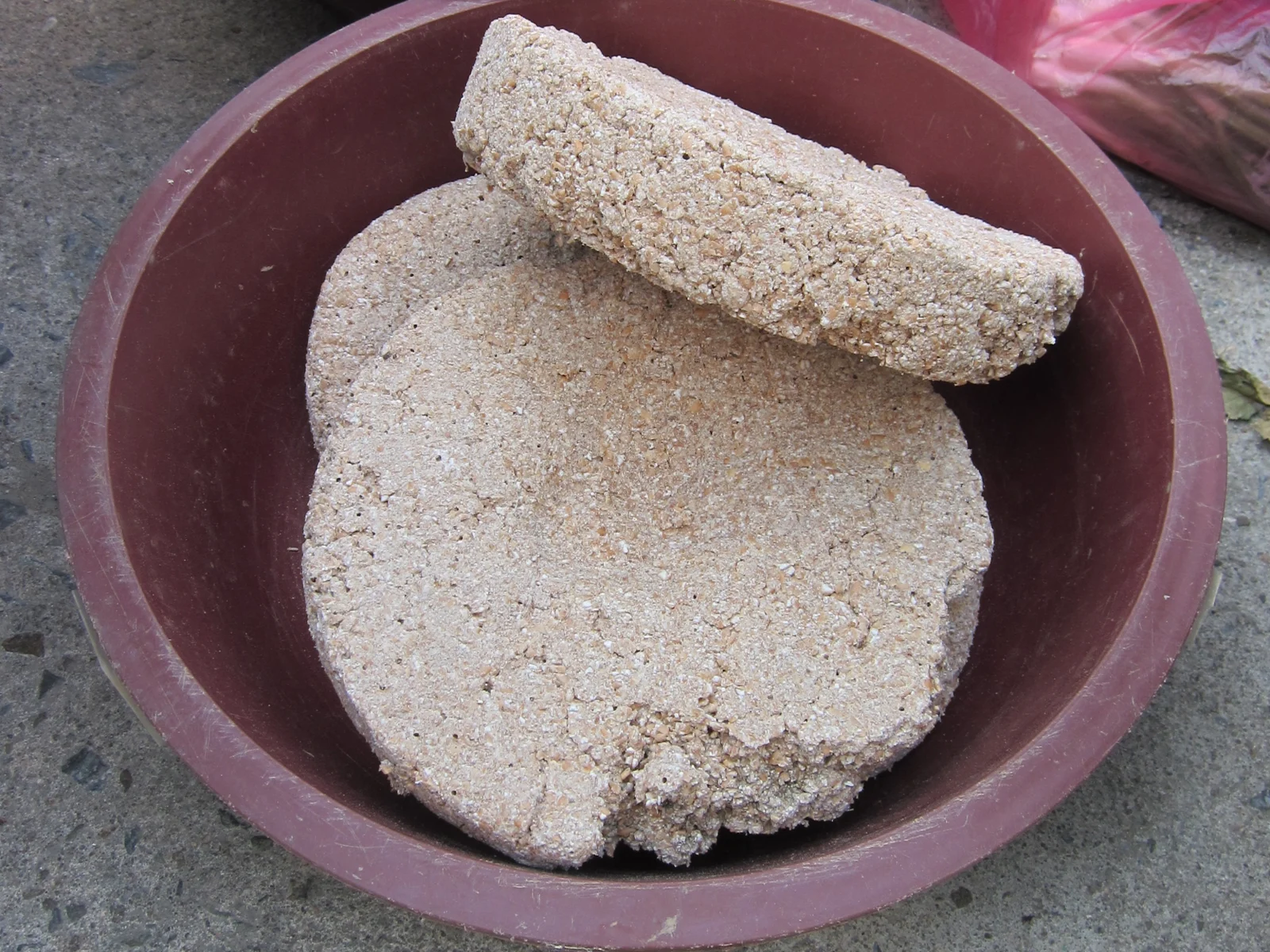
Nuruk fermentation starter, October 17, 2010. Archive ingredient illustration.
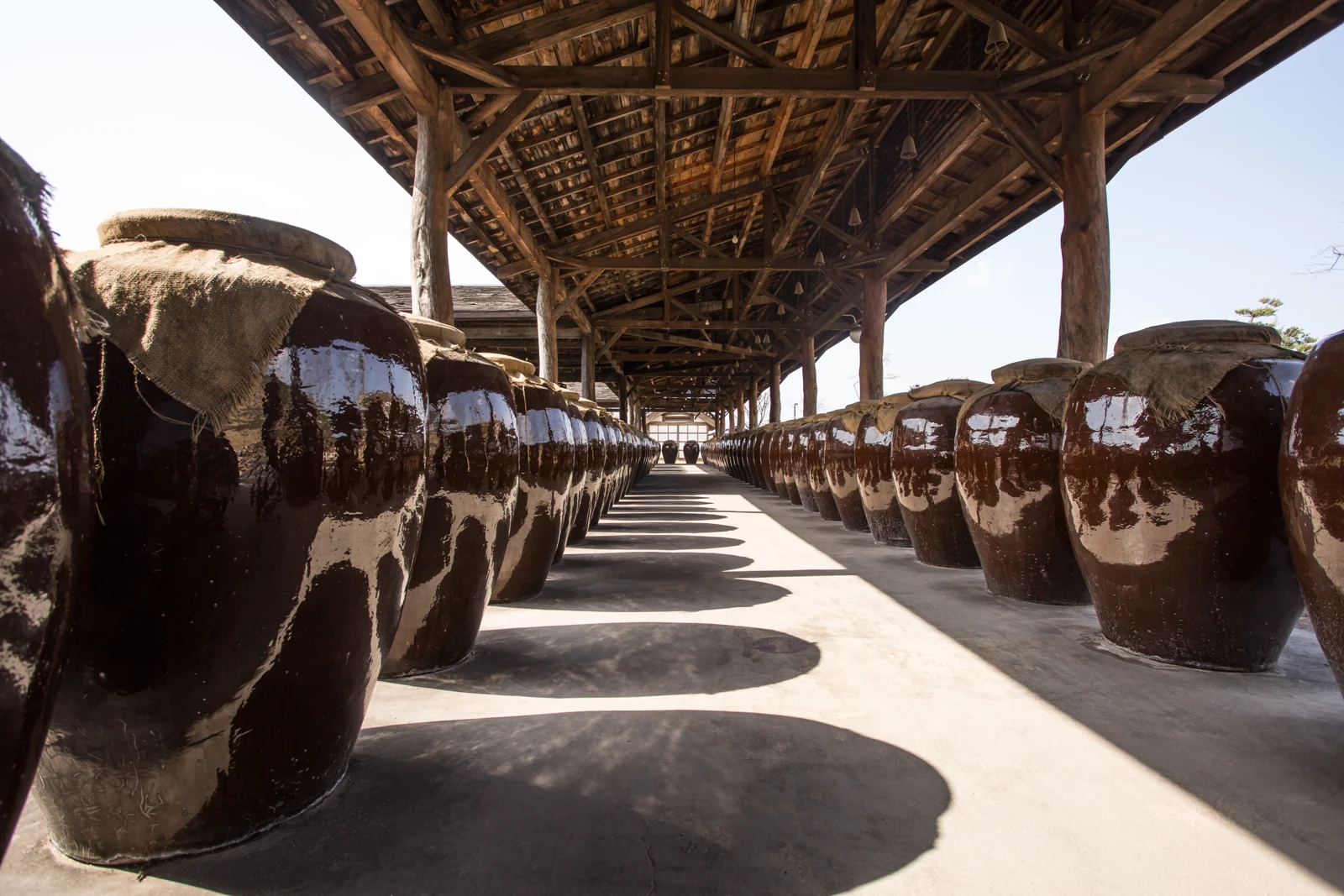
Earthenware jars photographed during makgeolli brewing, April 14, 2016. Archive production illustration.
04
Makgeolli deserves more than one plastic bottle
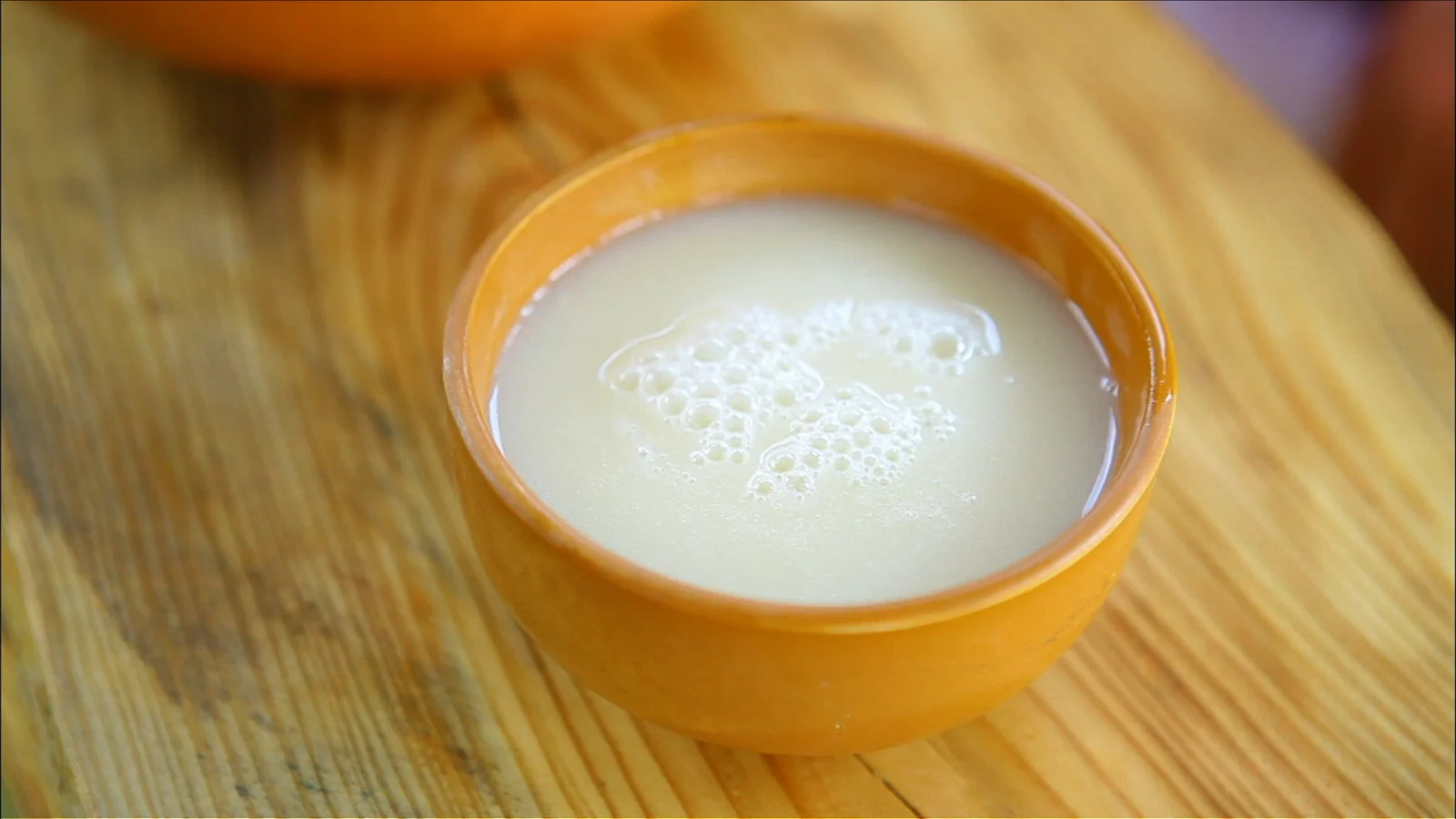
Makgeolli (막걸리) is cloudy because fine grain material remains in the drink. Rice is familiar, but other grains can appear in recipes. The family includes light, gently fizzy drinks and much denser, stronger ones. “Milky” describes the appearance; it does not establish that milk was added.
Do not judge the whole category by whether your first bottle was sweet. Different brews vary in acidity, sweetness, body and carbonation. Added sweeteners can matter, but so can the recipe and fermentation. If you dislike one, identify what you disliked before ruling out the shelf.
Two useful reference points are Song Myeong-seop makgeolli, which the official Korean liquor directory describes as an unadulterated style with little sweetness, and Boksoondoga Son Makgeolli, a sparkling example listed by its producer at 6.5%. They suggest different conversations even before you get to the much richer high-strength takju sold by specialist makers.
The classic food direction is jeon: savory pancakes with crisp edges and enough oil to welcome something fresh and tangy. It is a starting point, not a rule. Ask for a dry or sweet style according to your preference, then see what the kitchen serves with it.
Three label words worth recognizing
생, saeng: usually signals a live, unpasteurized product. Follow its refrigeration instructions and use-by date. The bottle can continue changing as fermentation proceeds.
살균, salgyun: pasteurized. This does not automatically mean inferior, flat or flavorless. It does mean you should use the storage instructions for that product rather than assume every makgeolli behaves identically.
원주, wonju: the base or original brew; on a product it can suggest a less diluted, more concentrated expression. Check the actual ABV and description. It is not a universal promise of one strength.
Let the bottle tell you how to open it. For lively sparkling makgeolli, chill it and follow the producer's instructions. Do not vigorously shake a pressurized bottle to mix the sediment. Boksoondoga publishes its own opening guide for a reason.
And what about dongdongju?
The traditional image of dongdongju (동동주) is grain wine with rice grains floating on the surface. In modern menus and product names, the word is also used for cloudy drinks that overlap with makgeolli. Treat it as a prompt to ask what is being served, rather than a guarantee of sweetness, strength or a particular filtration method.
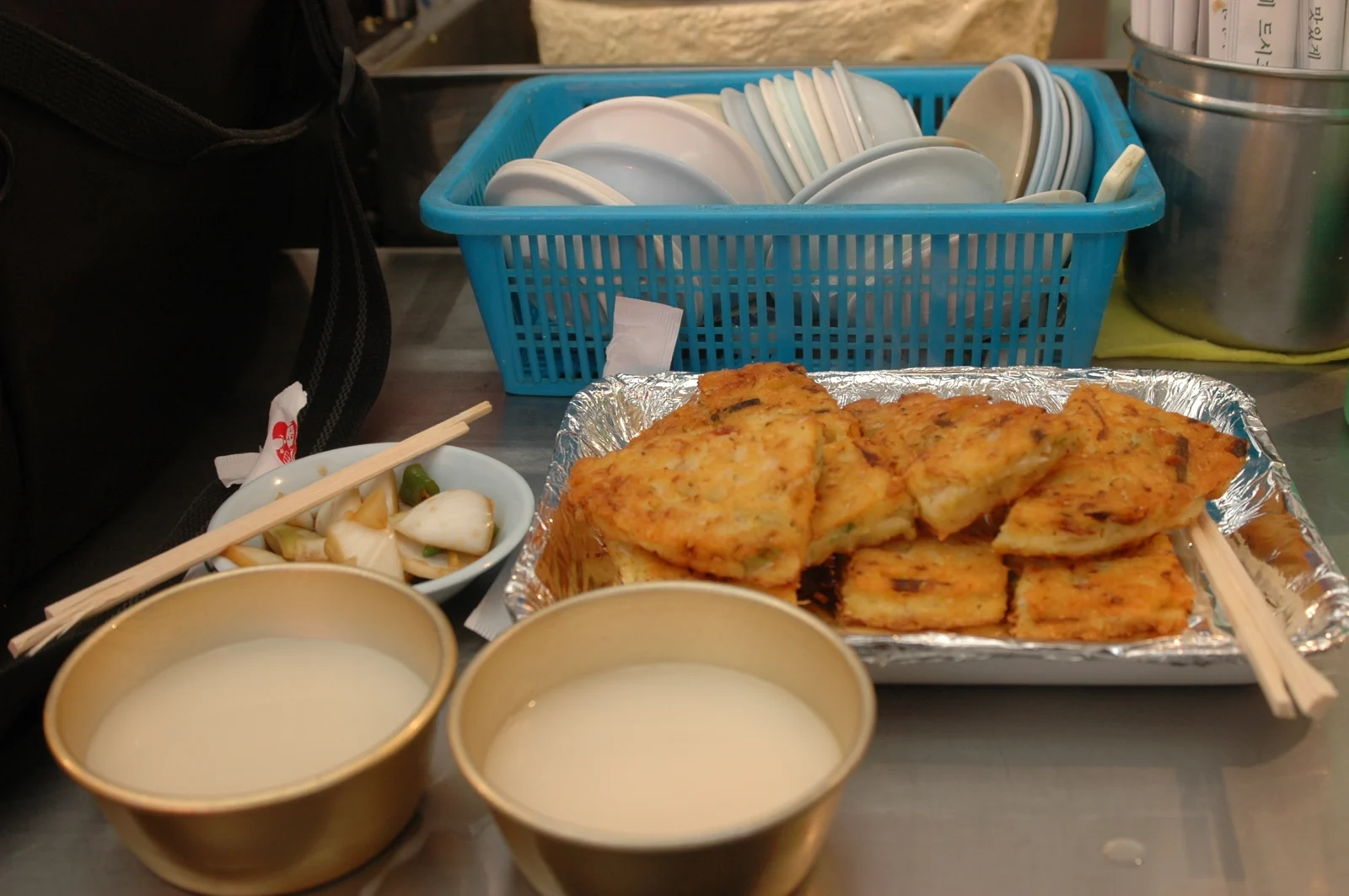
Makgeolli and bindaetteok at Gwangjang Market. Archive photograph dated July 10, 2008; not a current menu or venue check.
05
Yakju and cheongju: give the clear bottles a chance
This is the shelf I would point a curious wine drinker toward first.
Yakju (약주) and cheongju (청주) introduce clear fermented grain drinks. Removing the cloudy solids changes how you experience the aroma, texture and acidity. One useful mental picture is the clear liquid separated from a grain brew, although modern producers do not necessarily bottle a clear and cloudy version from the same batch.
There is a further complication: historical language and modern label classifications do not match perfectly. A traditional clear rice brew can be labeled yakju. Do not insist that every clear Korean rice wine must say cheongju, or assume yakju must contain medicinal herbs.
Hansan sogokju (한산소곡주), associated with Hansan in Seocheon, is a useful rich, sweet reference. The well-known 18% expression is stronger than its gentle sweetness might suggest. Its nickname, “the drink that leaves you sitting down,” comes with stories about drinkers forgetting to leave. Enjoy the folklore without treating it as a recommended outcome.
For a different direction, Pungjeong Sagye Chun (풍정사계 춘) is described in the official directory in terms of fruit-like complexity, acidity and restrained sweetness. The comparison is useful: clear does not mean neutral, and rice does not mean every bottle will taste like sweet rice pudding.
Ask for the driest or most aromatic available option and tell the server which matters more. I would start with relatively gently seasoned food while getting acquainted with a subtle bottle. A mouthful of very hot sauce makes delicate aromas harder to follow.
You may also recognize Baekseju (백세주), romanized Bekseju by its maker. Kooksoondang's current product page describes a 13% clear rice wine made with nuruk and twelve botanicals. It is a useful bridge from familiar restaurant bottles toward herbal grain wines. Its botanical character is a flavor direction, not a reason to treat it as medicine.
06
Distilled soju: the same word, a different appointment
Jeungnyusik soju (증류식 소주) is made by distilling a fermented base. Distillation concentrates alcohol and selected aroma compounds. Grain, starter, distillation equipment and maturation can all shape the result. These bottles invite a smaller pour and a little attention.
Andong soju is an important regional name, with different makers and products beneath it. Hwayo offers a contemporary reference: its official range includes 25% and 41% rice spirits, among other expressions. The number matters. A bottle intended for slow sipping may contain much more alcohol than an everyday restaurant soju.
If you like spirits, ask to try a small neat pour before adding ice or water. Then adjust it to your preference. A change in temperature or dilution can change what you notice, and there is no prize for preferring the most forceful version.
Oak adds another branch. HiteJinro's Ilpoom Jinro Oak25 is a 25% distilled product blended with oak-matured spirit. Wood can contribute familiar notes for someone who enjoys aged spirits, but an oak-aged Korean spirit does not automatically become whisky. Read what the producer actually calls it.
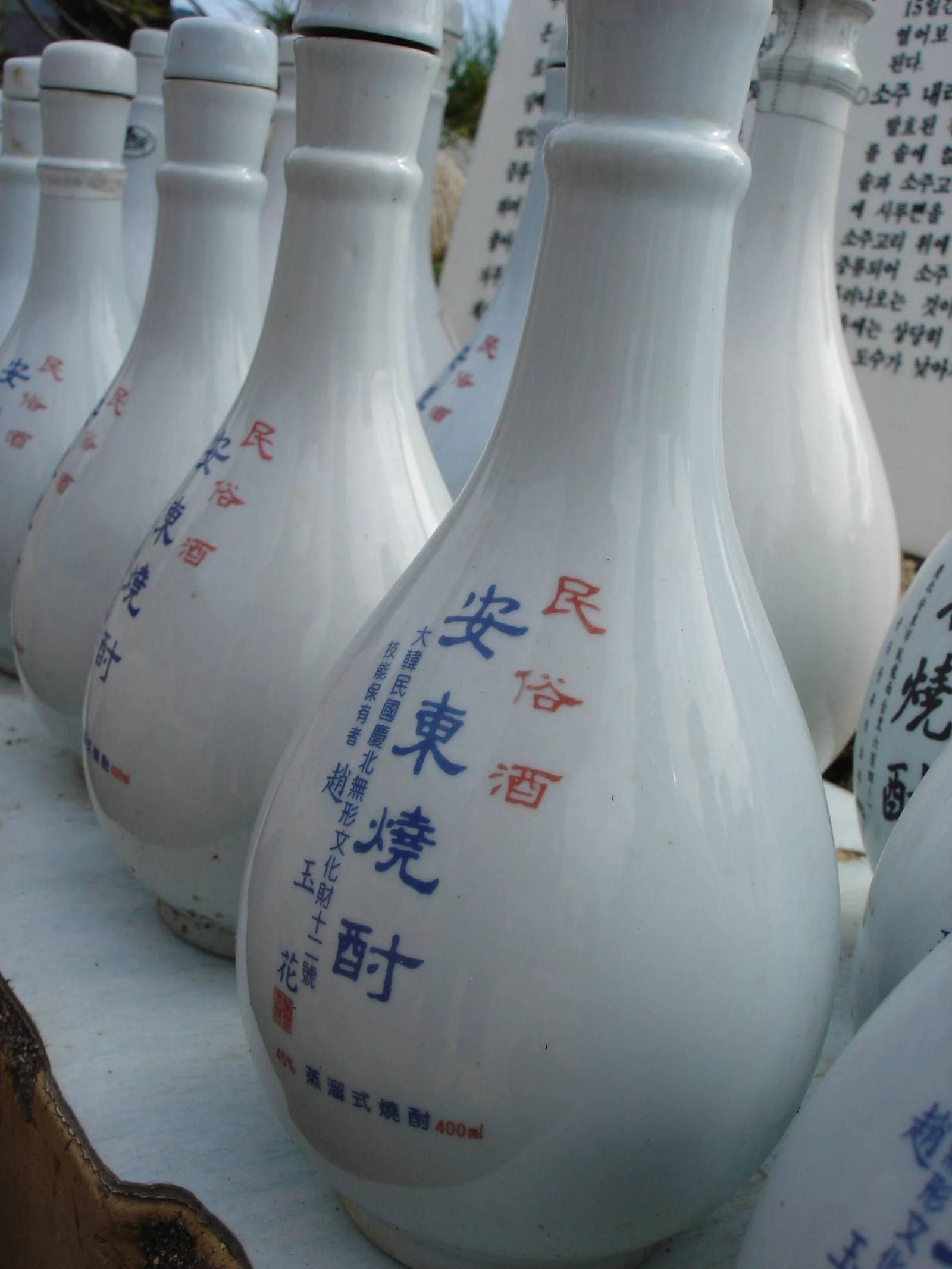
Andong soju in ceramic bottles, October 10, 2007. Archive packaging, not the current range.
07
Five bottles that take you beyond the obvious
These drinks are distinctive enough to justify asking for by name. Some are exported, so “impossible to find outside Korea” would be an overclaim. The reason to explore them here is the chance to compare makers, hear the story and drink them alongside Korean food.
Ihwaju (이화주): request the spoon
Ihwaju can be so thick that you eat it. Think a spoonable fermented rice drink with a texture closer to thick yogurt or cream than to the makgeolli poured into a bowl beside your pancake.
The name invokes pear blossoms; it is not an instruction to expect pear juice. Accounts connect the name with blossom season or the pale appearance. The official directory lists spoonable examples, while brewing references also describe serving it diluted with cold water. The texture is part of the style, rather than a bottle that accidentally failed to become liquid.
Choose it for: the most surprising change of format on this list. Ask how that maker recommends serving it, and check the strength before treating the little pot as dessert.
Gwahaju (과하주): the fortified branch
Gwahaju brings fermented grain wine and distilled spirit together. Traditional methods add spirit during the making of the brew, producing a fortified drink. Its name refers to passing through summer, reflecting its association with preserving a drink through warmer weather.
Port is a helpful comparison for the idea of fortification, but the ingredients, methods and flavors differ. Ask about Gyeongseong Gwahaju (경성과하주), a 20% example from Soolawon, if you want a named starting point. The appeal is the meeting of a fermented drink's richness and a spirit's structure.
Choose it for: an alternative to the usual after-dinner pour, especially if fortified wines already interest you. A small glass is enough to begin.
Munbae-sul (문배술): the pears are an aroma
This is an excellent bottle for reading the ingredients after smelling the glass.
Munbae takes its name from an aroma associated with a Korean wild pear, yet the traditional spirit is made from grains rather than pears. The official listing for the 40% Cheonhyang expression identifies millet and sorghum in the distilled base. It is a particularly clear demonstration that fermentation and distillation can produce a fruity impression without a fruit infusion.
Choose it for: aromatic grain spirit, or a genuinely useful comparison with fruit-flavored soju. Smell it first. The label becomes more interesting afterward.
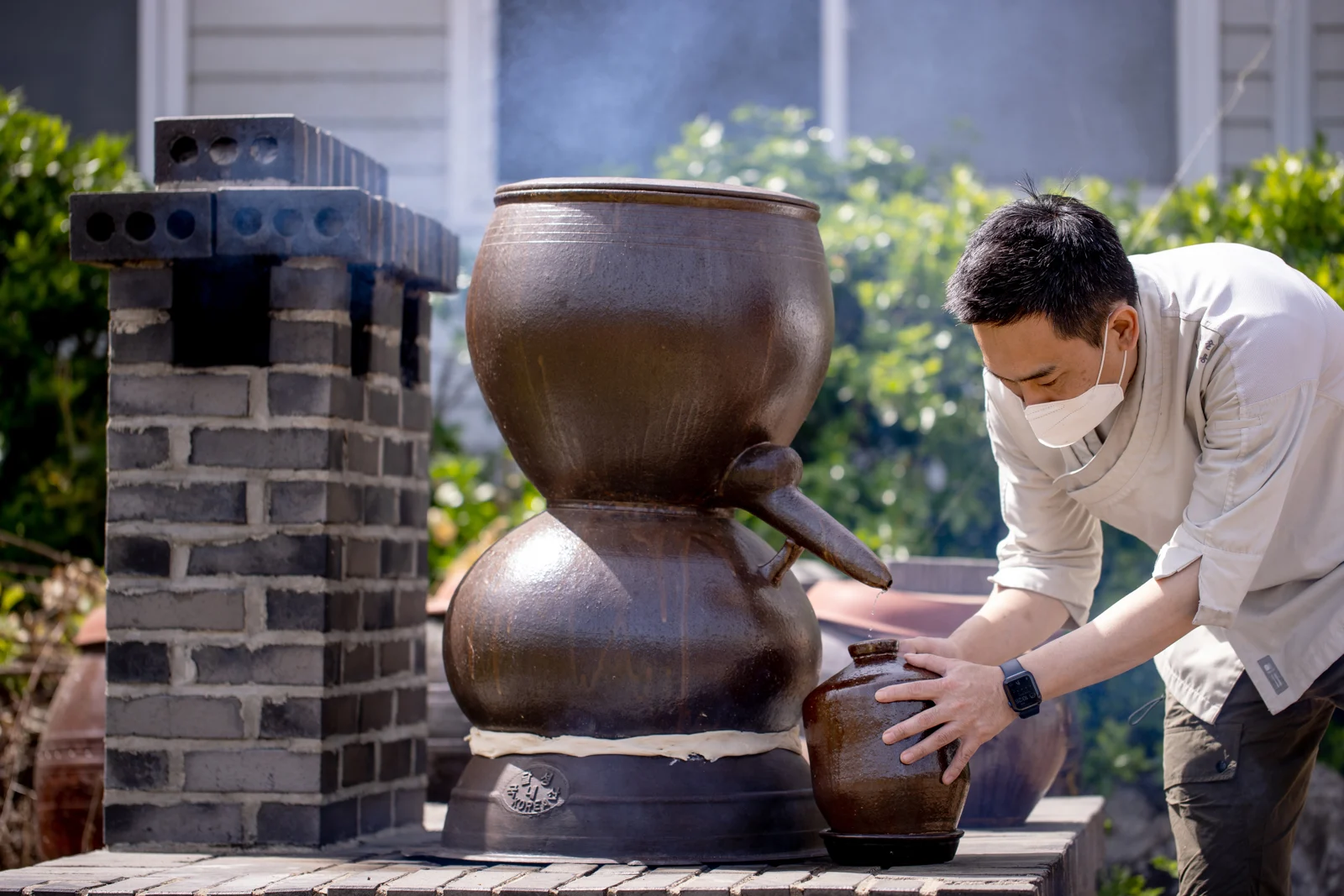
Traditional distillation at the Munbae brewery in Gimpo, April 27, 2022. Archive production photograph.
Gamhongno (감홍로): the spice cupboard opens
Gamhongno belongs in a different part of the flavor conversation. The official 40% listing includes rice and millet alongside longan, cinnamon, citrus peel, clove, ginger, licorice and a coloring botanical known as jacho. Cinnamon is a prominent part of the official tasting description.
This is a better lead for someone drawn to botanical spirits and spices than for someone looking for a neutral shot. It also makes a useful reminder that “traditional Korean alcohol” can contain a very busy ingredient list.
Choose it for: an aromatic small pour after dinner. Ask for the bottle's own serving suggestion, and let the spices be the attraction rather than assuming the ingredients confer a health benefit.
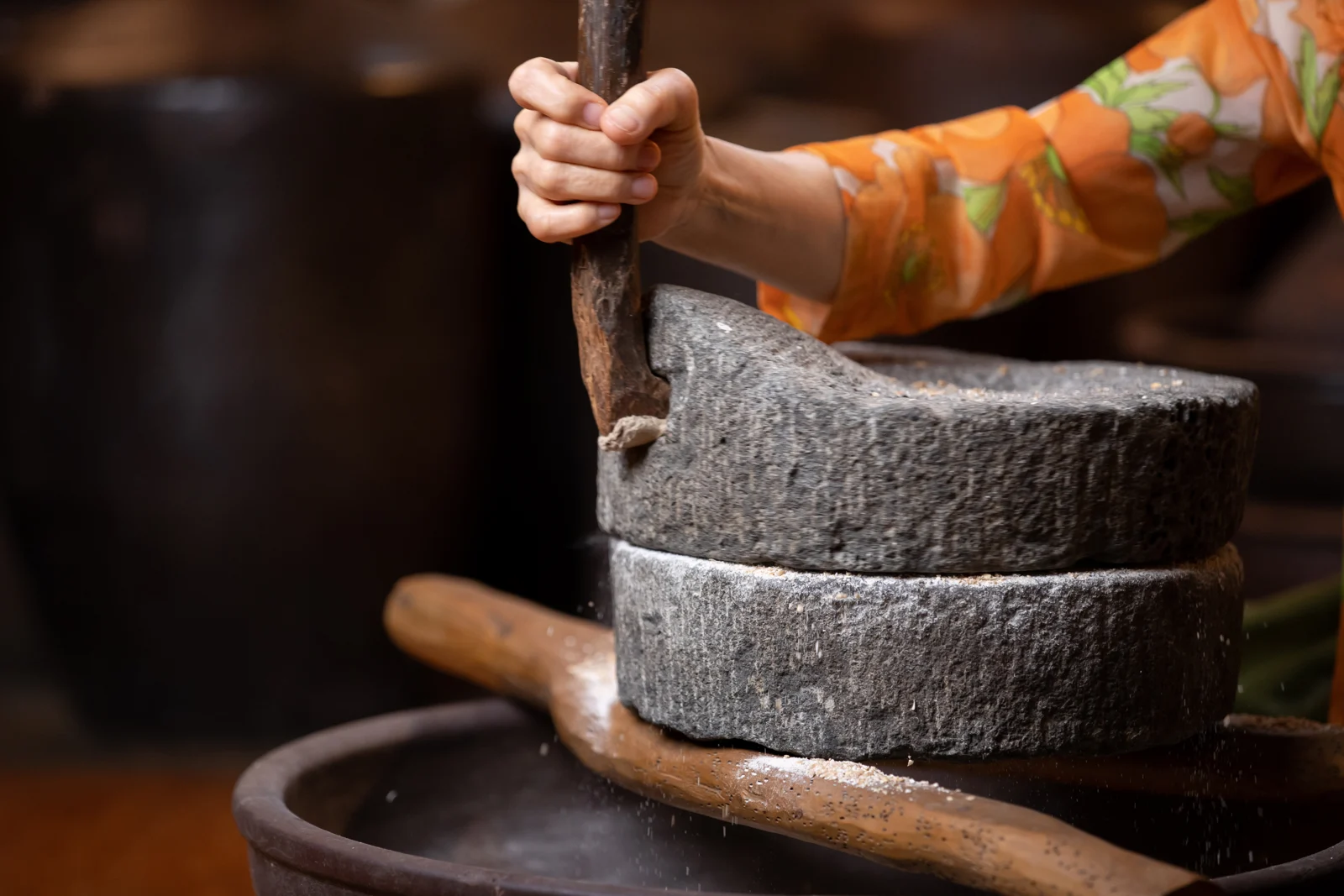
Grinding ingredients at the Gamhongno brewery in Paju. Archive photograph: May 30, 2022, according to the Korean caption and camera metadata; the English description differs.
Gosori-sul (고소리술): a Jeju story in a still
Gosori names the traditional distilling apparatus in Jeju dialect. Jeju Tourism Organization describes an island method in which omegi grain brew, made with foxtail millet and barley nuruk, is distilled through it. The contrast between the fermented omegi drink and its distilled relative makes an unusually good tasting comparison. Modern makers' recipes can differ, so read the particular bottle.
Choose it for: a regional drink to explore while visiting Jeju. Search for 제주 술익는집 or 제주샘주 when researching makers and experiences, then confirm the current booking arrangements directly. A tourism listing describes the opportunity; it does not reserve a tasting for you.
08
Fruit, flowers, and the bottles between categories
Korean drinks do not stop at grain. Fruit may be fermented into wine, steeped in spirit, or added to another fermented base. Those are different routes, even when the fruit on the front label looks the same.
Bokbunja (복분자) is a dark berry associated with Korean fruit wines, especially around Gochang. Look for berry intensity, and ask about sweetness rather than assuming every bottle is a dessert drink. “Bokbunja” identifies the fruit; the producer and classification tell you more about the drink.
Maesil (매실), often translated as plum, appears in infused and flavored drinks. Fermentation and infusion are worth distinguishing here: sweetness, base alcohol and the proportion of fruit can change the result considerably. Omija (오미자) offers another direction. The official Korean liquor portal documents omija-and-apple cider, illustrating how a Korean ingredient can move into a contemporary format.
For flowers, ask about Myeoncheon dugyeonju (면천두견주), a sweet, aromatic grain wine made with azalea flowers. The official listing describes a long brewing and maturation process and a distinctive floral aroma. This is a finished drink to buy from a producer, not a suggestion to pick roadside flowers for a homemade infusion.
There are Korean grape wines, apple spirits, ciders and meads, too. They need not be ancient or unique to Korea to be worth drinking. A local fruit, a distinctive fermentation or a well-made modern expression can be sufficient reason to choose a bottle.
One more regional detour: Jeonju moju
Moju (모주) deserves its own small detour if you are visiting Jeonju. It is associated with simmering makgeolli with ingredients such as ginger, jujube and licorice, giving it a sweet, spiced character. Jeonju's tourism material describes low-alcohol versions, but reported strengths differ by product. Heating is not a guarantee that all alcohol disappears. Ask for the actual percentage if that matters to you, rather than treating moju as an alcohol-free tea.
“Traditional” needs a little care. Cultural tradition and the policy category called jeontongju are different lenses. Official classifications can encompass qualifying regional drinks made with local agricultural produce, including contemporary styles. An old-looking label does not prove a centuries-old recipe, and modern packaging does not settle the question either. Judge the ingredients, maker and method.
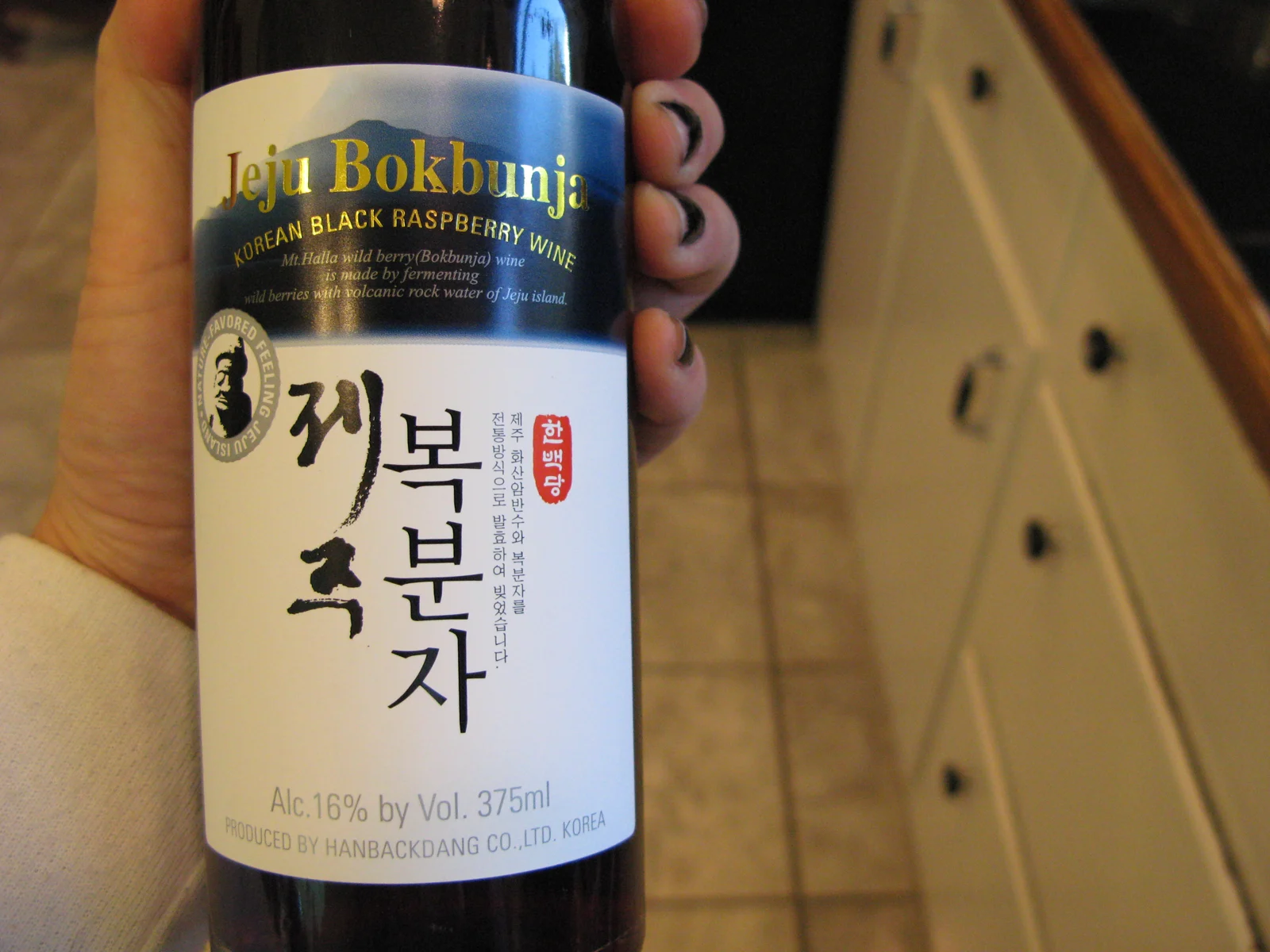
A bottle of Jeju bokbunja wine, February 29, 2008. Archive packaging, not a current product specification.
09
What I would order, according to what you already like
| Your usual preference | A useful Korean direction | What to ask |
|---|---|---|
| Cold, light beer | A Korean lager, or a light sparkling makgeolli | Which is the lightest, least sweet option? |
| Dry white wine | A relatively dry yakju or cheongju | Which has the least sweetness? What is its ABV? |
| Rich or sweet wine | Hansan sogokju or a gwahaju | Can we order a small glass rather than a full bottle? |
| Aromatic spirits | Distilled soju or munbae | What grain is it made from? Can I try it neat? |
| Spices and botanicals | Gamhongno or igangju | What is added to the spirit? |
| Texture and something unfamiliar | Ihwaju | Is this the thick, spoonable kind? |
These are editorial starting points, not promises that two drinks taste alike. Igangju (이강주), the pear-and-ginger lead above, is listed with pear, ginger and other botanicals in the official directory. Unlike munbae, it really does list pear as an ingredient.
For a first exploration, spread three decisions across your trip: a familiar beer or everyday soju with one meal; a makgeolli chosen specifically for your preferred sweetness and texture with another; then a small pour of clear grain wine or distilled spirit at a specialist venue. A bar offering a flight can make comparison easier. Confirm the pour sizes and price before ordering.
Anju (안주) is food served with alcohol. Think of the drink as part of dinner: jeon with a tangy makgeolli, gently seasoned dishes with a subtle clear wine, or grilled food alongside a spirit you are sipping. These are suggestions to try, not an exam with one correct pairing.
A few phrases that do more work than a brand list
| Korean phrase | English meaning |
|---|---|
| 많이 달지 않은 술로 추천해 주세요. | Please recommend something that is not very sweet. |
| 도수가 몇 도예요? | What is the alcohol percentage? |
| 희석식이에요, 증류식이에요? | Is it diluted soju or distilled soju? |
| 한 잔씩도 주문할 수 있어요? | Can we order it by the glass? |
| 이 음식이랑 잘 맞는 술이 뭐예요? | Which drink would you pair with this food? |
| 냉장 보관해야 해요? | Does it need refrigeration? |
A polite two-handed pour or reception is a useful default when drinking with someone older or in a formal setting. Beyond that, follow your company rather than a list of television rituals. You can sip slowly, decline a refill and leave your glass unfinished. “술은 안 마셔요” means “I don't drink.” No explanation is required.
10
The bottle to drink here, and the bottle to take home
The best souvenir and the most interesting drink for tonight may be different purchases.
For live makgeolli, think about a fridge before thinking about your suitcase. Read the storage temperature and date on the bottle, and ask how to transport it. A product that needs refrigeration is a poor choice for several warm days of sightseeing. For any bottle you intend to fly with, check your airline's alcohol rules and your destination's import allowance before buying.
A sealed distilled spirit without a refrigeration requirement is often simpler to plan around than a live fermented drink, but the actual strength and packaging still matter. Do not assume airport availability, permitted quantities or shipping simply because a bottle is sold locally.
Start your research with a specialist Korean liquor shop, a maker's official site, or the The Sool directory run by the agriculture ministry and aT. For a guided introduction, check the Traditional Liquor Gallery's current announcements and reservation page; schedules, languages and prices belong to the specific session. Brewery visits can also be rewarding, particularly when they explain the production process as well as pour samples.
When comparing bottles, read the category, ingredients, ABV, volume, storage instructions and price together. A handsome ceramic container may be part of the appeal, but it cannot tell you whether you will enjoy what is inside.
I would come home with the name of a producer as well as the bottle. A drink becomes easier to remember when you know what made it different: the millet, the starter, the blossom, the still.
And if the one you keep thinking about was served with a spoon, the green bottle can probably cope with the competition.
References
- KTO: How to Drink Like a Korean
- MAFRA/aT: Korean liquor guide, 2020
- OB: corporate and brand FAQ
- HiteJinro: product archive
- HiteJinro: Chamisul Fresh
- 2026 reformulation announcement
- The Sool: makgeolli and fermentation starters
- The Sool: Takju/Yakju brewing textbook, part 1
- KTO: Makgeolli, regional charms
- The Sool: diverse makgeolli styles
- The Sool: Song Myeong-seop makgeolli
- Boksoondoga: makgeolli range
- The Sool: storage guidance
- The Sool: pasteurized makgeolli example
- The Sool: concentrated makgeolli examples
- Boksoondoga: FAQ and opening guide
- The Sool: young brewer guidebook
- The Sool: yuja dongdongju
- The Sool: Hansan sogokju
- The Sool: Pungjeong Sagye Chun
- The Sool: Andong soju example
- Hwayo: official product range
- HiteJinro: Ilpoom Jinro Oak25
- The Sool: ihwaju
- The Sool: spoonable ihwaju examples
- The Sool: gwahaju and fortification
- The Sool: Gyeongseong Gwahaju, 20%
- The Sool: Munbae Cheonhyang, 40%
- The Sool: munbae aroma and grain base
- The Sool: gamhongno
- Jeju Tourism Organization: Jeju traditional brewing experience
- Jeju Tourism Organization: Jeju Saemju
- The Sool: bokbunja fruit wine example
- The Sool: distilling textbook
- The Sool: omija and apple cider
- The Sool: Myeoncheon dugyeonju
- The Sool: tasting selections
- MAFRA: explanation of regional specialty alcohol
- The Sool: igangju
- Traditional Liquor Gallery: official announcements
- MAFRA: visiting breweries program
- Lotte Chilsung: Saero
- 2024 brand portfolio
- Lotte Chilsung: Saero Omija launch
- Soonhari export announcement
- Kooksoondang: Bekseju
- Jeonju Tourism: traditional liquor
- Nambu Market guide