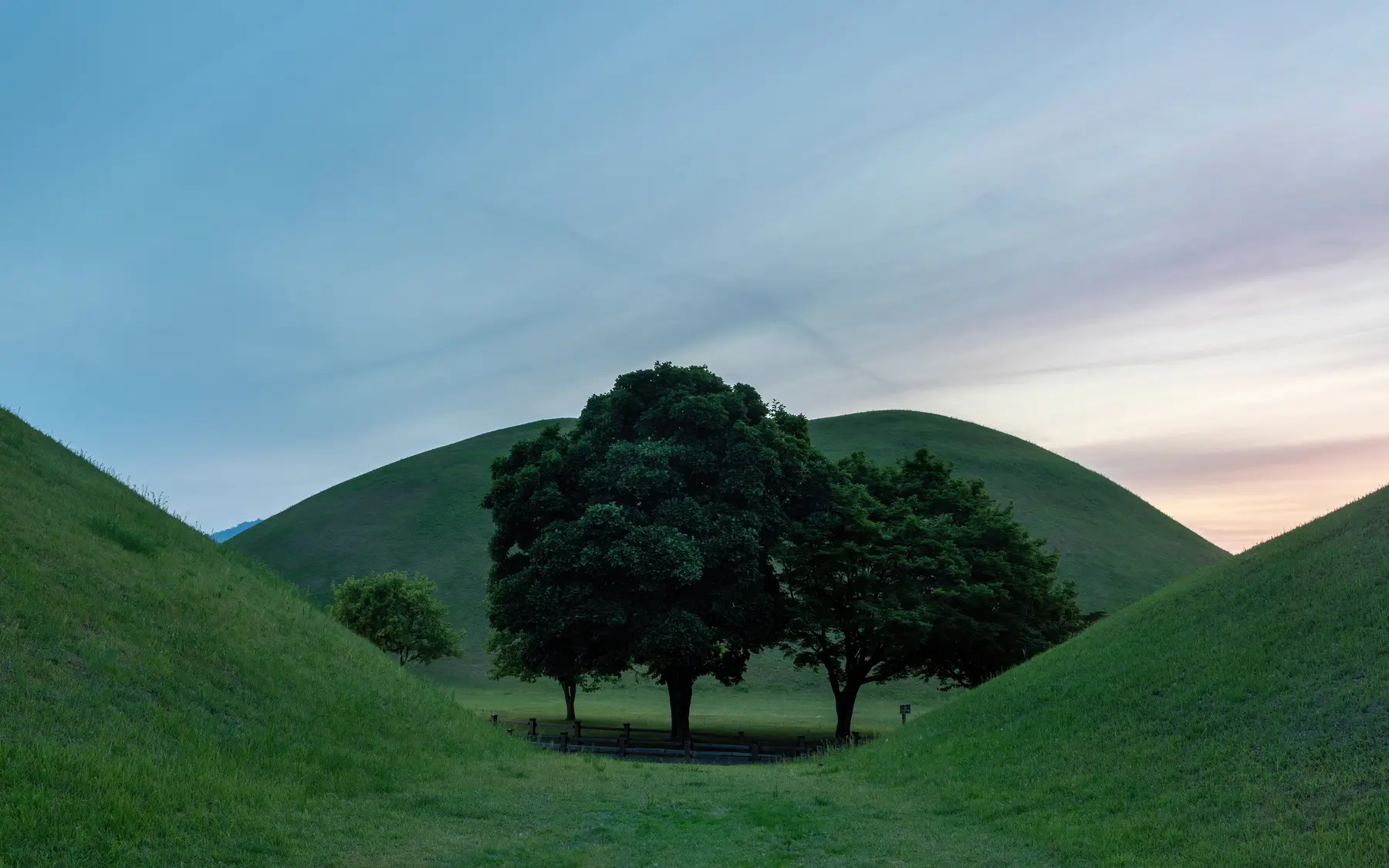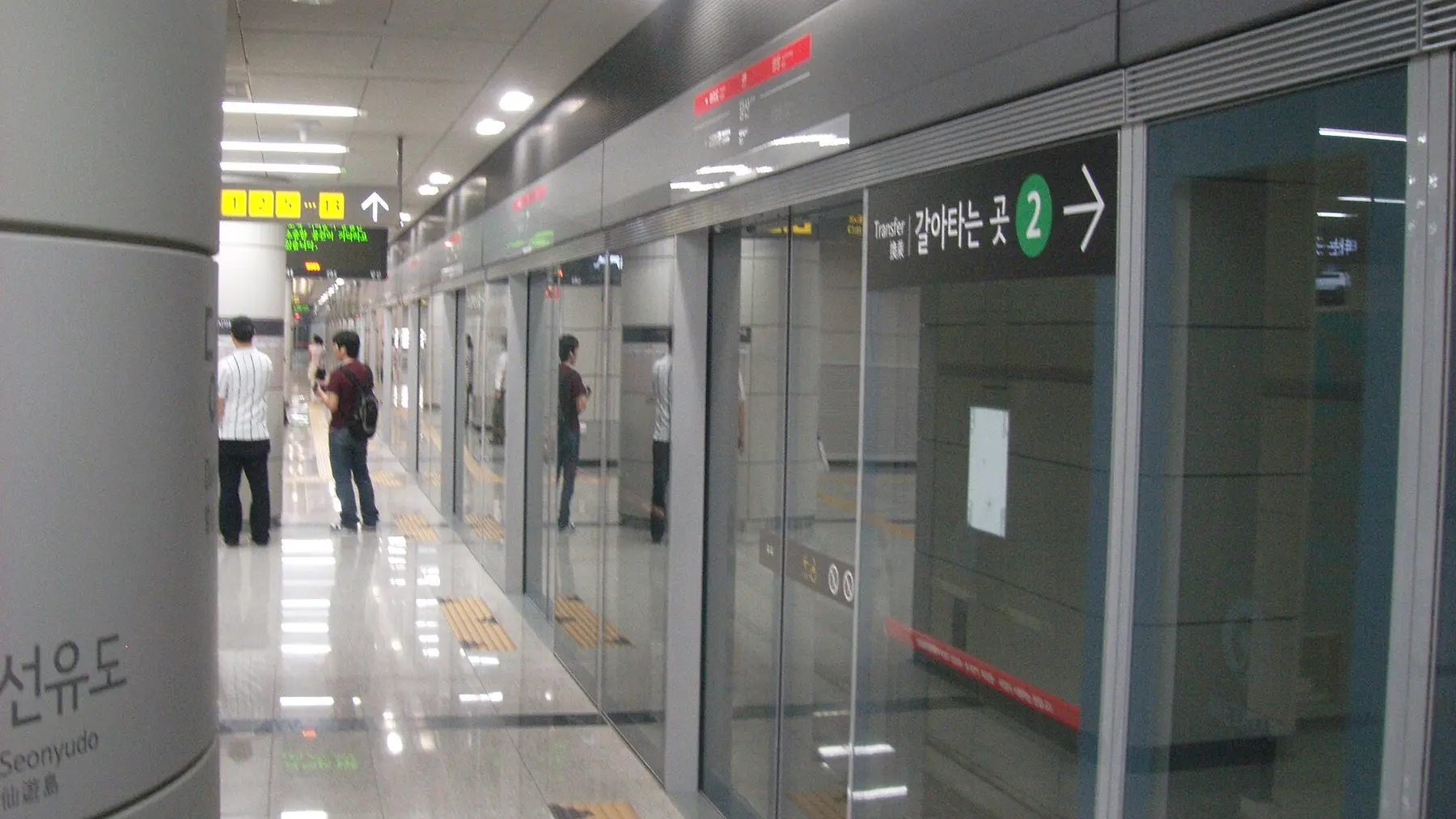
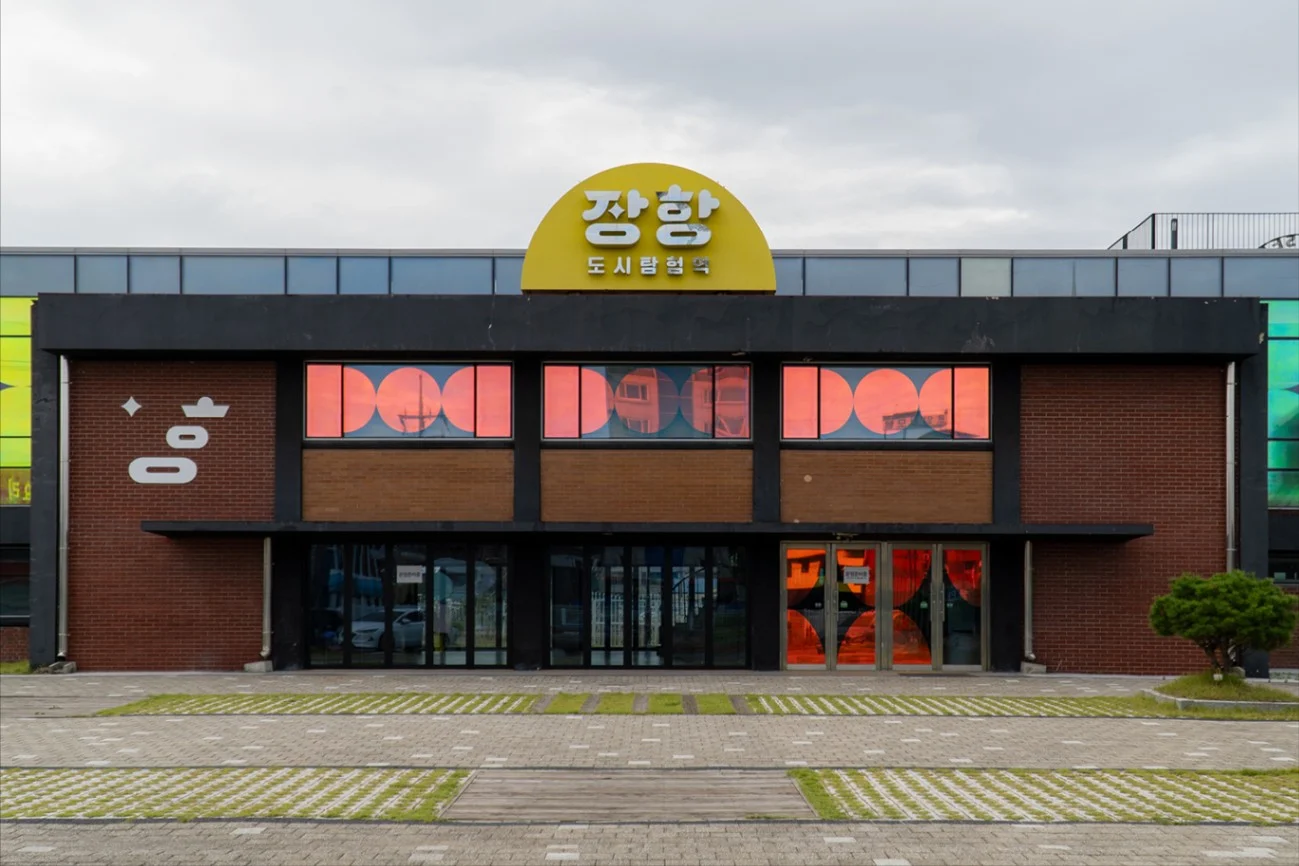
The most useful thing a hotel room can buy you is permission to stop checking the time. In Janghang, I would spend it on dinner.
Not dinner fitted between an exhibition and a dash for the train, but dinner that gets to be the evening. Then a morning with nowhere urgent to be except a pine forest beside the sea.
This small port town in Seocheon is not a miniature Seoul with fewer people. The appeal is a different set of details: a station that no longer sends you anywhere, streets with an older working-town shape, fish on the table and a coast that asks you to look at mudflats as well as water.
I would give it one night, not because every stop demands it, but because the journey from Seoul deserves more than an afternoon with a return deadline. The plan below is researched itinerary advice, not an account of a personal stay. It keeps two areas separate: the old town first, Songnim and the coast the next morning.
01
First, decide whether this is your kind of overnight
If your ideal short break needs a long list of famous sights, I would choose somewhere else. Janghang makes a better case to the traveler who likes finding out what a place used to do, eating something local and having enough time to notice the gap between the two.
One night is the useful middle ground. A day trip can become transport with a few attractions inserted. Two nights are worth considering only if you want a wider Seocheon trip or a substantial museum day. For this version, leave the county-wide checklist alone.
The workable weekend pattern is old town on Saturday, coast on Sunday. The Foundation lists Urban Exploration Station as open Tuesday–Saturday, 9 a.m.–6 p.m., with Sunday, Monday, statutory holidays and May 1 closed. Older tourism articles give different hours. I would follow the operator and check for exceptions before booking. An evening festival is a separate program, not evidence of normal late opening.
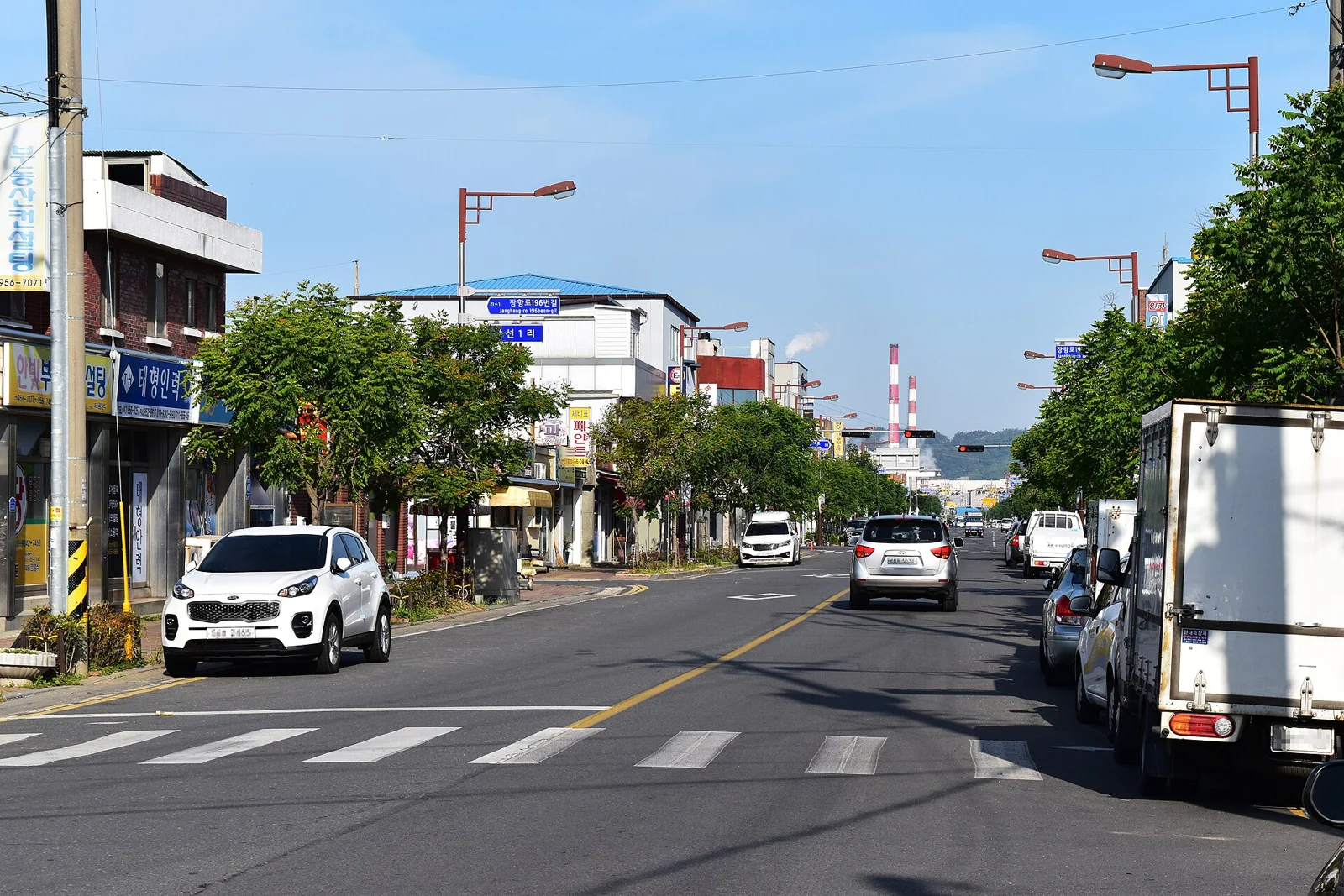
Janghang at street level, June 4, 2017. Archive streetscape; businesses and road arrangements may have changed.
02
Arrive at the right station, then put the bag down
Search for 장항역 when booking the passenger train. Save 장항도시탐험역 separately for the old-town attraction. They share a name and a history, not a convenient single entrance. This is exactly the sort of small distinction that can eat the first hour of a trip.
Compare the actual Korail options from your Seoul departure station for both directions. Do not assume a direct train is the quickest option, or that a faster-looking connection is the easiest with luggage. As a planning allowance, protect three to four hours from your Seoul base to your Janghang accommodation; the booked train and local transfer determine the real total. That is a door-to-door allowance, not a published timetable.
The Foundation estimates roughly ten minutes by taxi from the passenger station to Urban Exploration Station. Its indicative fare is about ₩7,000, not a guaranteed quote. The bus alternative is listed at around 22 minutes to the town, followed by about ten minutes on foot, before any waiting. For two people with an overnight bag, a taxi is a reasonable place to spend a little convenience money.
Ask your accommodation about luggage storage before assuming an early check-in. If storage is unavailable, arrange the first part of the day around the bag rather than deciding that every museum has a locker.
03
Let the old station explain the town
Start at Urban Exploration Station, at 장항로161번길 27. Its job now is to help you read Janghang rather than leave it. The operator describes a cultural and tourism space with exhibitions, local stories and programs in the former station.
Give it 45–60 minutes as an editorial allowance. Look for the railway and port connections before walking out into the surrounding streets. A converted building is more interesting when the previous life remains part of the story; otherwise, it is just another attractive place to buy coffee.
Then take a short old-town walk toward the 6080 food-street area, 장항6080음식골목 맛나로. Let the current map choose the pedestrian crossings. This is a living town, not a pedestrianized heritage set. Working shops, traffic and ordinary front doors belong in the picture too.
If you want to see the port, treat it as a separate daylight look from clearly public space, not a promise of a waterfront promenade. Do not follow an inviting view onto a working quay or through a closed gate. The sea is allowed to have a job.
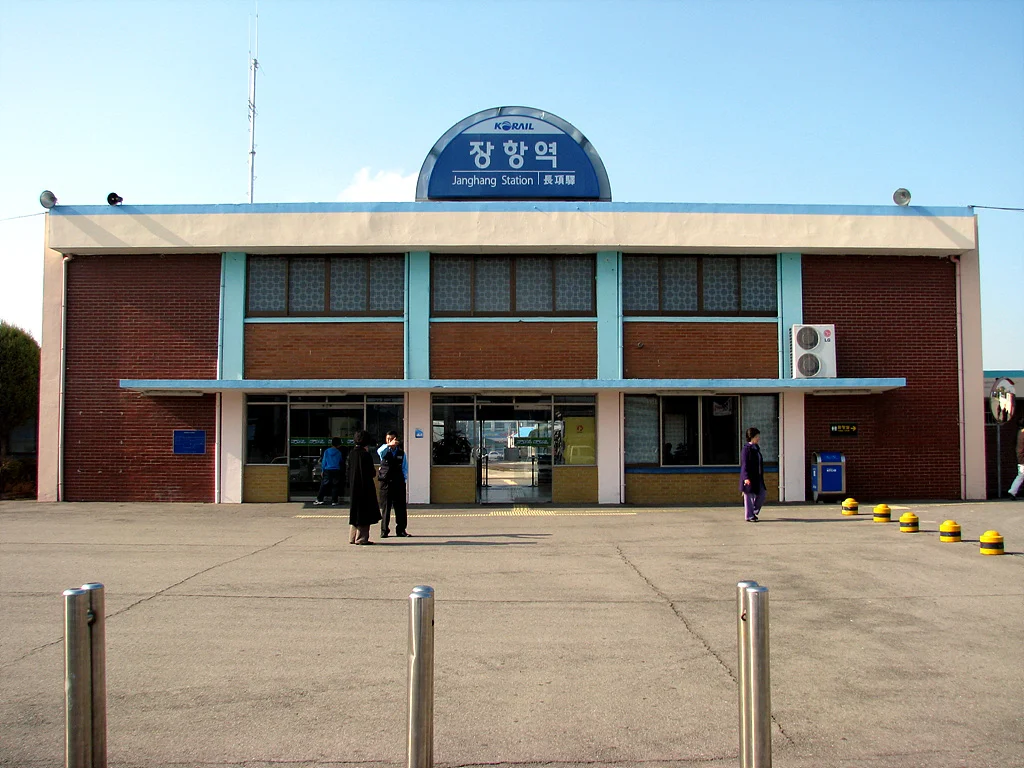
Before the cultural conversion: the old station on November 25, 2007. Historical comparison, not the current passenger station.
04
Choose a bed for the evening you actually want
For this itinerary, I would prioritize an old-town address with dinner within a comfortable walk. A hotel room with a sea view is a less convincing bargain if every meal requires another car journey.
Hotel Kamon, searchable as 호텔카몬 or 카몬호텔, is a concrete old-town lead in the county accommodation directory. The listing confirms a property, not an inspected room or a recommendation based on a stay. Check the exact address, recent guest photographs, bed configuration, non-smoking status and your date’s price before paying.
For a forest-first version, Seocheon Youth Hostel, 서천유스호스텔, is another tourism-listed lead near the Songnim area. Confirm that an individual room is available to your party and check bedding, bathrooms and check-in arrangements directly. Do not assume “youth hostel” means a walk-in dorm bed.
The trade-off is straightforward: town for an easy dinner and station-area evening, Songnim for the next morning. Without a car, town would be my default. A wider “Seocheon” search can return places well outside this route, so judge the pin before the photograph.
05
Give dinner the time you came for
I would start with bakdae, 박대, a local flatfish served grilled or braised. Seohaean Sikdang, 서해안식당, is a useful named option: KTO lists its bakdae set meal as combining grilled and braised preparations. Confirm opening hours, last orders and the number of people a set serves before committing your appetite.
Yujeong Sikdang, 유정식당, appears in KTO’s Seocheon food recommendations for seasoned crab, while Uri Sikdang, 우리식당, is a lead for braised monkfish. These are alternatives to investigate, not three meals to collect. Ask about spice, raw seafood and minimum orders if those affect your choice. There is no prize for ordering the dish you cannot comfortably eat.
Eat early enough that a closed kitchen does not decide the menu for you. If you are traveling solo, confirm a one-person meal; a shared seafood dish can change both the budget and the evening. If you fancy a drink, arrange the ride first and leave the car parked.
Afterwards, keep the rest modest: a café whose hours you have actually checked, a short walk on well-lit public streets, or simply back to the room. On an ordinary weekend, do not expect the town to turn into a festival once the sun goes down. The point of staying is having less to fit in, not inventing an extra night shift for the itinerary.
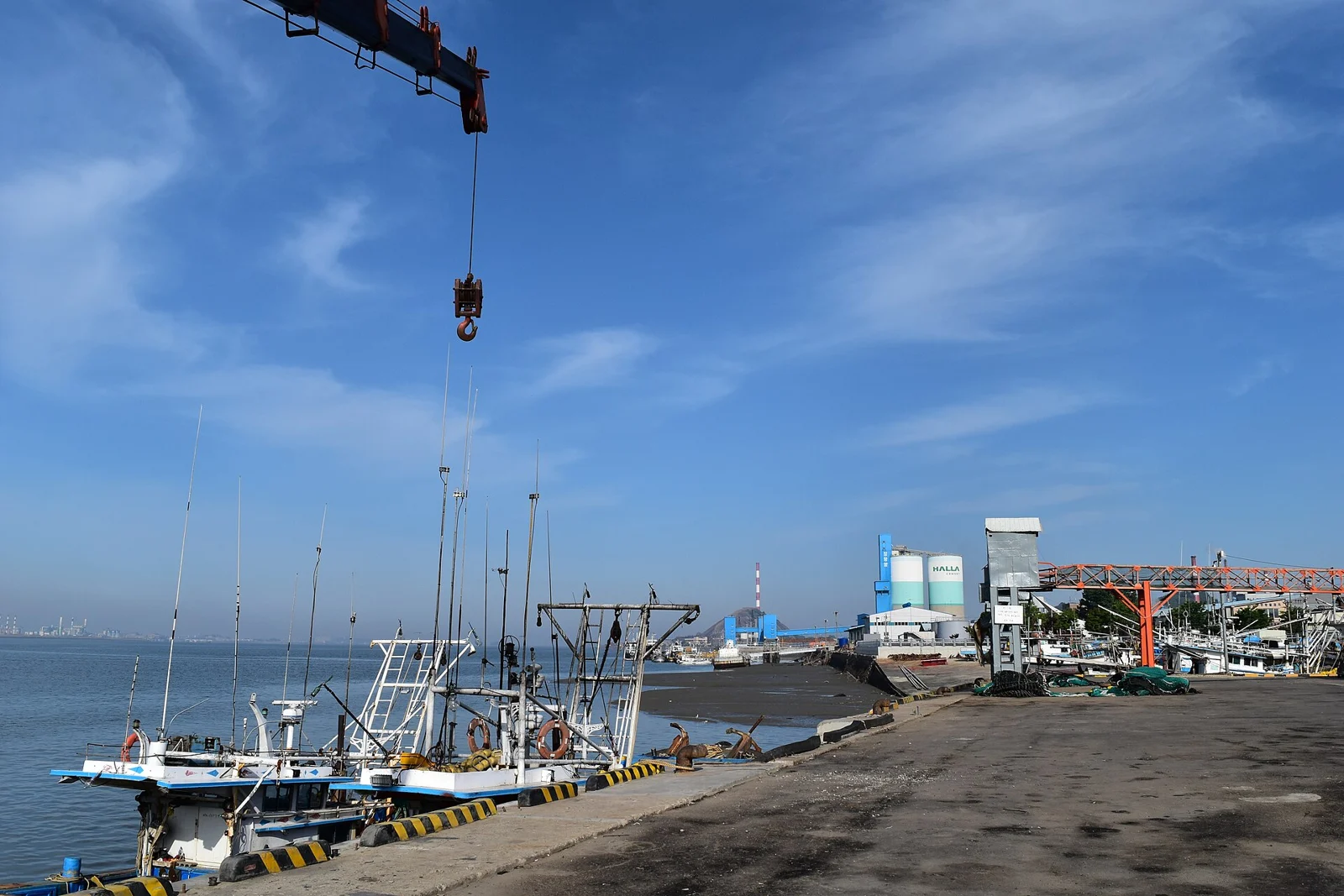
The working port, June 4, 2017. An archive illustration of the town’s maritime setting, not an invitation onto restricted quays.
06
The next morning belongs to Songnim
Have breakfast before leaving town. Seohaean Sikdang’s KTO listing mentions early weekday opening, but that is not a promise of Sunday breakfast. Ask the hotel for a confirmed option the evening before, or keep something simple in reserve.
Take a taxi or drive to 장항송림산림욕장. Give the pine-forest paths and coast 60–90 minutes rather than treating the trees as the approach to a ticket booth. This is a tidal shore. The water may be a long way out, and the exposed flats are part of the landscape, not a disappointing version of a beach photograph. Stay on established public routes; this plan does not include walking out onto the mudflats.
Janghang Skywalk is an optional addition above the pine forest and shore. KTO describes it as about 15 meters high and 250 meters long. The newer January 2025 KTO guide lists ₩4,000 admission with a ₩2,000 local voucher, and an October–March closing time of 5 p.m., with entry ending 30 minutes earlier. Older official tourism pages still show lower prices and different seasonal hours. Check with the facility before visiting; budget for the newer listing, not the cheaper screenshot.
A voucher is not a cash refund and not a reason to buy something you do not want. The Skywalk normally closes Mondays, with holiday exceptions. It is not an after-dark viewing platform, and height, stairs or exposed conditions may make the forest-level walk the better choice.
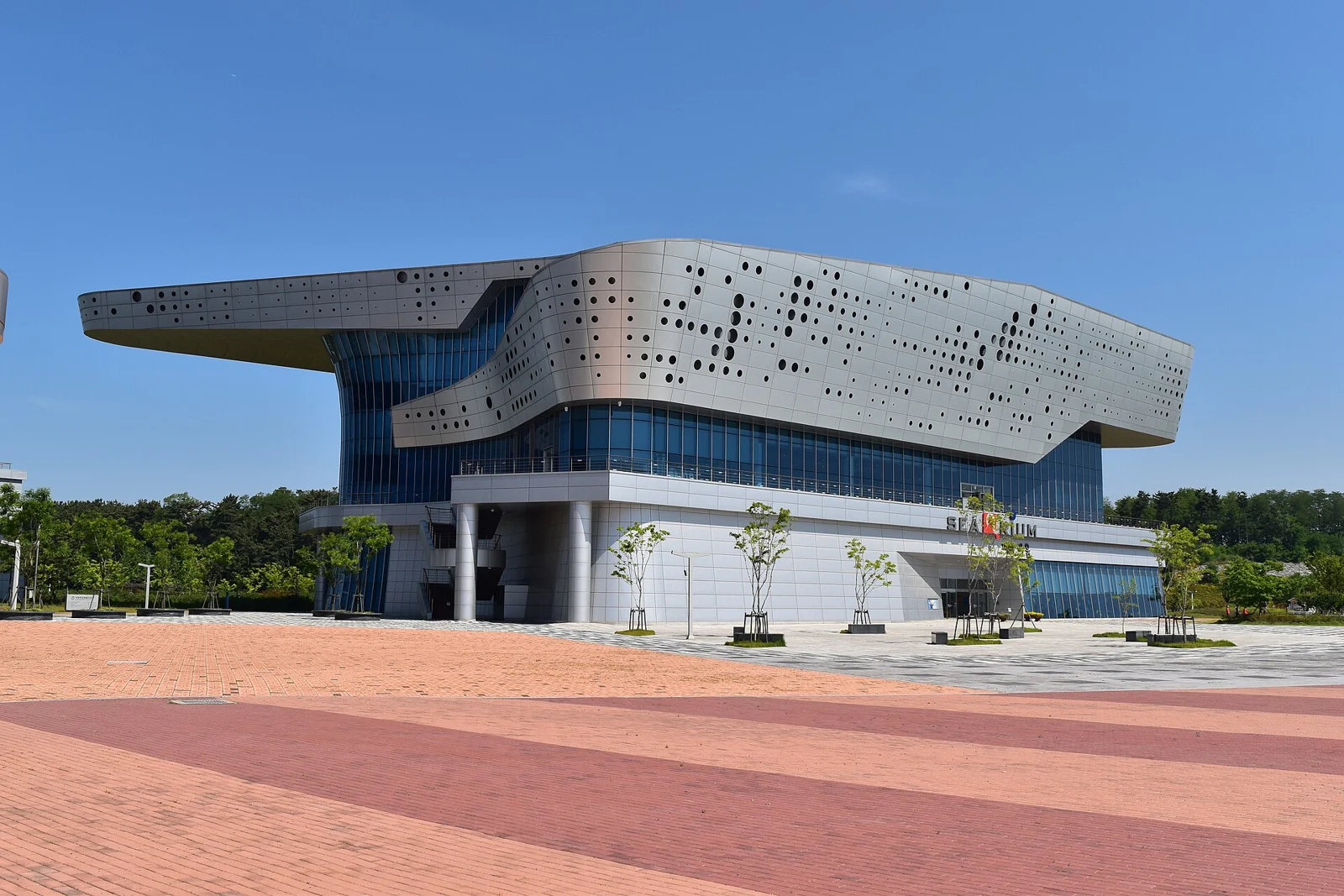
SeaQrium, June 4, 2017. A marine-biodiversity museum near the Songnim area; archive exterior.
07
Choose one indoor alternative, not a museum relay
SeaQrium, the exhibition building of the National Marine Biodiversity Institute of Korea, pairs naturally with the Songnim area. It is a marine-biodiversity museum built around specimens and exhibitions, not a promise of a large live-animal aquarium. Allow about 90 minutes if it genuinely interests you. Check the current visitor leaflet and notices for opening, fees and special-room arrangements.
The National Institute of Ecology, 국립생태원, is the other strong option. Its transport page places the west ticket office within a five-minute walk of the working Janghang railway station. That makes it particularly useful before a later train, provided you have dealt with the luggage.
The Ecorium offers contrasting climate environments, with grounds that can make the visit longer than expected. I would allow two to three hours, not the spare half-hour before departure. Adult admission is currently listed at ₩5,000. The institute normally closes Mondays, moving to the first following weekday when Monday is a public holiday; check the seasonal hours on its own site.
For a relaxed trip, choose Songnim with an optional SeaQrium visit, or replace that morning with the Ecology institute. Do not add both museums to the coast merely because they appear on the same county map. In serious rain, favor the indoor option and leave the exposed coast for another visit.
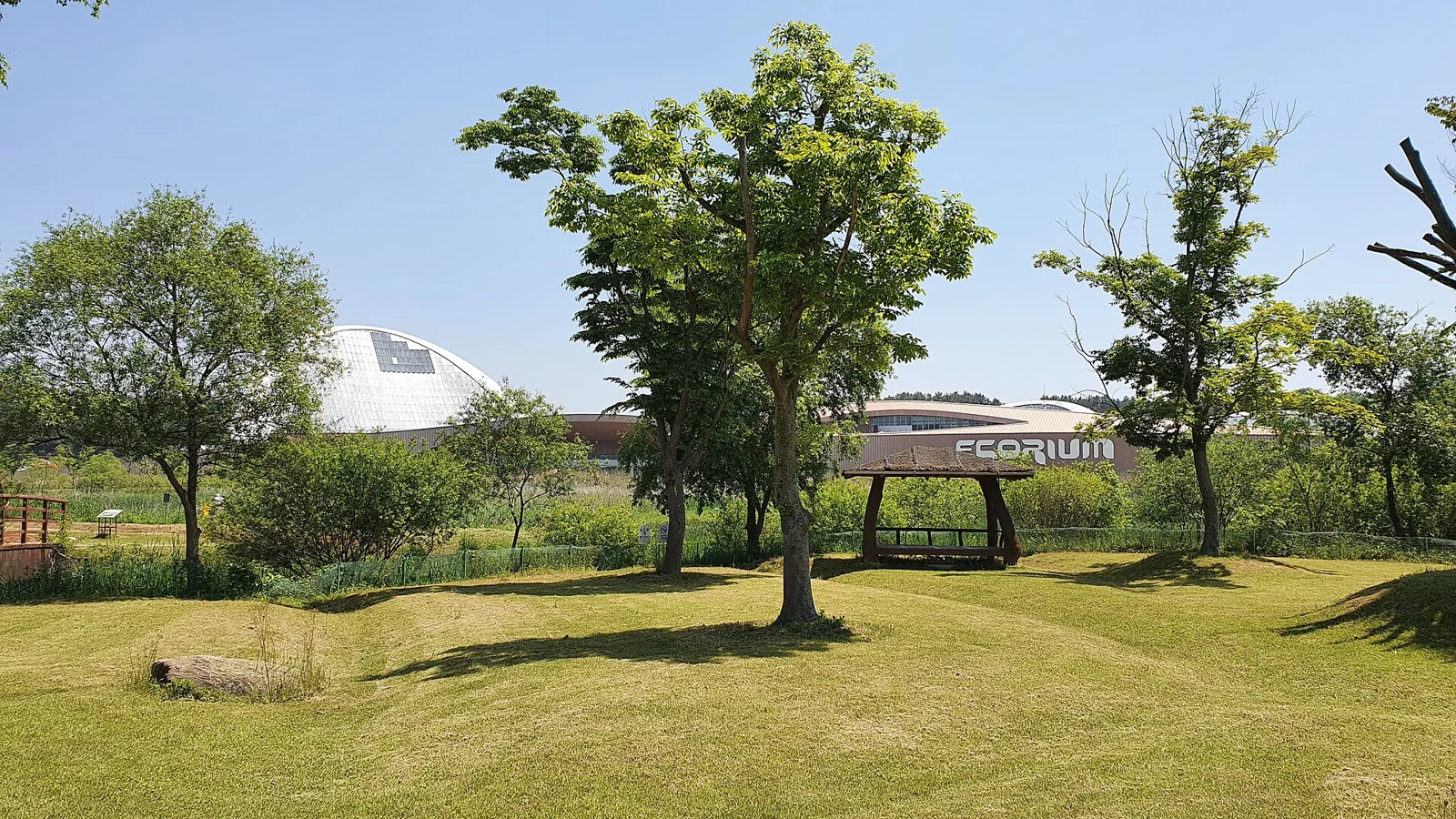
The Ecorium across the institute’s grounds, May 19, 2021. Allow time for more than the building entrance.
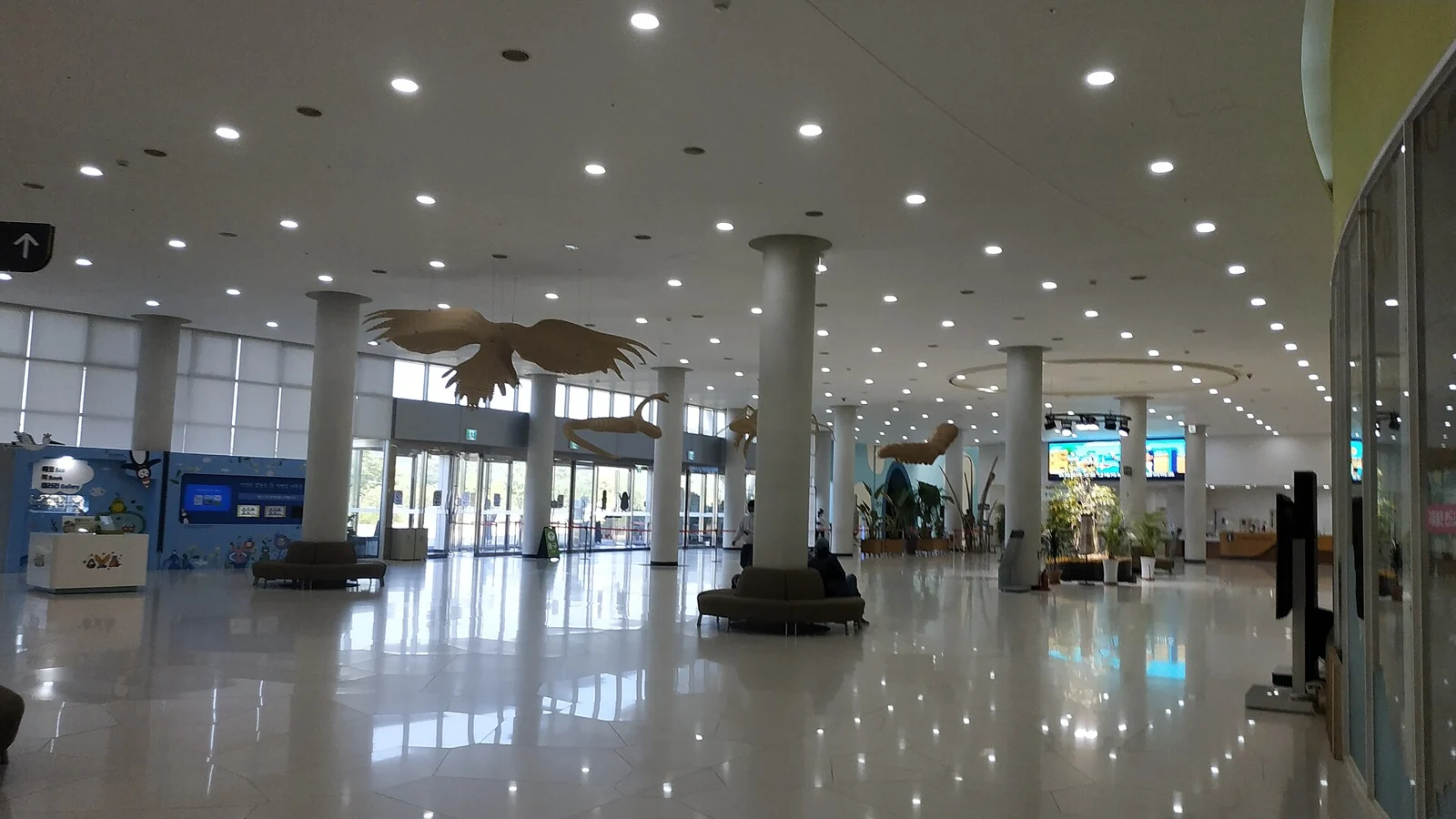
Inside the Ecorium, May 19, 2021. Archive interior; current exhibits may differ.
08
October 30–31: an evening bonus with its own rules
Janghang 1931: A Journey Through the Night has two remaining dates in 2026: Friday October 30 and Saturday October 31, each 5–9 p.m. around Urban Exploration Station. These are individual operating nights, not a festival running every evening until October 31.
KTO lists performances, exhibitions and retro-themed experiences using the former station, platform and train spaces. General entry is free, with some experiences charged separately. Check the Foundation’s current notices for each session, registration, capacity and weather changes. A free festival gate does not reserve you a place at a dining experience.
For these dates, the overnight earns its keep particularly easily: you can enjoy the evening without building the whole plan around the last train. Book the room and return journey first. Outside the festival, keep the same town-and-coast structure, but expect dinner and a quiet evening rather than scheduled entertainment.
09
What the extra night should buy you
For two adults sharing a room, use ₩80,000–₩140,000 for the room, ₩70,000–₩110,000 for meals and café stops, ₩30,000–₩50,000 for local taxis and ₩10,000–₩25,000 for selected admissions as initial planning allowances. That gives roughly ₩190,000–₩325,000 for two, before intercity travel, shopping and a contingency. These are editorial estimates, not researched live quotes; a festival room or seafood order can move the total substantially.
A car helps with the scattered stops and a coast-side room. It is not essential for this restrained version if you are willing to pay for several taxis and arrange the return pickup. Local buses are an option, not an assumption that every transfer will happen conveniently. Have the hotel help with a taxi if an app is uncooperative.
My test for the itinerary is simple: does the second day begin with something nicer than repacking in a hurry? A fish dinner, a night without a departure board and a morning under the pines make a persuasive answer. If you have to sprint through all three, you have given the overnight the wrong job.
References
- Seocheon Culture and Tourism Foundation: current old-station hours, closures and transfer guidance
- Korea Tourism Organization: Janghang 1931 event dates and admission
- Korea Tourism Organization: Songnim, Skywalk and local food and accommodation leads; January 2025 reference
- Korea Tourism Organization: Seohaean Sikdang and bakdae set meals
- Seocheon County: Hotel Kamon listing
- National Institute of Ecology: station-side west entrance and transport
- National Institute of Ecology: current notices, admission and seasonal visiting hours
- SeaQrium: official exhibition information and visitor leaflet
- Korail: search trains for your actual travel dates