Walk Gyeongju’s central Silla heritage on day one, then give Bulguksa a separate morning. Includes arrival advice, admission prices and an overnight budget example.
01
Is Gyeongju worth two days of your trip?
Choose Gyeongju if tomb landscapes, Buddhist architecture and a slower evening appeal to you. Stay overnight to enjoy Wolji after dark without racing back to another city. If you mainly want shopping or nightlife, or have only a few days in Korea, staying longer in Seoul or Busan may suit you better.
This plan assumes you arrive the evening before day one and stay two nights. With just one night, arrive early on day one and leave late on day two. If that is not possible, drop a stop. Do not squeeze the full route between two long travel days.
| Day | Main area | How you move | First thing to drop |
|---|---|---|---|
| Day 1 | Tombs, observatory, museum, Wolji | Mainly on foot; short ride if tired | Optional Woljeonggyo detour |
| Day 2 | Bulguksa, then return to town | Bus or taxi out and back | Seokguram unless transport and time fit |
02
Start by dividing the map
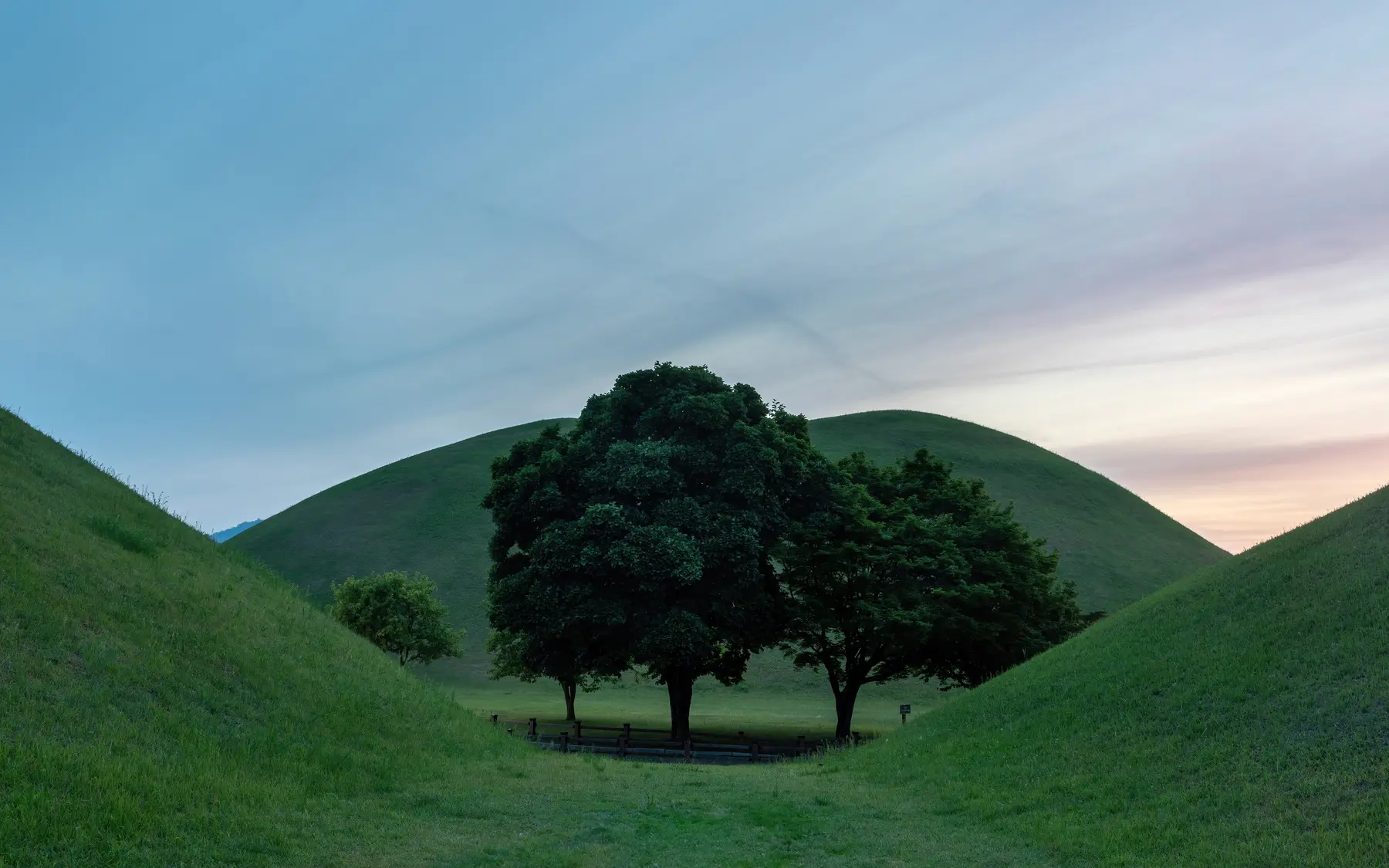
Daereungwon contains Silla-era burial mounds, Cheomseongdae is a historic observatory, and Donggung and Wolji mark a former palace site. The national museum helps connect these places with the objects recovered from them. Together they make a central walking day, with meals around Hwangnidan-gil and a short taxi or bus if needed.
Bulguksa sits well outside that cluster. Seokguram is farther up Tohamsan, about 3 kilometres from Bulguksa by hiking trail and roughly 9 kilometres by road, according to current VISITKOREA information. Putting both temples after a full central walking day turns a thoughtful visit into an exercise in checking the time.
Yangdong Village, Namsan and Bomun Lake are all valid reasons to return or add a third day. They are not spare half-hour stops. Choose which area you want to explore properly, then give it enough time.
03
Choose a base near the central area
For this plan, stay within an easy walk or short ride of Hwangnidan-gil, Daereungwon or the intercity and express bus terminals. That keeps your first evening and day-one walk simple. Check the exact hotel entrance in a Korean map app, not only the district name.
If arriving by high-speed train, book to Gyeongju Station (경주역). KORAIL's current station page notes that the name changed from Singyeongju. The station is not the same thing as arriving beside Daereungwon, so include the local transfer to your hotel in the day's timing. Save the hotel address in Korean and check the live bus or taxi route after the train schedule is fixed.
The express and intercity bus terminals are closer to the central sightseeing area, but road travel is less predictable. Compare the complete journey from your previous hotel, not simply train time against bus time. Whichever route you choose, avoid attaching a prepaid evening ticket to an arrival with no margin.
04
Day one morning: tombs, lunch and Cheomseongdae
Begin at Daereungwon (대릉원) in the morning. The rounded tombs read as a landscape before they read as a list of names, which is exactly why the first hour should not be rushed. The complex currently opens from 09:00 to 22:00. Entry to the grounds is free, while Cheonmachong, the tomb interior open to visitors, is listed separately at 3,000 won for an adult.
After Daereungwon, have lunch around Hwangnidan-gil or a nearby side street. The neighborhood is useful because it sits between the tomb complex and the rest of the central route, not because every photogenic café deserves a queue. Choose one proper meal and keep moving east toward Cheomseongdae (첨성대) and Gyerim Forest (계림).
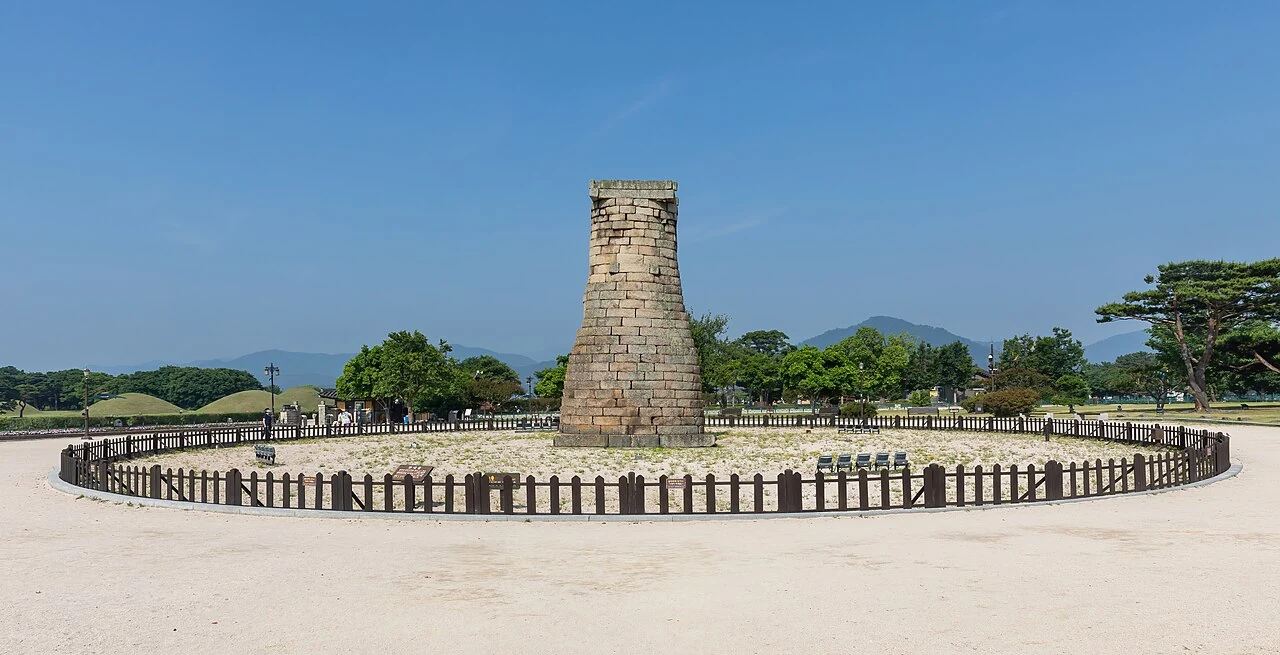
Cheomseongdae, photographed June 11, 2024. The observatory and nearby heritage paths fit into the central walking day.
05
Day one afternoon: choose the museum or a longer walk
From there, decide how much outdoor walking belongs in the afternoon. A longer route can continue through the Wolseong landscape and toward Woljeonggyo Bridge. A shorter one can turn toward Gyeongju National Museum (국립경주박물관). The museum is the better choice in rain, strong heat or when the tombs have left you curious about the objects that came out of the ground.
The museum’s permanent galleries are free. Use the current Korean visitor page: 10:00–18:00, with last admission 30 minutes before closing. Saturday opening extends to 20:00 from March through October. It closes on January 1, Seollal and Chuseok; exhibition halls also close on the second Monday of March, June, September and December. These hours took effect on March 1, 2026. The English page still shows an older schedule.
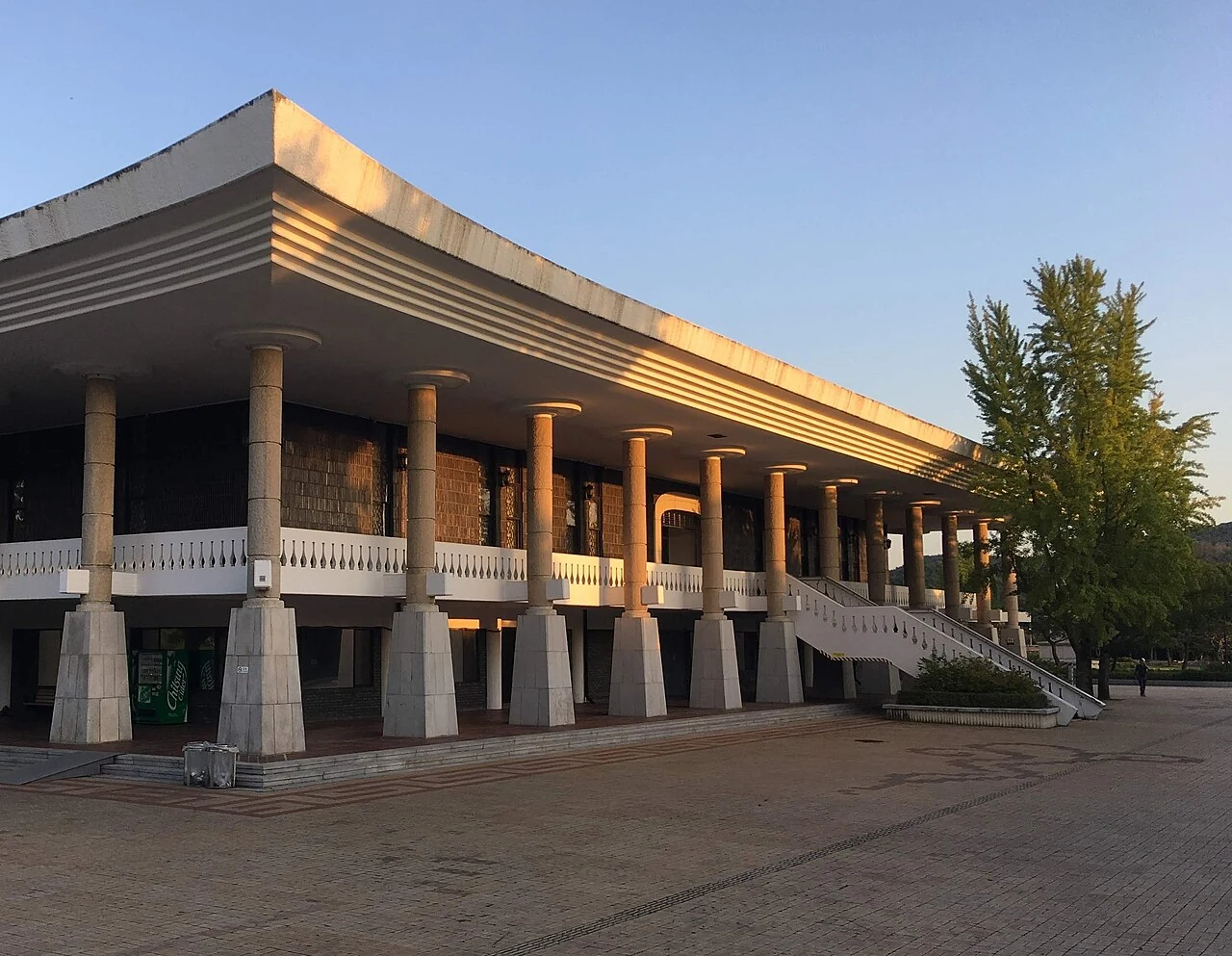
Gyeongju National Museum, photographed September 30, 2018. This archive view shows the exterior; use the current visitor page for opening hours and entrance arrangements.
06
Optional detour: Woljeonggyo Bridge
Woljeonggyo adds a view of a colorful covered bridge to the central walking day. It belongs in the longer version of this route. Choose it when you want more time outdoors, and leave it out when your feet or the weather favor the museum.
The riverside photograph shows stone steps along the bank. Do not treat that viewpoint as a checked step-free route. Keep to a route that suits your group and allow extra walking time before heading to the museum or dinner.
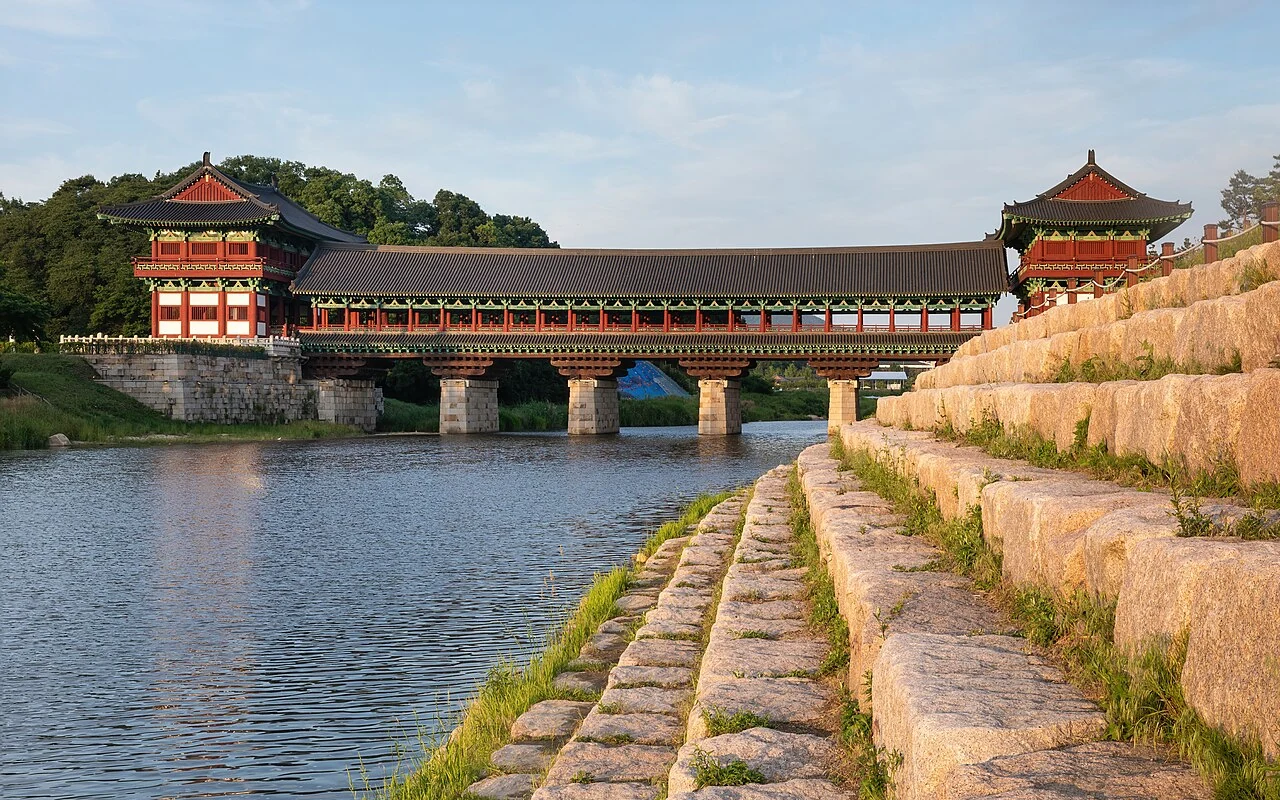
Woljeonggyo, photographed June 9, 2024. Add this detour only if you want the longer walk; the stepped bank shown here is not a verified accessible route.
07
Day one evening: Donggung Palace and Wolji Pond
Finish at Donggung Palace and Wolji Pond (동궁과 월지) after dinner or around blue hour. Current visitor information lists 09:00-22:00, with last ticketing and admission at 21:30, and an adult ticket of 3,000 won. The illuminated pavilions and their reflection give the route an evening finish without requiring another district. Crowds gather around the best-known viewpoints, so walk a little farther around the pond before deciding that the first gap in the rail is the only possible photograph.
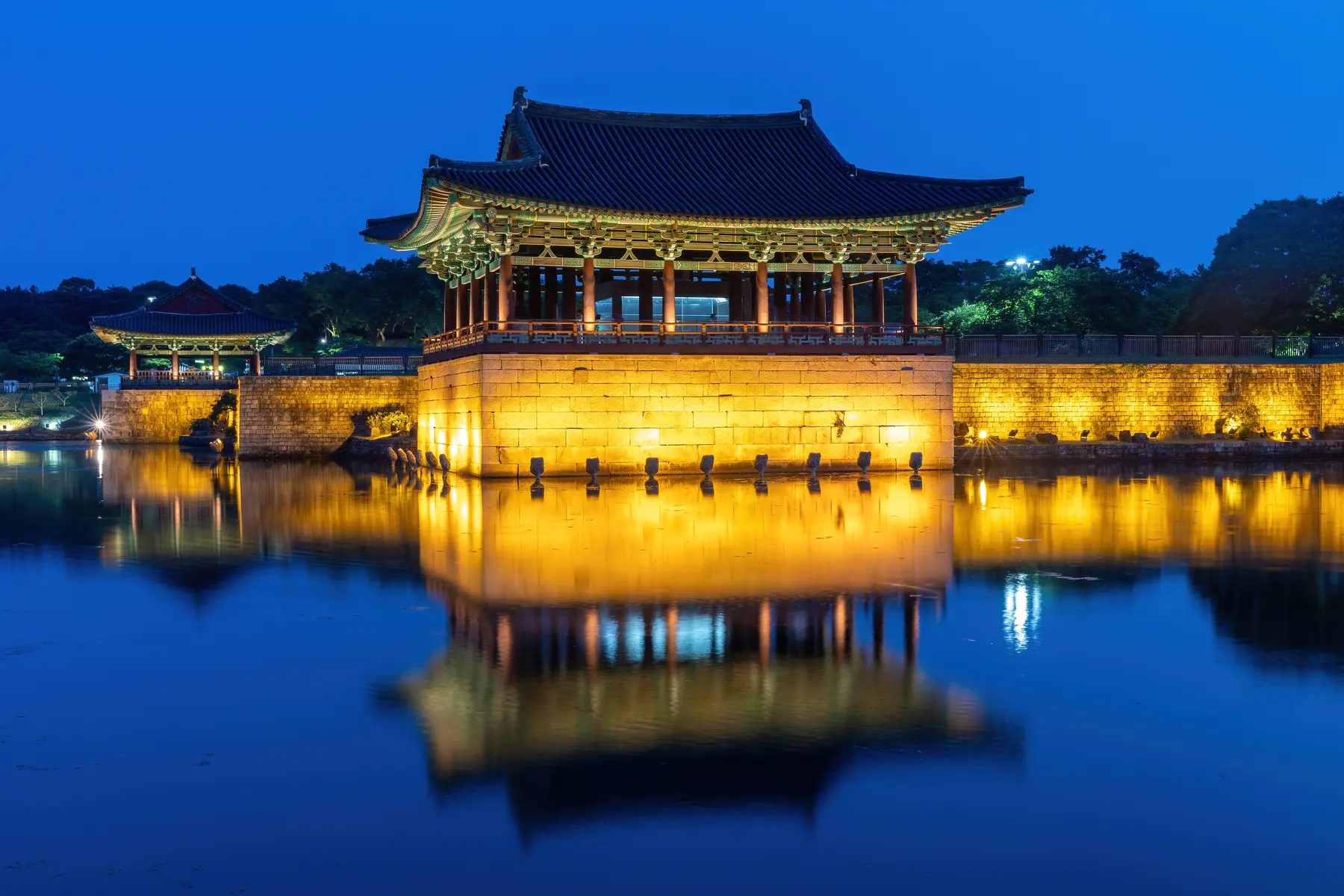
Wolji Pond at blue hour, photographed June 10, 2024. Stay overnight to give this evening visit room to breathe.
08
Day two morning: Bulguksa first
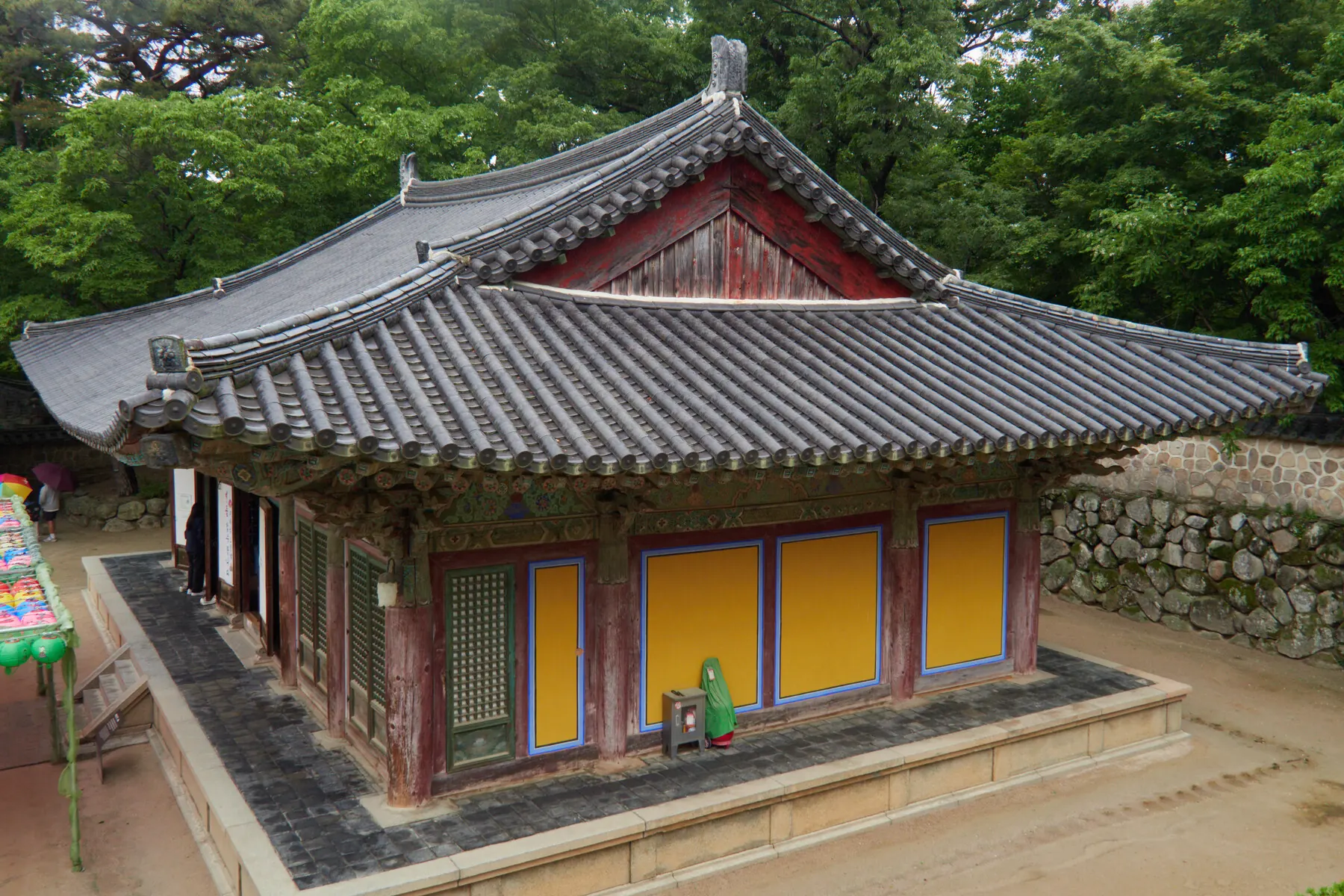
Leave the central area in the morning for Bulguksa Temple (불국사). Current information lists the temple as open from 09:00 to 18:00, with exit possible until 19:00, and admission free. Arriving near opening gives the stone terraces, bridges, pagodas and halls a little space before the main flow of groups.
Allow about two hours for an unhurried visit. This is not a claim that every visitor needs exactly 120 minutes. It is enough time to move through the main precinct without treating the temple as a photograph between buses.
09
Optional extra: Seokguram, only if it fits
After Bulguksa, make a fresh decision about Seokguram Grotto (석굴암). VISITKOREA places it about 3 kilometres away by hiking trail and 9 kilometres by road. It is currently listed as open 09:00-18:00 with free admission, but its own page warns that hours can change. Add it when the weather is suitable, your transport plan is clear and everyone in the group is comfortable with the climb or transfer.
Skip Seokguram when visibility is poor, paths are slippery, mobility is limited or the return connection would make the rest of the day anxious. Bulguksa is not an incomplete visit without it. A heritage itinerary should leave you with an understanding of the place, not only proof that your phone visited both pins.
Return to central Gyeongju for a late lunch, a final café or the museum if it was missed on day one. If leaving by train, work backward from the KORAIL departure and include the transfer to Gyeongju Station. If leaving by bus, confirm whether your service uses the express or intercity terminal.
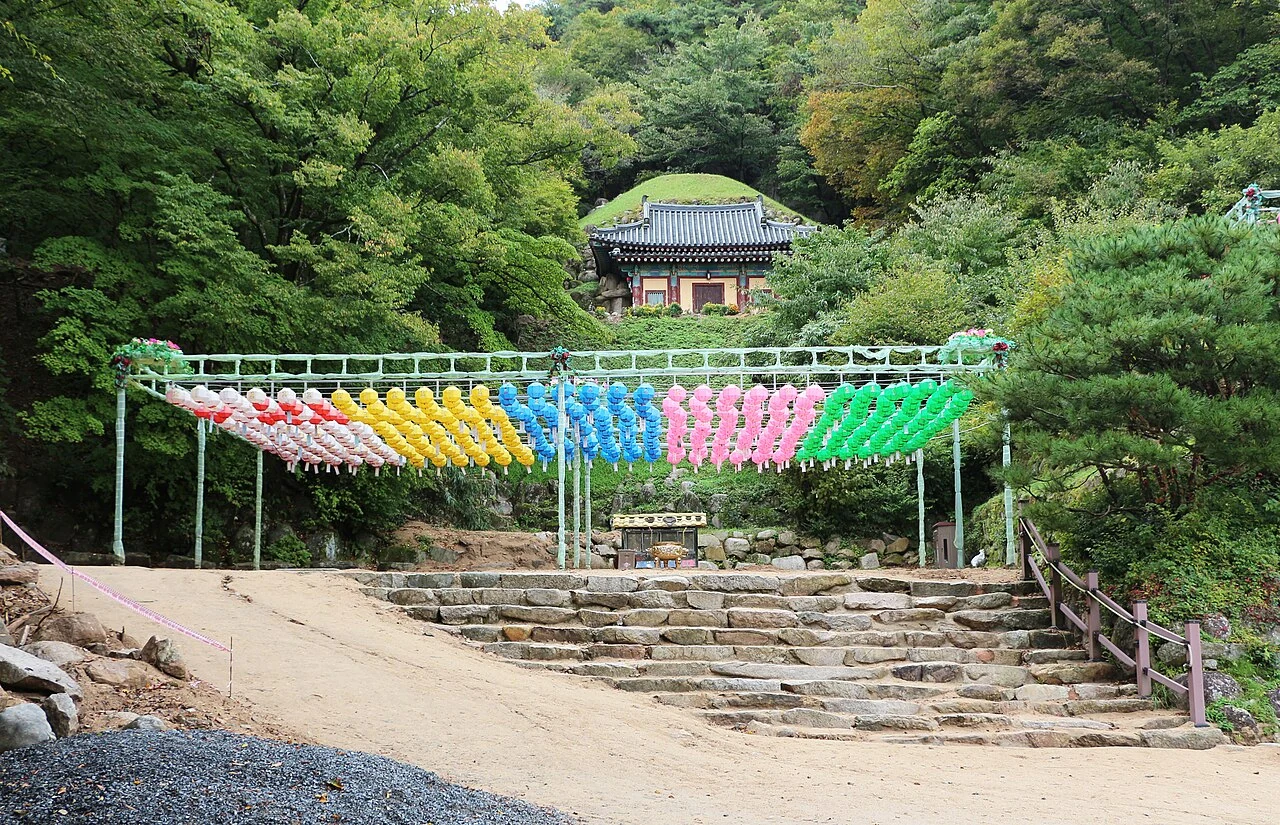
The approach to Seokguram, photographed October 6, 2022. The archive image shows the stairs; lantern displays and visitor arrangements may differ on your dates.
10
Use buses selectively and taxis strategically
For planning only, reserve 45–60 minutes for a station-to-central-hotel transfer, and 60–90 minutes each way for central Gyeongju to Bulguksa by bus, including the wait and approach. A taxi may be quicker. These are generous scheduling allowances, not measured journey times or current service intervals. Replace them with the live route from your actual starting point before booking a departure.
You do not need a rental car for this route, but you do need a live map. Search Korean place names in Naver Map or KakaoMap and check the route on the day. Do not build the itinerary around an old screenshot of a bus number. Stops, routings and intervals can change, while the temple will continue to sit exactly where it was.
For one or two travelers, local buses keep costs down. For a group of three or four, a taxi can be sensible when it prevents a long wait or protects the return to the station. This is particularly true for the connection between the central area and a fixed departure. Compare the whole transfer, not the emotional satisfaction of having spent the minimum possible fare.
Keep a rechargeable transit card available, but confirm how each regional service handles payment. Save the destination in Korean and show it to the driver if necessary. For accessibility needs or special luggage, contact the operator or accommodation before travel. This guide does not claim that every bus, stop, path or temple entrance is step-free.
11
What to budget for the overnight visit
For one adult staying two nights, the example below totals ₩246,000 before the train or intercity bus into and out of Gyeongju. Only the admissions are published prices checked for this route. Rooms, food and transport are editable planning allowances, not live quotes.
Two adults sharing the same ₩80,000 room would spend about ₩332,000 together if each allows ₩60,000 for food, ₩20,000 for local transport and ₩6,000 for admission. That is ₩166,000 per person before intercity travel. Add a buffer, and increase the transport allowance if you plan several taxis or Seokguram. Compare dates and room availability before relying on either example.
| Expense | Example amount | What the figure means |
|---|---|---|
| Room, 2 nights | ₩160,000 | ₩80,000 per room/night; planning allowance |
| Meals, snacks and drinks | ₩60,000 | ₩30,000 per day; planning allowance |
| Local transport | ₩20,000 | Bus-focused allowance; several taxis cost more |
| Cheonmachong + Donggung/Wolji | ₩6,000 | ₩3,000 adult admission each |
| Core total | ₩246,000 | Excludes intercity tickets, shopping and buffer |
12
Decide what not to add
With a third day, choose one extra area: Yangdong Village for a preserved clan village, Namsan for a landscape of Buddhist remains and hiking, or Bomun for lakeside leisure. Each asks for its own transport and pace.
Without a third day, leave them alone. Gyeongju rewards attention more than coverage. Two coherent days will show you how Silla's capital occupied its landscape. Adding distant stops means more travel and less time at the places you came to see.
13
Before you book
Reserve one central base, save its Korean address and check the station or terminal on your transport ticket. Put the central walk on day one and Bulguksa on day two. Confirm museum opening for your dates, keep Seokguram optional and leave enough time to collect luggage before departure.
For the bigger picture, use our Korea trip-cost guide and public-transport playbook. The companion below turns these two days into a copyable sequence with Korean map searches and fallback choices.
Check before you go
Official links and live information
Details last checked October 13, 2026. Entry rules, schedules, prices, transport coverage, and operating hours can change, so verify time-sensitive details before committing time or money.
- VISITKOREA: Daereungwon and Cheonmachong fees
- VISITKOREA: Donggung Palace and Wolji Pond
- Gyeongju National Museum: current Korean hours and closures
- Gyeongju National Museum: directions and bus connections
- VISITKOREA: Bulguksa
- VISITKOREA: Seokguram and distances from Bulguksa
- KORAIL: Gyeongju Station, formerly Singyeongju
- KORAIL: train booking
- Korea trip-cost guide