
Essentials · Deep dive
Your Korea Cash-and-Card Checklist
A copyable payment routine for foreign cards, starter cash, transit top-ups, ATMs and a declined transaction.
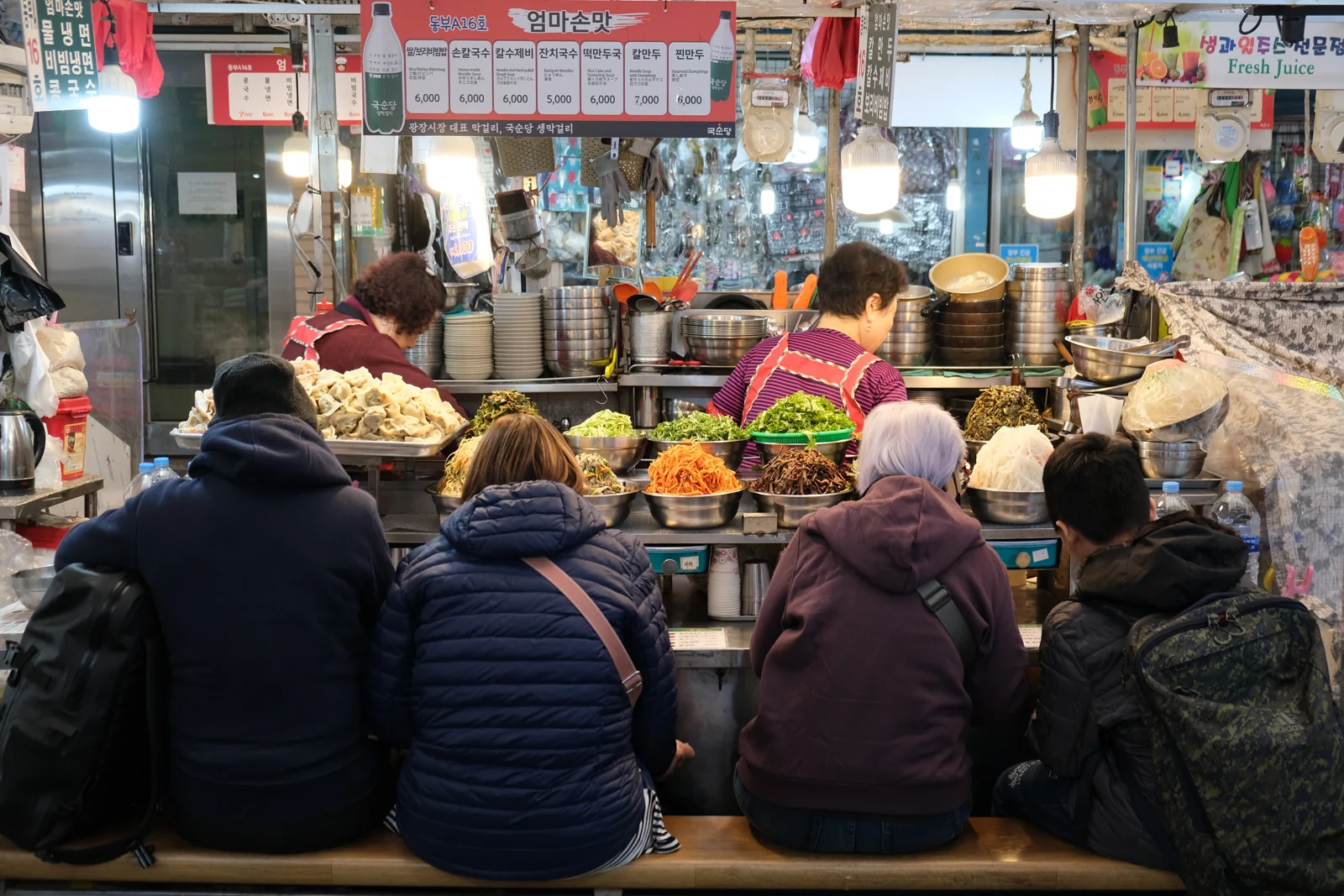
Run the setup once before flying, then check cash and transit balances during the trip. Fill in the amounts for your own party.
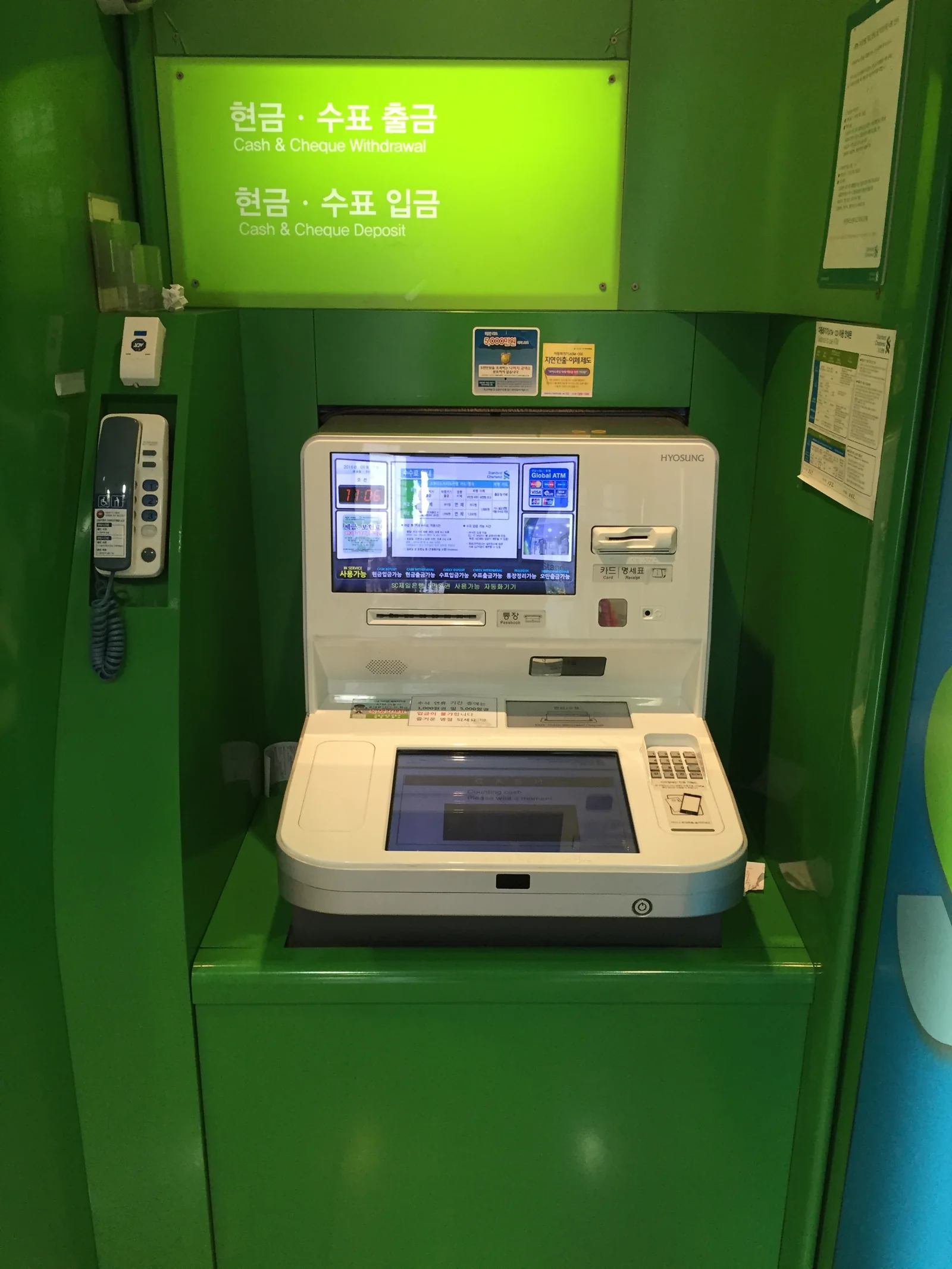
A Hyosung ATM in Seoul, photographed in September 2016. Archive illustration, not a guide to current fees, foreign-card acceptance or screen prompts.
Before you leave
Prepare your payment methods.
- Check overseas purchase and withdrawal access, PIN requirements, limits and fees with each card issuer.
- Keep a physical main card and a separately stored backup; make sure you can receive issuer approval messages.
- Decide which transit product suits your route and how you will fund it.
Pay with confidence
Your plan, in order.
Adjust the cash allocation for your party, transit product and planned purchases.
- 1 · Plan01
Split the remaining budget
Subtract prepaid accommodation and tickets. Write down the remaining spending budget, planned card spending and expected cash needs. A cash withdrawal is not a second expense.
- 2 · Prepare02
Set your starter cash
Use ₩100,000 solo, ₩150,000 for a couple or ₩200,000 for the example family as adjustable first-day-or-two allocations, not required minimums. Add cash-only plans and transit-card purchase costs; reduce top-ups if you have a suitable pass.
- 3 · Arrive03
Exchange or withdraw won
Use an authorized exchange service or a Global ATM displaying your network. Check the final amount, operator fee, issuer charges and withdrawal limit. Keep the receipt.
- 4 · Travel04
Fund the correct transit product
Have cash for a standard physical T-money top-up. For a short-term Climate Card or single-journey ticket, check whether the new station machine supports your foreign card and what fee it displays. Do not assume the bank card itself opens the gate.
- 5 · Pay05
Ask, check the currency, confirm
Ask whether your foreign card works before committing to a purchase. Use KRW unless you have intentionally compared a conversion offer. Confirm that the transaction succeeded.
- 6 · Recover06
Handle a decline calmly
Check acceptance, try the physical card if appropriate, review any issuer alert and try your backup. Agree a cash or other supported payment with staff. For bookings, check confirmation before paying again.
- 7 · Review07
Check tonight, top up tomorrow
Record wallet cash and each transit balance. Replenish against the next day’s plans. Before leaving Korea, check refund rules for the specific product and avoid unnecessary last-minute loads.
Make it your trip
Useful changes.
- Market-heavy day: allocate more small notes to purchases after checking acceptance.
- Hotel-and-shopping trip: most planned spending may stay on cards, while the cash reserve stays modest.
- Family trip: track each transit balance separately and arrange the child fare category before use.
Sources checked October 9, 2026
Verify before you go
Check current payment support, displayed fees and your own card issuer’s terms. Cash examples are editorial allocations.
- Korea Tourism Organization: currency, card acceptance and authorized exchange
- Tmoney official blog: physical-card top-ups and payment methods
- Seoul Metropolitan Government: foreign-card ticket payments, March 17, 2026
- Visa: understanding currency conversion at shops and ATMs
- Seoul Metropolitan Government: Financial Guide Book for Foreigners, Global ATM guidance
- Korea Tourism Organization: transportation cards and passes